
All The Microbiologist articles in Web Issue – Page 301
-
 News
NewsTracking infectious disease spread via commuting pattern data
Researchers have introduced a Commuter Metapopulation Model (CMPM) to simulate the spread of COVID-19 with actual commuting data provided by the country’s second-largest telecommunication network, revealing it could better capture spatial variety in outbreak patterns.
-
 News
NewsFreshwater snails are an overlooked reservoir of AMR, study reveals
Freshwater snails across Africa and the UK carry bacteria containing a wide range of antimicrobial resistance (AMR) genes, including those predicted to confer resistance against last-resort antibiotics, according to a new study led by AMI members.
-
 News
NewsCHIKVdb: A comprehensive genomic resource for chikungunya virus surveillance and outbreak response
Scientists have developed the Chikungunya Virus Database (CHIKVdb), a comprehensive genomic resource. CHIKVdb integrates 8,193 nucleotide sequences and 10,637 protein sequences from five major host categories across 99 countries, spanning 40 years.
-
 News
NewsScientists reveal role of paeoniflorin in mediating microbiota-gut-brain axis
Paeoniflorin treatment significantly reduced depression-like behaviours in stressed rats, while gut microbiota analysis revealed that the treatment corrected imbalances in key metabolites associated with brain function, a study shows.
-
 News
NewsResearchers developing new easy-to-use viral biosensor test, giving patients more accurate and immediate results
An interdisciplinary team of researchers is creating a single low-cost test to detect HIV & Hepatitis B and C simultaneously, that may be used in resource-limited settings. With quicker and more accessible results, the test has potential to save lives.
-
 News
NewsScientists research potential anti-ulcer vaccine targeting Helicobacter pylori
Scientists are on the way to finding a vaccine to fight off the Helicobacter pylori bacterium, possibly preventing stomach ulcers and lowering the risk for stomach cancer. They used immunoinformatics to scan its genetic makeup and predict which parts can trigger a strong immune response.
-
 News
NewsComparison of E. coli inactivation by UV222-ADPs and UV254-ADPs in water
A new study investigates advanced disinfection processes (ADPs) that use 222 and 254 nm far-ultraviolet radiation in conjunction with hydrogen peroxide (H2O2), sodium percarbonate (SPC), and persulfate (PDS) to inactivate E. coli in water.
-
 News
NewsValorization of soybean-processing wastewater sludge via black soldier fly larvae: performance and bacterial community dynamics
A new study indicates that the valorization of soybean-processing-sourced sludge via black soldier fly larvae was achieved via functionally important BSFL intestinal microbiota, providing an efficient recycling approach for similar waste streams.
-
 News
NewsScientists unbolt gateway to sharper CRISPR gene editing
Identifying the passwords for a certain CRISPR tool is a major stumbling block in discovering and characterising the CRISPR tool - but a team of scientists has cracked the code.
-
 News
NewsTwo-step wastewater surveillance reveals co-circulation of respiratory pathogens in a low-resource setting
A new study evaluates the efficacy of qPCR assays for wastewater monitoring of respiratory bacterial pathogens, providing significant insights into the co-circulation of various respiratory pathogens during the autumn and winter of 2023.
-
 News
NewsLake Tahoe algae experiment suggests seasonal shifts ahead
As the climate warms and nutrient inputs shift, algal communities in cool, clear mountain lakeswill likely experience seasonal changes, according to a new study. The effects of climate warming were especially pronounced in the colder months.
-
 News
NewsTraditional Chinese medicine combined with peginterferon α-2b in chronic hepatitis B
A new study demonstrates that adjunctive Traditional Chinese Medicine significantly enhances the antiviral efficacy of peginterferon α-2b in HBeAg-positive chronic hepatitis B while concurrently mitigating treatment-limiting myelosuppression.
-
 News
NewsStructural diversity of pyripyropenes via biosynthetic gene cluster design and heterologous expression in Aspergillus nidulans
Researchers have designed a reconstituted biosynthetic gene cluster (BGC) for producing structurally diversified deacetylated pyripyropenes, using the native pyripyropene A BGC from the wild-type strain Aspergillus fumigatus Af 293 as a template.
-
 News
News‘Cocktails’ of common pharmaceuticals in our waterways may promote antibiotic resistance
New research has shown, for the first time, how mixtures of commonly used medications which end up in our waterways and natural environments might increase the development of antibiotic resistant bacteria.
-
 News
NewsCould targeted steroid use offer a universal complimentary treatment to fight TB?
Newly published research provides evidence that treating patients with steroids may enhance the function of their macrophages to kill the mycobacteria, while diminishing pathways of inflammatory damage.
-
 News
NewsResearchers probe how malaria harms unborn babies
UK-based Wellcome has awarded over €2 million to an international research effort to uncover how malaria can injure developing babies.
-
 News
NewsCompound from Antarctic microorganism can be used to produce food, cosmetics, and medicine
A bioactive compound produced by the microorganism Bacillus licheniformis, found on Deception Island in Antarctica, has properties that qualify it for use in producing food, cosmetics, pharmaceuticals, and biodegradable materials.
-
 News
NewsSafer, more effective vaccines with new mRNA vaccine technology
A new messenger ribonucleic acid (mRNA) vaccine technology could make future vaccines safer, more effective, and less burdensome for patients. The new approach uses albumin-recruiting lipid nanoparticles to deliver mRNA precisely to lymph nodes while bypassing the liver.
-
 News
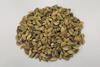
NewsCould cardamom seeds be a potential source of antiviral treatment?
Researchers have found that cardamom seed extract, as well as its main bioactive ingredient, 1,8-cineole, can have potent antiviral effects through its ability to enhance the production of antiviral molecules known as type I interferons via nucleic acid ‘sensors’ inside cells.
-
 News
NewsWetland plant-fungus combo cleans up ‘forever chemicals’ in a pilot study
From a greenhouse study, researchers report that moisture-loving yellow flag irises and fungi on their roots are a promising combination for PFAS removal. As part of a constructed wetland, this pair could effectively treat contaminated wastewater.