
All The Microbiologist articles in Web Issue – Page 304
-
 News
NewsExercise counteracts junk food’s depression-like effects through gut-brain metabolic signaling
New research into metabolic pathways demonstrates that voluntary running exercise can mitigate depression-like behaviors induced by high-fat, high-sugar diets associated with both circulating hormones and gut-derived metabolites.
-
 News
NewsScientists turn algae and crop waste into valuable fuels and nanomaterials
Researchers have developed a clean and efficient process to transform microalgae and agricultural residues into a range of high-value products, including biofuels, bio-adsorbents, and fluorescent carbon nanodots.
-
 News
NewsNovel fungal phyla and classes revealed by eDNA long reads
Via a thorough analysis of the EUKARYOME long-read database, an international team has discovered that a large proportion of unknown eukaryotes uncovered with long-read sequencing belong to deep, hitherto undescribed fungal lineages.
-
 News
NewsCofactor engineering with phosphite dehydrogenase enables flexible regulation of lactate-based copolymer biosynthesis in E. coli
A new breakthrough enables higher yields of poly(3-hydroxybutyrate-co-lactate) [P(3HB-co-LA)] without disrupting bacterial growth, paving the way for more sustainable bioplastic manufacturing.
-
 News
NewsMosquito saliva may hold clues to fighting chikungunya inflammation
Scientists have uncovered a surprising mechanism showing how mosquito saliva can alter the human body’s immune response during chikungunya virus (CHIKV) infection - it not only transmits the virus but also influences how the body’s immune system responds.
-
 News
NewsNew platform for the production of versatile active ingredients
With the help of a newly developed chemo-enzymatic platform, researchers have succeeded in producing a large number of different furanolides in larger quantities and characterizing their biological activity.
-
 News
NewsUS funding cuts could result in nearly 9 million child tuberculosis cases, 1.5 million child deaths
A new study projects that US funding cuts to global health aid will have a catastrophic effect on pediatric TB, with children in Sub-Saharan Africa and Southeast Asia likely to experience a spike in preventable cases and deaths over the next decade.
-
 News
NewsNew insights into malaria could reshape treatment
A sodium pump essential to the malaria parasite’s survival, PfATP4, has emerged as one of the most attractive drug targets. A new study presents the first high-resolution 3D structure of PfATP4 and identifies a previously unknown but essential binding partner.
-
 News
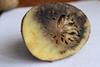
NewsCrop-killing pathogen found to disable plant ‘alarm system’
An international team has discovered that the pathogen Phytophthora infestans - which caused the Irish potato famine - employs special enzymes, called AA7 oxidases, to disable the plants’ early warning system, weakening their defenses before they can respond.
-
 News
NewsHow to hack your microbiome for lifelong health
A new book, The Microbiome Master Key, dissects the latest microbiome research, dispels common myths and provides simple, science-backed tips on how to leverage your microbiome to promote healthy living and aging.
-
 News
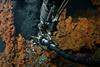
NewsHydrothermal plumes - and microbes - revealed as invisible transport pathways for iron
A new review highlights how hydrothermal vents on the seafloor shape iron availability and influence the global oceanic element cycles.
-
 News
NewsNew role of gut bacteria provides hope for a novel IBS treatment
Research clarifies the complex interaction between gut bacteria and IBS, identifying two bacteria that together can produce serotonin: Limosilactobacillus mucosae and Ligilactobacillus ruminis.
-
 News
NewsNew hope for cats with eye infections: Study finds common cold sore cream safe and effective for feline use
A common human cold sore cream may soon help cats with painful eye infections: researchers found that 1% penciclovir cream (Fenlips®), when applied to cats’ eyes, was safe, well-tolerated, and maintained antiviral levels for over eight hours.
-
 News
NewsMicrobes at Red Sea vents show how life and geology shape each other
A new study led by King Abdullah University of Science and Technology (KAUST; Saudi Arabia) Professor Alexandre Rosado has revealed an unusual microbial world in the Hatiba Mons hydrothermal vent fields of the central Red Sea, a site first discovered by one of his co-authors and colleagues, Assistant Professor Froukje ...
-
 News
NewsImportant algal phenomenon discovered in the Arctic – could boost marine life
The shrinking sea ice in the Arctic Ocean is, overall, a disaster. But paradoxically, the melting of the ice can also fuel the engine of the Arctic food chains: algae. A new study indicates there will probably be more of it in the future than previously thought.
-
 News
NewsDoes floral scent affect insect visitors and bacterial strains on flowers?
A new study reveals that high floral scent chemodiversity is associated with increased pollinator richness but reduced bacterial richness on flowers. The findings led the scientists to propose the ’Filthy Pollinator Hypothesis’.
-
 News
NewsScientists develop a way to track donor bacteria after fecal microbiota transplants
Researchers have developed a new technology to track beneficial bacteria for up to 5 years after fecal microbiota transplants (FMT). The method allows scientists to distinguish even closely related bacterial strains and identify each one’s unique genetic “fingerprint.”
-
 News
NewsGlobal platform for pandemic preparedness to be established at DTU National Food Institute
A new global online infrastructure aims to prevent disease outbreaks from developing into pandemics. DTU National Food Institute in Denmark will serve as the focal point for the new infrastructure. Work to build the platform will begin on 1 January 2026.
-
 News
NewsBabies born eight to ten weeks early can be safely milk fed without risk of gut complications, finds a new study
A major study has found that babies born between eight to ten weeks early can be fed with milk through a tube in their stomach straight after birth rather than being given intravenous feeds through a drip.
-
 News
NewsReport explores health, economic, and societal benefits of vaccination
A new report provides evidence on the advantages of immunization for individual and population health, economic outcomes, and societal well-being. Studies show that every $1 spent on childhood vaccines saves about $11 in avoided medical costs and preserved productivity.