
Plant–soil feedbacks play a central role in crop productivity, ecosystem resilience, and long-term soil health. In many agricultural systems, repeated planting leads to negative feedbacks, where harmful microbes accumulate and reduce plant survival.
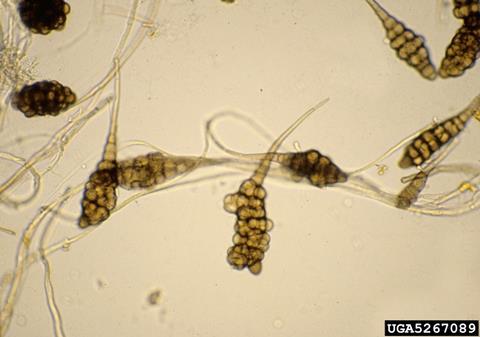
Biodiverse systems such as agroforestry often avoid this problem, yet the mechanisms behind their stable soils remain poorly understood. Foliar pathogens are traditionally viewed as purely destructive, but growing evidence suggests that plants can respond to aboveground attacks by recruiting helpful microbes belowground through a “cry for help” strategy.
How pathogen diversity and infection intensity regulate this process has remained unclear, creating a critical knowledge gap in sustainable disease management and soil health research.
In a study published (DOI:10.1093/hr/uhaf137) on 21 May 2025 in Horticulture Research, scientists from Yunnan Agricultural University, Northwest A&F University, and the University of Maine investigated how different levels of foliar fungal infection shape plant–soil feedbacks in an agroforestry system.
Using Panax notoginseng and its leaf pathogen Alternaria panax as a model, the team combined field experiments, microbial community profiling, transcriptomics, and metabolomics to uncover how mild versus severe disease alters root signaling, soil microbiomes, and the survival of subsequent plant generations.
Conditioned by plants
The researchers compared soils conditioned by plants experiencing weak, moderate, or severe leaf infections. They found that soils exposed to mild infections consistently improved seedling survival and biomass, indicating positive plant–soil feedback. In contrast, soils conditioned by severe infections reduced plant survival, reinforcing negative feedback. Microbial analyses revealed that mild infections enriched beneficial bacterial groups capable of suppressing root pathogens, while severe infections favored disease-conducive microbial communities.
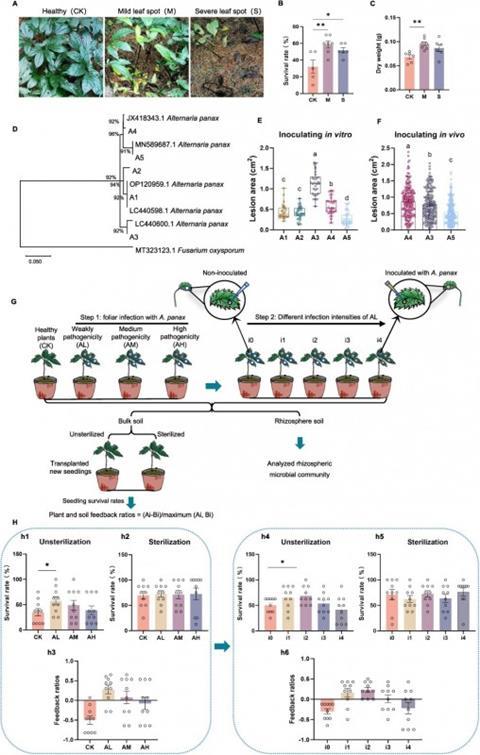
At the physiological level, moderate infection activated jasmonic acid–mediated defense signaling that extended from leaves to roots. This systemic response reprogrammed root metabolism and stimulated the secretion of 2-aminoethanesulfonic acid into the rhizosphere. Laboratory and greenhouse experiments showed that this compound directly inhibited a major soil-borne pathogen while selectively promoting beneficial bacteria such as Rhodococcus and Microbacterium. Applying jasmonic acid alone triggered similar metabolic responses, confirming its central regulatory role.
Critical threshold
When infection intensity exceeded a critical threshold, defense signaling became confined to leaves. Root signaling weakened, beneficial metabolites declined, and the disease-suppressive microbiome collapsed. These results demonstrate that plant defenses operate within a narrow optimal range, where moderate stress enhances ecosystem resilience but excessive stress undermines it.
“This study challenges the traditional view that plant disease is always harmful,” said the study’s senior author. “We show that a moderate level of foliar infection can activate a beneficial ‘cry for help’ response, allowing plants to recruit protective microbes in the soil. However, once disease pressure becomes too strong, this communication breaks down. Understanding where this balance lies is essential for developing sustainable cropping systems that harness natural plant–microbe interactions rather than relying solely on chemical control.”
New strategies
The findings offer new strategies for sustainable agriculture and soil management. Instead of eliminating all pathogen pressure, carefully managed stress signals could be used to stimulate beneficial soil microbiomes.
Jasmonic acid or related signaling compounds may serve as eco-friendly alternatives to conventional pesticides, helping plants assemble disease-suppressive soils naturally.
READ MORE: From roots to riches: mycorrhizal fungi and the future of farming
READ MORE: A new study reveals the microbial biodiversity of dehesa soil
In agroforestry and diversified cropping systems, this approach could reduce chemical inputs while improving long-term productivity. More broadly, the study highlights how plant immunity, microbial ecology, and disease management are tightly interconnected, providing a blueprint for building resilient agricultural ecosystems under increasing environmental stress.
No comments yet