Trick or treat!
To mark this year’s Halloween celebrations we’ve put together a collection of our spookiest content.
Reading after dark is not advised.
Feral Features
Feral Features
The hunt for the halophilic soda-lake vampire
In June 2019, microbiologists from around the world travelled to Transylvania, home of the story of Dracula, not on the hunt for vampires, but for the Halophiles 2019 meeting, focused on salt-tolerant microbes.
Read story
London's hidden plague pits
Bunhill Fields cemetery in the City Road is a quiet haven on the edge of the City of London, mainly attracting office workers seeking lunchtime tranquility or possibly a shortcut to the Artillery Arms pub in Bunhill Row.
Microbial interactions of the necrobiome
Researchers from Michigan State University provide an update on basic research and forensic applications.
Ancient skeletal remains and the invention of agriculture: effects on the oral microbiome
How the oral microbiome adapted to the system of agricultural subsistence across the millennia of paleolithc and neolithic history.
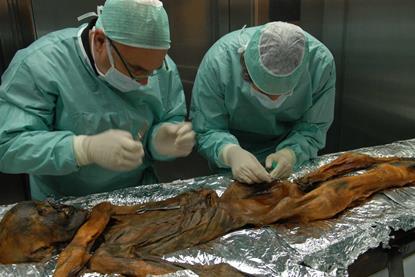
Uncovering the secrets of the mummy
To his great surprise, microbiologist Frank Maixner found himself turning his scientific skills to mummy research. He reveals what the latest techniques are revealing about ancient humans, the history of malaria and the Medici family.
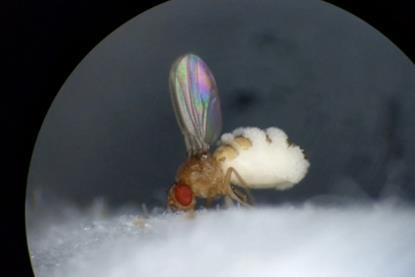
Puppeteer fungus directs ‘summiting’ of zombie flies
Scientists have uncovered the molecular and cellular underpinnings behind the ability of the parasitic fungus Entomophthora muscae’s ability to manipulate the behaviour of fruit flies.
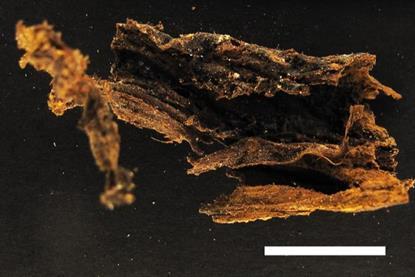
Malaria pathogen found in mummified soft tissue in Medici tomb
The pathogen of the deadliest form of the disease has been identified in mummified soft tissue belonging to members of the Florentine dynasty.
 News
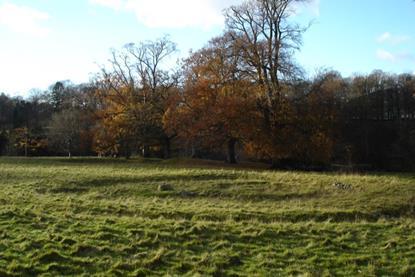
News4,000-year-old plague DNA found – the oldest cases to date in Britain
Researchers have identified three 4,000-year-old British cases of Yersinia pestis, the bacteria causing the plague – the oldest evidence of the plague in Britain to date.
 News
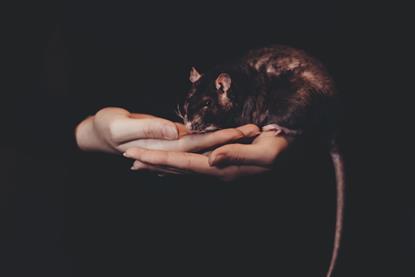
NewsStudy reveals how plague spreads through wild rodent populations
Mathematical modeling reveals how fleas with early-stage Yersinia pestis infections are insufficient to drive epizootic outbreaks but can help promote a low level of enzootic plague.
 Features
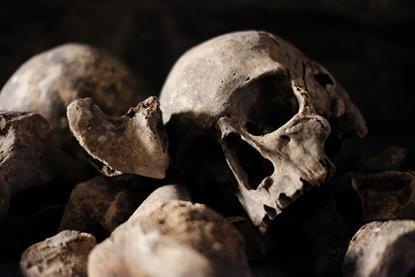
London's hidden plague pits
Bunhill Fields cemetery in the City Road is a quiet haven on the edge of the City of London, mainly attracting office workers seeking lunchtime tranquility or possibly a shortcut to the Artillery Arms pub in Bunhill Row.
- Previous
- Next