
All Dictyostelium discoideum articles
-
 News
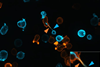
NewsNanotube connections between social amoebae
Scientists studying the social amoeba Dictyostelium discoideum found that, in addition to signaling molecules drifting from cell to cell freely or inside membrane vesicles, the amoebae also create tunneling nanotubes that physically connect the membranes of cells.
-
 News
NewsA common CRISPR platform enables comparative studies of multicellularity in social amoebae
Researchers have established a CRISPR genome editing technique that enables comparative analysis of the evolution of multicellularity across different species of social amoebas (cellular slime molds). Until now, genetic studies had been largely restricted to a single model species.
-
 News
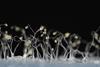
NewsSlime mold metabolites are a promising, eco-friendly repellent of root-knot nematodes
A team of researchers has discovered 14 compounds secreted by slime molds that repel root-knot nematodes (RKNs) - worm-like parasites of the genus Meloidogyne - and could be the source of new, non-toxic anti-RKN pesticides.
-
 News
NewsCould slime mold microbes be a source of potent antimicrobials?
The cellular slime mold Dictyostelium discoideum is a soil microbe that produces diverse natural products with potential antibiotic activity. In this study, researchers optimized lab culture conditions of Dictyostelium cells to boost the levels of low-abundance chlorinated compounds and to characterize their antimicrobial properties.
-
 Careers
My PhD with ADHD - Ana Paula reveals lab life as a neurodivergent student
Microbiology PhD student Ana Paula Guevara-Cerdán has struggled with ADHD all her life without knowing it - but her diagnosis earlier this year transformed her life in the lab, as she tells The Microbiologist during ADHD Awareness Month.