
All Early Career Research articles – Page 19
-
 News
NewsSummer studentship: Shen explores how a novel peptide can destabilise the outer membrane of E. coli
Li Shen reports back on his AMI-sponsored summer studentship which investigated a novel antibiotic adjuvant at the Centre for Bacterial Resistance Biology, Imperial College London.
-
 News
NewsAncient plankton hint at steadier future for ocean life
A team of scientists has uncovered a rare isotope in microscopic fossils, offering fresh evidence that ocean ecosystems may be more resilient than once feared. They analyzed nitrogen isotopes preserved in the shells of tiny plankton called foraminifera.
-
 News
NewsCould a fungus provide a blueprint for next-gen hydrogels?
New research finds one fungal species, Marquandomyces marquandii, shows promise as a potential building block for new biomedical materials. It can grow into hydrogels, materials that hold lots of water and mimic the softness and flexibility of human tissues.
-
 News
NewsNew herpes virus–based vaccine could cure cancer in the future without side effects
The Herpes simplex virus is a widespread virus that often causes cold sores, and most people carry it. By removing a virulence gene, i.e. a gene that makes the virus harmful to humans, the herpes virus can be repurposed as a cancer vaccine.
-
 News
NewsIndia could bear biggest impact from chikungunya, new maps suggest
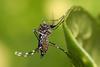
Based on existing evidence of chikungunya transmission, an infectious disease model predicts 14.4 million people could be at risk of infections globally each year, with 5.1 million people at risk in India.
-
 News
NewsCorals might be adapting to climate change, study shows
Researchers showed that despite a gradual increase in ocean acidity levels over the past 200 years, some corals seem to be able to adjust and continue to generate their hard, stony skeleton structures.
-
 News
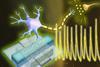
NewsEngineers use bacterial nanowires to create first artificial neurons that could directly communicate with living cells
Engineers have created an artificial neuron with electrical functions that closely mirror those of biological ones. Using protein nanowires synthesized from electricity-generating bacteria, the discovery could herald immensely efficient computers built on biological principles.
-
 News
NewsMicrobial DNA sequencing reveals nutrient pollution and climate change reinforce lake eutrophication
A new study using DNA sequencing of lakebed microbes reveals that nutrient pollution from agricultural runoff and climate change amplify each other in ways that profoundly affect the health of lake ecosystems.
-
 News
NewsSome plants can make their own fertilizer - scientists say they learned it more than once
In a new study, scientists show that chemical receptors that plants use to recognize nitrogen-fixing bacteria have developed the same function independently on at least three separate occasions through a process called convergent evolution.
-
 News
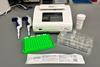
NewsNew one-hour, low-cost HPV test could transform cervical cancer screening in Africa and beyond
A team of researchers has developed a simple, affordable human papillomavirus (HPV) test that delivers results in less than an hour with no specialized laboratory required.
-
 News
NewsNew mechanisms for bacterial motility and DNA transfer between bacteria decoded
Scientists have discovered a new family of signaling proteins, widespread in the bacterial kingdom and contributing to regulating bacterial motility and DNA uptake mechanisms.
-
 News
NewsHot springs in Japan give insight into ancient microbial life on Earth
Iron-oxidising bacteria in the iron-rich hot springs suggest early microbes used iron and trace oxygen, not sunlight, as their primary energy source during the planet’s shift from a low-oxygen to a high-oxygen atmosphere about 2.3 billion years ago.
-
 News
NewsIn pregnant mice with severe flu, harmful molecules can breach fetal barriers
A new study shows, for the first time, that severe flu infection in pregnant mice leads to a breakdown in placental and brain barriers, leading to the accumulation of potentially harmful molecules in the fetal brain. Fibrinogen can pass into developing fetal brains.
-
 News
NewsHeadspace invaders: How mosquito-borne viruses breach the brain’s defenses
Using a stem cell-based model of the human blood-brain barrier, researchers compared two closely related Sindbis virus strains — one brain-invading and one not — and found that small changes in viral surface proteins called glycoproteins dictate whether the virus can cross.
-
 News
NewsKey to the riddle of sleep may be linked to bacteria
New research suggests a new paradigm in understanding sleep, demonstrating that a substance in the mesh-like walls of bacteria, known as peptidoglycan, is naturally present in the brains of mice and closely aligned with the sleep cycle.
-
 Careers
Summer studentship: Amelia investigates how Streptococci aggregate with other oral bacteria
Amelia Rohim reports back on her AMI-sponsored summer studentship which focused on the investigation of inter-species aggregation between oral bacteria at the University of Michigan with Dr. Alexander Rickard.
-
 News
NewsJie Xiao to receive 2026 Carolyn Cohen Innovation Award from The Biophysical Society
The Biophysical Society has announced that Jie Xiao, of the Johns Hopkins School of Medicine, USA, will receive the 2026 Carolyn Cohen Innovation Award.
-
 News
NewsStudy links chronic sickle cell pain to gut microbial imbalance
Researchers have found a clear connection between chronic sickle cell disease pain and the bacteria present in the gastrointestinal tract. The team alleviated chronic pain by transplanting bacteria from the feces of healthy mice into the digestive tract of sickle cell animals.
-
 News
NewsOral bacteria linked to Parkinson’s via the gut-brain axis
Researchers have identified the mechanism by which metabolites produced by oral bacteria in the gut may trigger the development of Parkinson’s disease.
-
 News
NewsYeast in gut microbiome can worsen salmonella infection
Researchers have discovered that a yeast commonly found in our gut can make infection with salmonella worse. Salmonella binds to Candida albicans and triggers a chain reaction that allows the bacteria to better invade cells lining the intestines.