
All Editorial articles – Page 203
-
 News
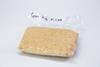
NewsMiso made in space tastes nuttier, researchers on the ISS find
A new study reveals how researchers successfully made miso on the International Space Station (ISS). They found that the miso smelled and tasted similar to miso fermented on Earth—just with a slightly nuttier, more roasted flavor. The team hopes this research will help broaden the culinary options available to astronauts.
-
 News
NewsUK’s first water monitoring center launched to act as early-warning system for disease outbreaks and community health
The University of Bath is launching the UK’s first early-warning public health surveillance system based on detecting tiny traces of chemicals and biological markers found in water.
-
 News
NewsNew agent inhibits Staphylococcus aureus toxin – hope for pneumonia patients
Researchers have developed a miniaturized test system that allowed them to screen over 180,000 compounds for their ability to block the effect of the key virulence factor α-hemolysin in S aureus. Drug candidates from the quinoxalinedione class, in particular the compound H052, proved to be highly effective, both in cell culture and in animal models.
-
 News
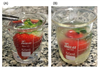
NewsEdible biofilm based on pomegranate peel extract extends the shelf life of strawberries
Fruit coated with the material showed 11% less weight loss during storage and took longer to start becoming contaminated by fungi.
-
 News
NewsUse of antifungals in agriculture may increase resistance in an infectious yeast
Genomic changes in the infectious yeast Candida tropicalis may play a role in its resistance to antifungals, according to a new study. These genomic changes can be brought on by a common antifungal, TBZ. The study demonstrates that the use of TBZ in agriculture may contribute to the increasing problem of antifungal resistance.
-
 News
NewsA new model is validated to predict the growth of listeria in artisanal fresh cheeses
Researchers have developed a new mathematical model capable of predicting the growth of listeriosis within food, making it possible to estimate the shelf lives of food products under different foreseeable storage conditions.
-
 News
NewsFAU secures $1.3 million NIH grant for breakthrough in HIV self-test technology
To address the urgent need for a reliable, rapid and affordable self-test for early HIV detection, researchers have been awarded phase-II of a five-year, $1.3 million grant which will support the development of an innovative disposable microchip technology designed for HIV-1 self-testing during the first two weeks post-infection.
-
 News
NewsNew Cedars-Sinai study shows how specialized diet can improve gut disorders
A new study examined whether a specialized diet could improve symptoms of gastrointestinal disorders linked to an imbalance in gut microbiota. The research tested the elemental diet’s effectiveness and explored whether improving its unappealing taste— a major barrier—could help patients adhere to the diet’s stringent protocol.
-
 News
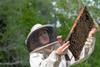
NewsScreening tool tests bee colonies by mimicking pheromones of death
A screening tool tests colonies for hygienic behavior by mimicking the pheromones emitted by sick or dying bees. The test can identify colonies resistant to several pests and pathogens that can decimate bee populations such as Vairimorpha (known to many beekeepers as Nosema) and fungal infections including chalkbrood.
-
 News
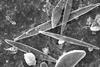
NewsA borrowed bacterial gene allowed some marine diatoms to live on a seaweed diet
A group of diatom species belonging to the Nitzschia genus gave up on photosynthesis and now get their carbon straight from their environment, thanks to a bacterial gene picked up by an ancestor, a new study shows.
-
 News
NewsScientists devise comprehensive resource on microbial cell factories for sustainable chemical production
Scientists evaluated the production capabilities of various industrial microbial cell factories using in silico simulations and, based on these findings, identified the most suitable microbial strains for producing specific chemicals as well as optimal metabolic engineering strategies.
-
 News
NewsMany TB cases may have gone undetected in prisons in Europe and the Americas during COVID-19
A new study found that reported diagnoses for tuberculosis were consistently lower than expected throughout the pandemic, even though incarceration rates remained largely consistent.
-
 News
NewsMpox could become a serious global threat, scientists warn
Mpox has the potential to become a significant global health threat if taken too lightly. Scientists highlight how mpox – traditionally spread from animals to humans – is now showing clear signs of sustained human-to-human transmission.
-
 News
NewsDeadly antibiotic-resistant ‘superbug’ bacteria spreading in Malaysian hospital
A virulent strain of antibiotic-resistant ‘superbug’ that causes severe disease has been found circulating in a Malaysian hospital - posing significant challenges to global public health, a new study reveals.
-
 News
NewsMOPEVACLAS vaccine candidate for Lassa fever enters clinical trials
After more than 20 years of research on arenaviruses, researchers have developed an original vaccine platform known as MOPEVAC. A Phase Ia clinical trial is set to begin for the platform’s first vaccine candidate, which targets Lassa fever, a hemorrhagic fever responsible for thousands of deaths worldwide each year.
-
 News
NewsResearchers develop machine learning model to predict virus reservoirs
A new artificial intelligence tool could aid in limiting or even prevent pandemics by identifying animal species that may harbor and spread viruses capable of infecting humans.
-
 News
NewsNew discovery boosts wheat’s fight against devastating disease
A new study reports a previously unknown molecular event that initiates the immune response to a major wheat disease. The findings provide strategies to engineer wheat that has stronger immunity against infection.
-
 News
NewsScientists tackle the rising global challenge of Chagas Disease
A study sheds new light on how the Chagas Disease parasite invades human cells—a crucial step towards developing effective treatments for this neglected tropical disease.
-
 Careers
Revolutionizing water safety: a rapid solution for detecting Shiga toxin-producing Escherichia coli contamination
Contaminated water is particularly dangerous in rural areas where private groundwater wells supply drinking water to households - but AMI One Health Advisory Group member Dr Zina Alfahl reveals a low-cost, simple way to check for STEC.
-
 News
NewsAI learns to ‘speak’ genetic ‘dialect’ for future SARS-CoV-2 mutation prediction
Researchers have developed a new method to predict mutations in virus protein sequences called Deep Novel Mutation Search (DNMS), a type of artificial intelligence model that uses deep neural networks.