
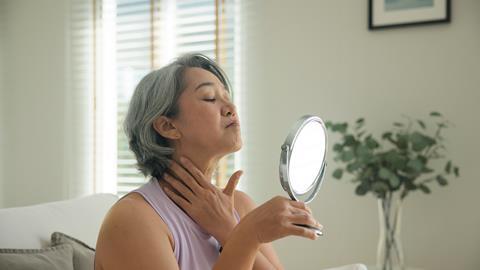
Menopause is defined as the permanent cessation of menstrual cycles – a natural ageing process involving a permanent decline in ovarian function. It is accompanied by substantial changes in women’s bodies – hot flashes, night sweats, insomnia, and mood instability are among the common complaints that start even before menopause.
During the transition period of menopause – which is categorised as pre-, peri-, and post-menopause – women experience radical hormonal and physiological shifts. The key player here is estrogen. Estrogen produced by ovarian follicles during reproductive years declines as follicle reserves diminish. With declining estrogen, the skin can be significantly affected. This is associated with atopic dermatitis, psoriasis, and hair loss in post-menopausal women.
These changes can be quite distressing and significantly impact women’s personal, social, and professional lives. For decades, skin concerns associated with menopause like dry skin, itching, and redness have often been dismissed as superficial cosmetic concerns inherent to biological ageing. But these changes may reflect the underlying shifts in skin biology.
What does the menopause do to skin?
Skin, being the largest organ in the human body, houses a diverse community of microorganisms - good (commensals) as well as bad (pathogens) ones, encompassing bacteria, fungi, and viruses, together referred to as the microbiome. When the balance between the two is breached, it can lead to skin-related diseases. The composition of these microorganisms depends heavily on the physiology of the skin. Our skin microbes work closely with our skin cells and help in maintaining the skin barrier, keeping harmful pathogens at bay and, in turn, supporting immunity. When this community is disrupted, a state known as dysbiosis weakens these natural defences and makes the skin vulnerable to inflammation and infectious diseases.
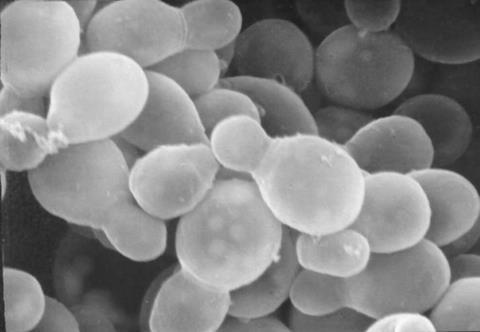
Malassezia predominates the skin mycobiome, along with C. albicans and Aspergillus. The composition of the skin fungi changes throughout life, including puberty and adulthood. A study published in npj biofilms and microbiomes, shows that Malassezia – a resident fungus – lives harmlessly on the skin and feeds on lipids in sebum (the skin’s natural oil). However, when estrogen levels drop and the skin runs low on oils, the sudden shortage of food makes the fungal species compete. It starts attacking skin cells, leading to inflammatory dermatoses – a condition commonly reported in women during menopause. These changes arise from reduced estrogen production and may explain how hormonal shifts alter the behaviour of the skin’s resident microbes.
To delve deeper, the researchers recruited 345 multi-ethnic Asian women in Singapore, categorised as pre-, peri-, and post-menopausal. They analysed the participants’ blood levels of Estradiol and follicle-stimulating hormone. Additionally, they also studied various skin properties, such as sebum production, pH levels, and skin barrier function. They collected cheek and scalp samples for further skin metagenomic sequencing analysis.
Metagenomic sequencing is an advanced multiomics tool that helps in mapping the skin microbiome in greater detail. By enabling high-resolution comparison of species, strains, and gene pathways found in healthy versus disease states, scientists can identify potential therapeutic targets. The metagenomic sequencing data revealed that menopause may alter the Malassezia community present in the skin. M. globosa and M. furfur were detected more frequently on the scalp and cheek skin of post-menopausal women compared to pre-menopausal women.
Their findings suggest that menopause-driven endocrine shifts turn the commensal Malassezia metamorphosis into a pathogenic invader, causing cellular damage. Researchers developed an in vitro co-culture model combining human skin cells and Malassezia to investigate their interaction. Laboratory experiments and transcriptomic analysis revealed that, once their population becomes extremely high, Malassezia can invade the keratinocytes (skin cells) and replicate within deeper epidermal layers. This cellular invasion in turn triggers and activates inflammatory pathways, exhibiting an aggressive inflammatory response and halting skin barrier repair – which replicates the conditions of dandruff and psoriasis, explaining why postmenopausal women experience skin sensitivity, itching, and inflammation.
Confocal microscopy revealed that Malassezia entering the keratinocytes is docked near the nucleus. However, future research is needed to confirm the exact cellular location and may pave the way to understand and develop targeted therapies for Malassezia-related challenges.
The researchers also noted some limitations in their study – namely, that their laboratory experiments and transcriptomics focused mainly on M. furfur. Different species of Malassezia may have varied responses to the skin cells. Therefore, further follow-up studies in human and in vivo animal models are necessary to establish a direct link between reduced estrogen levels and changes observed in post-menopause skin.
More than moisturisers
Skin is a living ecosystem which consists of a dynamic network of microorganisms interacting within themselves and with the skin cells. Menopause related skin conditions are more than cosmetic concerns; they need tailored skin treatment rather than the generally prescribed moisturisers or emollients.
Emollients only coat the surface rather than actually addressing the problem of fungal shifts resulting from falling estrogen levels. Topical corticosteroids are often prescribed to suppress the immune response elicited in skin conditions. However, long-term use of these corticosteroids can make people vulnerable to increased infection risk and other adverse effects. Targeted therapies focusing on specific immune blockers may offer a better solution.
Women’s dermatological health requires a fundamental shift in awareness among clinicians and the skincare industry regarding the ecosystem of ageing skin. Understanding the crosstalk between these microorganisms can pave the way for targeted therapies and improve women’s skin health in the case of menopause.
Kavi Bharathi R, PhD, is a freelance science writer based in Bengaluru, India.






No comments yet