
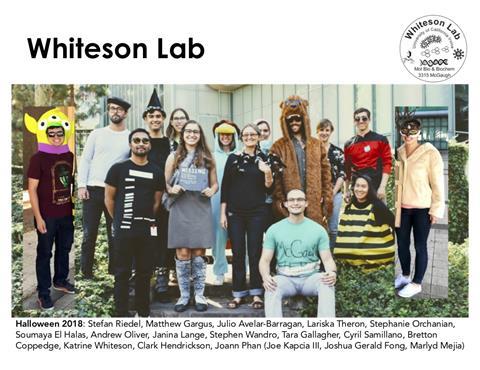
Part one of a series on the Microbiome Centers Consortium. When Katrine Whiteson moved her career around her family, she found herself helping to bridge two fields that have too often worked separately. At the UC Irvine Center for Microbiome Science, she and microbial ecologist Jennifer Martiny have built a place where soil scientists, cancer doctors and phage hunters work side by side.
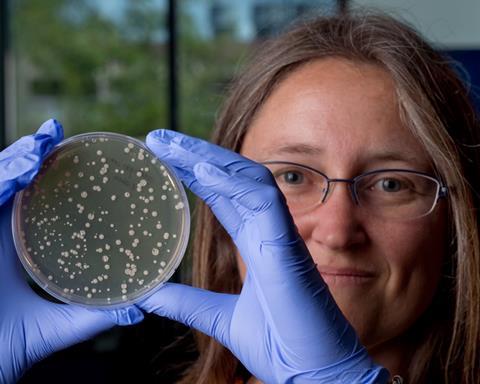
Every morning for several years, Katrine Whiteson walked into work through the emergency room doors of the University of Geneva Hospitals.
She wasn’t a patient and she wasn’t a doctor. She was a biochemist with a new PhD, a baby at home and a husband whose particle physics research tied him to CERN, just down the road. Her lab, the Genomic Research Lab, sat inside the hospital’s working clinical microbiology lab, where technicians spent the day processing swabs from strep throats and other ordinary infections.
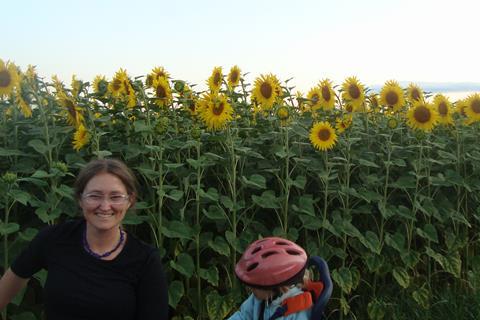
Alongside that routine work, something new was stirring. Her bosses, Jacques Schrenzel and Patrice François, were open to letting fresh research in, and through Laurent Farinelli’s company, Fasteris, they had access to an unfamiliar sequencing machine. Farinelli had worked on the Solexa technology, by then rebranded as Illumina. Whiteson and her team began collecting samples from healthy people, starting with their saliva, and sequencing everything in them.
“We didn’t know what was going to be in there,” she says. “In fact, a lot of the microbes we found were not in any databases. I was worried they were contaminants because they were so unknown. But in reality, we were discovering novel microbes, which we didn’t always realize at the time.”
It’s a great origin story. It very nearly didn’t happen.
“Would it be a dead end?”
A few years earlier, Whiteson’s husband had taken a job at the University of California, Irvine. She had a doctorate in biochemistry, training from Berkeley and Chicago, and a newborn. She was at a crossroads.
“That was a very hard year in my life,” she says. “I had a new baby, which made it really good. But career-wise, I was a bit at a loss. My classmates were flying around to postdoc interviews in the era of synthetic biology, but I didn’t have a clear lead in Irvine.”
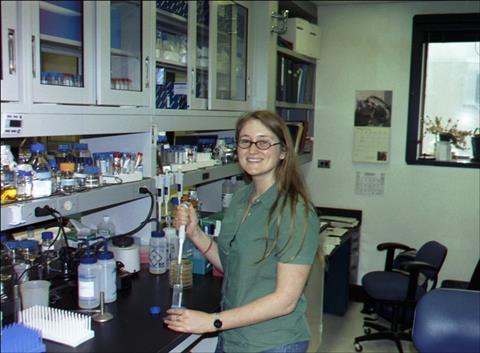
So she looked at what was happening near CERN, where her husband’s research was based, and found the hospital lab in Geneva. The detour gave her a front-row seat at the start of the microbiome sequencing revolution. It also gave her a problem. She had huge datasets and no idea how to analyze them.
“But guess who’s really good at that kind of analysis?” she asks. “Ecologists.”
A desk in someone else’s lab
Whenever the family came back to California so her physicist husband could teach at UCI, Whiteson got in touch with Jennifer and Adam Martiny, microbial ecologists at UC Irvine who were already well established in soil and ocean microbiomes. She asked if they could talk about her data.
Jennifer Martiny did more than talk. She gave Whiteson a desk.
“She was so helpful,” Whiteson says. “For a few years, whenever we were in California, I was kind of based out of her lab. I hope she understands how helpful she was to me. I learned so much.”
She sat in on lab meetings about soil communities and ocean phages, and she noticed something that would shape the rest of her career. Clinical microbiologists had mastered pathogens in ways that save lives. But when it came to thinking about whole communities, the environmental microbiologists were, in her words, “100 years ahead.”
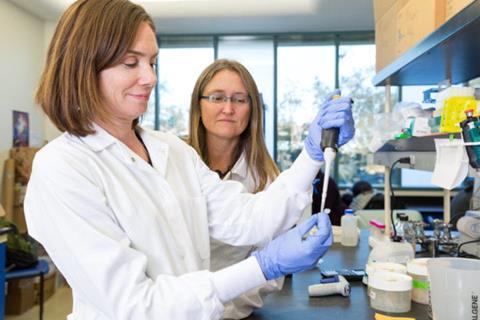
“The human side of microbiology was all about one pathogen at a time,” she says. “They weren’t thinking about communities. The seminars in Geneva were about antibiotic use in different regions of the world, and multivariate statistics were unusual.”
Whiteson was one of the human microbiome researchers who knocked on an ecologist’s door for help. She would not be the last.
A hundred knocks on the door
In 2014, Whiteson opened her own lab at UC Irvine as a human microbiome scientist. She arrived from a postdoc with Forest Rohwer at San Diego State University, where she had joined a critical mass of virome experts and studied the airways of people with cystic fibrosis. Then the emails started. About 100 researchers, most of them from the medical school, wanted to collaborate.
“Which is not something I could do by myself,” she says, laughing, “just as I was getting my first grad student.”
It was the same request she had once made of Martiny, now coming from a whole campus. Rather than turn people away, the two women took it on together. When the university provost asked for proposals for new campus initiatives, they applied and won three years of funding.
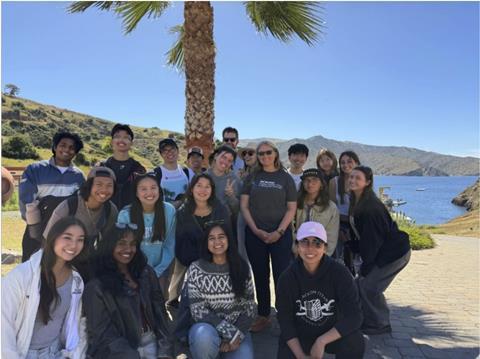
They set up a pilot grant program that ran almost entirely on in-kind support. Researchers sent in ideas, and the center paid them mostly in expertise, from consulting and study design to microbiome know-how built in from day one.
“A lot of clinical studies have a very different design,” Whiteson explains. “Having microbiome science infused from the beginning was a really good way to ensure success, and that the controls were in there.”
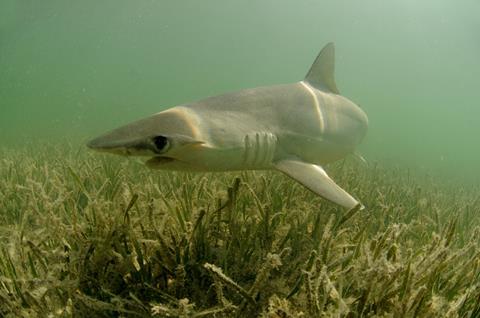
Over three annual calls for proposals, the center funded 29 projects. Its freezers now hold what Whiteson calls “every kind of sample,” from sharks that eat seaweed to “every kind of human bit you could think of.”
Graduate students were involved throughout. They ran workshops, sat in on consulting hours and provided bioinformatics support. They learned to talk with researchers from every corner of the university, and some were hired because of it. Many of the pilot projects went on to produce papers and lasting collaborations, and microbiome science spread into labs across campus.
From fragile start-up to 24 faculty
Whiteson admits the institutional details are not the fun part. For anyone trying to build a center, though, they may be the most useful part of the story, because they show how to survive once the start-up money runs out.
After three years as a provost initiative, the UC Irvine Center for Microbiome Science, known as UCI Microbiome, became a two-school center. It was backed by the School of Biological Sciences, where both Whiteson and Martiny are based, and by the School of Medicine. A few years later it became a provisional Organized Research Unit. Whiteson has just submitted the proposal to make it a full Organized Research Unit, which would bring five years of more stable support.
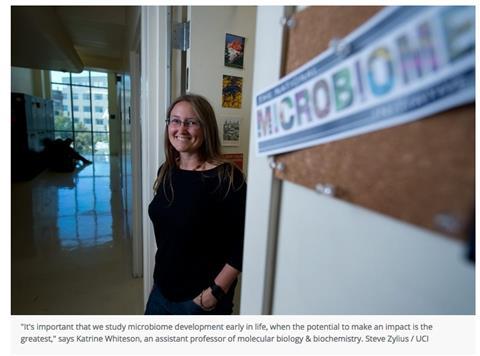
At the beginning, campus leaders worried about critical mass. “They were saying things like, ‘Yeah, but if one of you guys leaves, do we still have a center?’” she recalls.
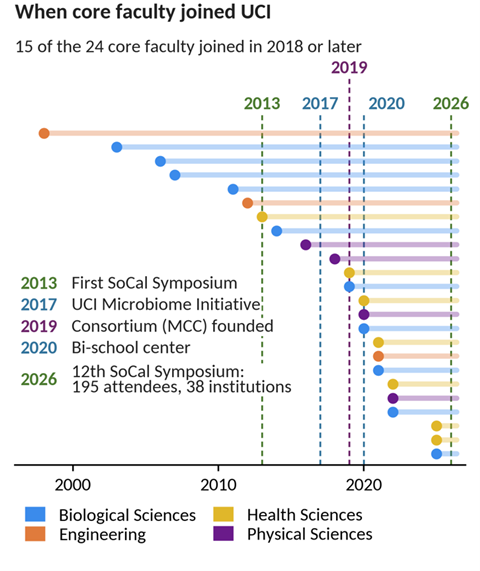
That worry is long gone. The center now counts 24 faculty from five schools and about 120 trainees. Some of that growth came from hiring rounds the founders led themselves. Their dean, Frank LaFerla, gave them two positions, and they turned them into three, hiring Travis Wiles, Toby Hammer and Maria Rebolleda-Gomez.
What began as a campus-wide resource for microbiome expertise has become a research community in its own right. With core faculty spanning environmental and human microbiomes, the center now takes on questions that no single lab, or single discipline, could tackle alone.
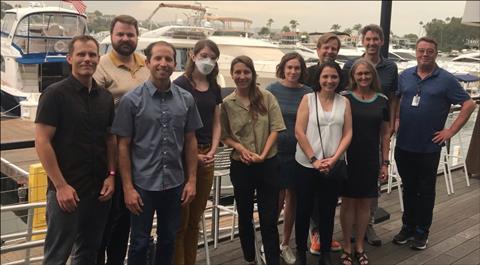
Thirteen of the 24 faculty are assistant professors, and many are about to go up for tenure.
“We’ve got this really young, excited, vibrant group of people,” Whiteson says. “When I was writing the center proposal, it was really easy to justify that this is the future of our science, and we should be investing in this.”
The same principles, everywhere
The idea that holds UCI Microbiome together is a phrase Whiteson repeats like a mantra. Cross-system microbiome science.
“We want to apply principles that emerge from environmental systems, like soil or ocean, to human systems, or vice versa,” she says. “We face major societal problems that don’t respect disciplinary lines, from antibiotic resistance to soil health and wildfire recovery, and microbiome science may help us solve them.”
When she presents her work on dietary fiber and the gut, the soil scientists in the audience get excited.
“They’re like, ‘Oh my gosh, you have the same enzymes in your gut that I have in the soil,’” she says. “Think about leaf litter on the ground, with microbes breaking down those fibers. That’s exactly what’s going on in your gut. And when you eat food that came from the soil, of course there are going to be connections.”
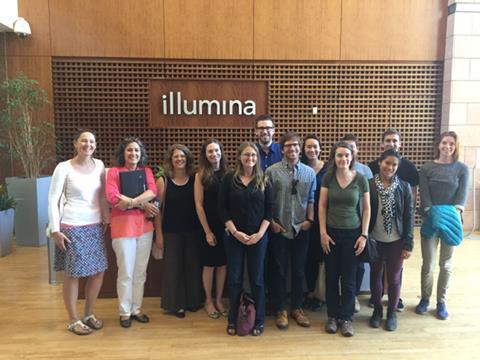
The center exists to create those moments, and Whiteson has watched them change people.
At this year’s Southern California Microbiome Symposium, Kristin Barbour, a former student of Martiny’s who is now a postdoc in Jack Gilbert’s group at UC San Diego, gave a talk on soil ecology. She described an experiment with tomato plants showing that the order in which potentially probiotic strains were added made a difference. Sitting in the audience was Angela Fleischman, an oncologist who has worked with Whiteson on diet studies for years and who studies how cancer cells evolve in the blood.
“It made this massive light bulb go off in her mind,” Whiteson says. “It changed her life. She was so excited. She’s been taking ecology classes online at Yale ever since.”
“A lot of the good, juicy stuff in science is at the intersection between fields,” she adds. “Environmental and human microbiology people have been existing quite separately. So that’s our center’s mantra.”
Eat your fiber, especially on antibiotics
Ask Whiteson what her science means for people outside the lab, and she answers immediately.
“There’s a message I want everybody to be hearing, because it’s very actionable,” she says. “The best thing you can do to help your gut microbiome is to eat dietary fiber.”
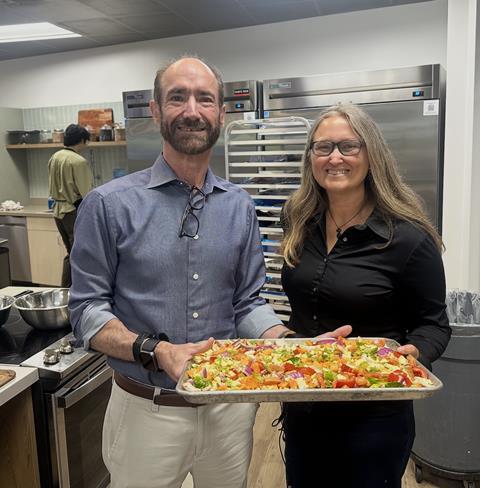
Fiber persists through digestion and reaches the colon, where anaerobic microbes ferment it into what she calls “all these healthy molecules.” It matters most, she believes, when you’re taking antibiotics or going through cancer treatment.
“If you have to take antibiotics, eating fiber may protect your microbiome,” she explains. “You give the anaerobes in your gut a place to shelter when the antibiotics come through, and the disruption will be much less.”
Behind that simple advice is a question science can’t yet answer.
Assistant professor Katherine Xue, who recently joined UC Irvine from Stanford, ran an unusual study there. Participants were given the antibiotic ciprofloxacin, and samples were collected from each of them, and from a member of their household as a control, for up to two years.
About three quarters of the 22 participants who received antibiotics bounced back within a couple of months. For the rest, the changes stuck. Microbes wiped out by the drug were not detected again during two years of follow-up.
The puzzle is that even with such detailed data, nothing in the study explains why that quarter of participants were affected for so long.
“I would have expected you’d say, ‘Oh yeah, that person had this going on with their health,’ or ‘They didn’t eat any fiber,’” Whiteson says. “But she had no clues. It would be nice to be able to say, ‘You’re the kind of person who’s at risk of a lasting response to antibiotics, and now we know what to do about that.’”
Antibiotics remain among medicine’s most powerful tools. “They’re powerful for a reason,” she says. But their effects on the microbiome are still poorly understood, and Irvine’s mix of ecologists and clinicians is well placed to work them out.
Glowing viruses, healing phages and an optimistic book
Whiteson has more to show off than she has time for. She sits on a PhD defense committee shortly after our conversation and needs to leave on time, so she runs through the highlights fast.
Her own lab works on phage therapy, which uses viruses that infect bacteria to treat disease. The team also studies how phages evolve, how they interact with their bacterial hosts and how they overcome resistance, all with the aim of making phage therapy more effective and reliable. “Our lab has discovered and produced phages that were used to treat people who have an infection that’s not being resolved,” she says.
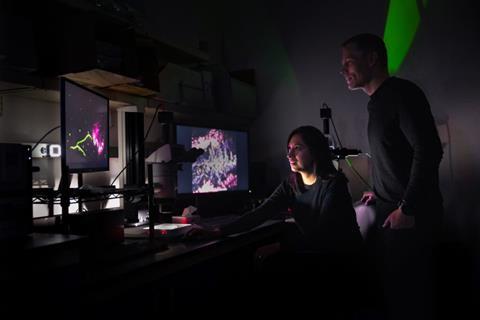
Down the hall, Travis Wiles makes phages that glow. His Phollow system, recently on the cover of Nature Microbiology, relies on a molecular tagging pair called SpyTag and SpyCatcher. The phage capsid carries the SpyTag. Each bacterial host makes a SpyCatcher fused to a fluorescent protein of a particular color, so new phage particles come out wearing their host’s color. When those phages infect bacteria that glow a different color, the next generation emerges in the new shade, and researchers can follow an infection as it spreads.
“This guy is a wizard with molecular biology,” Whiteson says. “This was his life dream, and he actually made it happen. The images are beautiful.”
On the environmental side, which makes up half the center, ecologist Steve Allison has recently published The Age of Microbes: A Blueprint for a Habitable Earth with Harvard University Press. Whiteson calls it a “very optimistic” book about how microbes could help humanity cope with climate change.
There’s more. Matthew Griffin, a chemist on the center’s faculty, is developing precision probiotics with an NIH Director’s New Innovator Award. Undergraduates take part in fiber interventions as part of Whiteson’s microbiomes course.
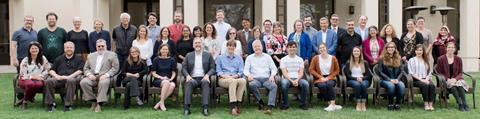
Then there’s the Southern California Microbiome Symposium, which began in 2013 and is California’s longest-running microbiome meeting. Whiteson organizes it with colleagues across Southern California. This year it was so oversubscribed that it became, in her words, “a hazard that I was responsible for, in a good way.” The room had 120 seats. A record 261 people registered. On the day, 195 came from 38 institutions, more than 100 of them trainees, and many ended up standing along the walls.
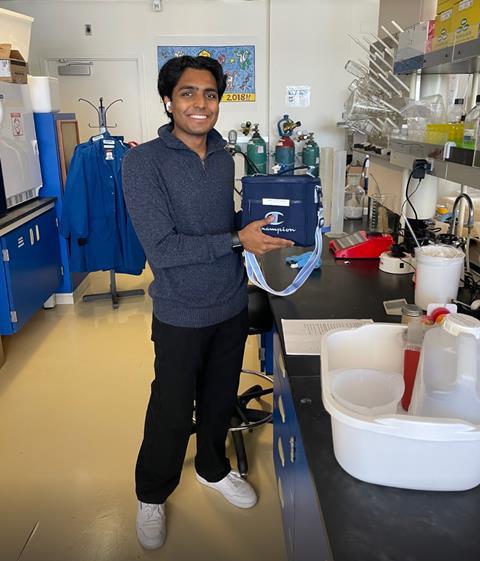
When Whiteson entered the field in 2008, microbiome papers came out in a trickle, few enough that she could read every one. The crowd lining those walls showed how far things have come.
A network born from a list
The microbiome boom happened on many campuses at once, and that led to the Microbiome Centers Consortium.
While Whiteson and Martiny were building their initiative, Jonathan Eisen at UC Davis began posting on social media about the microbiome centers appearing across the United States. His list soon passed a dozen.
“We were realizing that a lot of us were building these kinds of centers because it’s a new kind of science,” Whiteson says. “If you want to train scientists to do high-quality studies in a field that didn’t exist when we were in school, it helps to band together.”
Whiteson gives most of the credit to Martiny. The two used Eisen’s list to invite center directors to the Beckman Center of the National Academies of Sciences and Engineering in Irvine, so they could compare notes and, crucially, discuss how to keep their centers funded. The number of centers roughly doubled while the invitations were going out. The first meeting, in June 2019, brought together around 50 people from 28 centers.
“When the people all got in the room, there was so much energy,” she says. “Everybody wanted to stick together and do it again.”
They named themselves and planned to meet in Chicago in 2020. The pandemic pushed that meeting back to 2022. A third gathering took place in Irvine in June 2025, and the group now plans to meet roughly every three years. Membership has since grown to about 60 centers.
The consortium also published survey data on how its member centers are funded and organized. That paper has become, in Whiteson’s word, “ammunition.”
“A lot of other centers have used it when they go to their campus,” she says. “They can say, ‘Look, all these other centers have their campus’s support. So how about you support us too?’”
The generosity at the center of it all
What does Irvine want from other consortium centers? Not secrets. Templates, advice and honesty.
“It’s about sharing how you operate,” Whiteson says. “You’re writing a document to your campus: can you help me with this leadership part? How are you handling your future finances? When you do a contract for bioinformatics or a pilot project, do you have a template we could borrow?”
She has benefited from that openness herself. When the center was starting, Seth Bordenstein, now director of Penn State’s One Health Microbiome Center, sent her a contract template. Irvine’s pilot program was modeled on the in-kind scheme at the UC Davis West Coast Metabolomics Center.
Those agreements sound dull, but they protect the science. Before a project begins, everyone sits down and agrees in writing on the controls, the number of samples and how the study is structured.
“In the middle of that conversation, you sometimes realize the study design doesn’t quite make sense, and you have a moment to improve it,” she says. “Then a year later, when the baggie of crazy samples shows up, it corresponds to something that’s written down.”
That community spirit runs through the whole network, from Irvine’s freezers to Sue Ishaq’s work on microbes and social equity. When her name comes up, Whiteson’s answer is instant: “Oh, she’s amazing.”
Researchers can be protective of their methods. But the Microbiome Centers Consortium runs on shared spreadsheets, borrowed contracts and colleagues who make space for each other. It’s the same thing that happened years ago, when an ecologist gave a desk to a young biochemist exploring a new field.
At the end of the interview, already due to sit on a PhD examining committee, Whiteson apologizes: “I hope I gave you something usable.”
She gave plenty.
Further reading
UCI Microbiome, the center’s home page https://microbiome.uci.edu/
Microbiome Centers Consortium, the network linking about 60 centers https://microbiomecentersconsortium.org
“The emergence of microbiome centres”, Martiny et al., Nature Microbiology (2020), on the rise of microbiome centers https://doi.org/10.1038/s41564-019-0644-x
The 2017 microBEnet call to compile a list of academic microbiome centers https://microbe.net/2017/03/06/wanted-help-compiling-a-list-of-academic-microbiome-centers/
Katherine Xue and colleagues’ antibiotic study, bioRxiv preprint (2023) https://doi.org/10.1101/2023.09.26.559480
Phollow, the glowing phage system from the Wiles lab, Nature Microbiology (2025) https://doi.org/10.1038/s41564-025-01981-1
“An antibiotic alternative”, UC Irvine News (2025) https://news.uci.edu/2025/02/24/an-antibiotic-alternative/
Steven D. Allison, The Age of Microbes: A Blueprint for a Habitable Earth, Harvard University Press (2026) https://www.hup.harvard.edu/books/9780674290464
Genomic Research Lab, University of Geneva Hospitals, where Whiteson’s microbiome career began https://www.genomic.ch/
Nestlé Health Science study on lifestyle and gut health https://www.nestlehealthscience.us/stories/nestle-health-science-launches-landmark-study-uncover-impact-lifestyle-gut-health
Topics
- Angela Fleischman
- Bacteriophages
- ciprofloxacin
- Commercialising the microbiome
- Ecology & Evolution
- Fasteris
- Forest Rohwer
- Gut Microbiome
- Healthy Land
- Human Microbiome
- Jack Gilbert
- Jacques Schrenzel
- Jennifer Martiny
- Jonathan Eisen
- Katherine Xue
- Katrine Whiteson
- Kristin Barbour
- Laurent Farinelli
- Maria Rebolleda-Gomez
- Matthew Griffin
- Microbiome Centers Consortium
- One Health
- Patrice François
- Phage Therapy
- Phollow
- San Diego State University
- Seth Bordenstein
- Soil & Plant Science
- Solexa
- Southern California Microbiome Symposium
- Steve Allison
- Sue Ishaq
- Toby Hammer
- Travis Wiles
- UC Irvine Center for Microbiome Science
- University of Geneva Hospitals
- USA & Canada




No comments yet