
After 26 years, the US has lost its status of having eliminated the highly contagious measles virus, following two years of record case numbers and deaths.
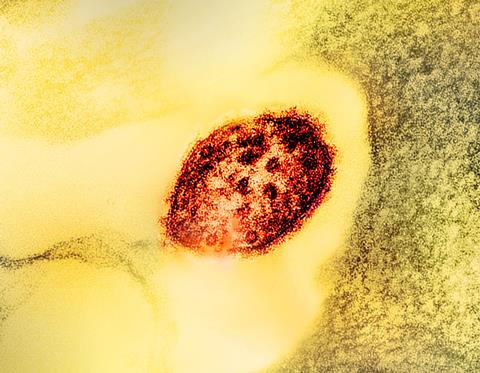
The Pan American Health Organization (PAHO), a service of the United Nations, determined the US has had uninterrupted transmission of the same strain of measles for more than 12 months. States have reported 10 measles-related deaths this year, the most the country has seen since the 1990s.
Dr Jarbas Barbosa, director of PAHO, announced that Mexico and Bolivia have also lost their measles elimination status, attributing the resurgence of measles in the region to persistent “gaps in vaccination”.
“These figures are a serious warning for our region,” Barbosa said at a news conference.
He added that Canada, which lost its status of having eliminated measles last year after seeing several large outbreaks, has made strides this year to interrupt transmission.
Action plans
Daniel Salas, the executive manager of immunisations at PAHO, said on Tuesday that the US and others who lost elimination status would be required to submit corrective action plans outlining how they would attempt to improve vaccination rates.
The UK, Spain and Austria were among European nations that lost their measles-free status earlier this year, along with countries including Russia, Azerbaijan and Uzbekistan.
Nuwan Gunawardhana, an assistant professor of medicine with Columbia University Irving Medical Center, said the US losing its elimination status was “a huge leap backwards”.
Global killer
The measles virus once infected millions of children a year before a vaccine was invented. The extremely contagious virus can be fatal, and some patients can experience long-term complications including encephalitis and immune amnesia, which resets the immune system, leaving it with only limited ability to respond to new infections.
The US recommends two measles, mumps and rubella (MMR) shots for children between ages one and six, which is 97% effective in protecting against the illness.
The US was the first country to eliminate measles in the Americas thanks to vaccination campaigns, noted William Moss, a paediatric infectious disease specialist at the Johns Hopkins Bloomberg School of Public Health.
Dropping vaccination rate
Many public health experts point to declining vaccination rates as the key culprit for the growing number of cases and outbreaks. CDC numbers show that back in the 2019-2020 school year, 95% of kindergarteners had the MMR vaccine, which dropped to 92% in the 2025-2026 school year. It leaves nearly 300,000 kindergarteners without protection from the virus.
Health officials consider a 95% vaccination rate as herd immunity, reducing the risk of outbreaks and say even a small reduction in vaccination rates can have devastating consequences to the public.
“Measles is incredibly contagious, and once vaccination coverage falls below critical thresholds, the virus can quickly find vulnerable communities,” said epidemiologist Dr. John Brownstein.
“Losing measles elimination status is an historic public health setback… We spent decades building the vaccination coverage and public health infrastructure needed to stop this virus from spreading continuously in the United States. To see that progress reversed is a stark reminder that these achievements are not permanent and cannot be taken for granted.”
The country has seen 5,400 cases of measles this year alone, the most it has recorded in a year since 1991.
An outbreak in Pennsylvania has infected over 1,400 people - likely a large underestimate - and killed seven people, according to state officials.
Regaining elimination status
The Centers for Disease Control and Prevention has said it is committed to regaining a measles elimination status.
“The measles elimination designation is not what protects Americans. Vaccination does. We know where transmission is occurring and we’ve invested $100 million in state and local health departments to reach those communities,” CDC Director Dr. Erica Schwartz said in a statement. “Losing a designation doesn’t mean we abandon an evidence-based approach. It means we remain focused on stopping outbreaks.”
In part of a statement, the Department of Health and Human Services said they “will continue working to stop transmission, close vaccination gaps, strengthen outbreak response, and protect Americans from measles. Secretary Kennedy and CDC Director Dr. Erica Schwartz continue to recommend MMR vaccination as the most effective way to prevent measles.”




No comments yet