
All flagella articles
-
 News
NewsToxic tail: Biologists find a hidden weak spot in how bacteria build the tails they use to move
New research has uncovered a previously unknown vulnerability in how bacteria build the whip-like tails they use to move. Building these tails can put stress on the protective wall surrounding a bacterial cell, and uncovered systems bacteria use to keep that stress from becoming destructive.
-
 News
NewsBacteria use wrapping flagella to tunnel through microscopic passages
A new study shows that certain symbiotic bacteria wrap their rotating flagella around their cell bodies to form a “screw thread.” This configuration lets them propel forward through one-micrometer-wide passages, such as those inside insect guts, that would otherwise trap or immobilize them.
-
 News
NewsSame moves, different terrain: How bacteria navigate complex environments without changing their playbook
New research shows that a diverse group of bacteria has learned how to use the same basic movements to move through a wide range of environments no matter how complex, from unconstrained fluids to densely packed soil and tissues.
-
 News
NewsA tug-of-war explains a decades-old question about how bacteria swim
Whether a bacterium’s tail spins clockwise or counterclockwise was previously thought to depend on a ‘domino effect’ among proteins inside the tail. However, new research proposes that a tug-of-war is the deciding factor.
-
 News
NewsNew imaging approach transforms study of bacterial biofilms
Scientists have reimagined the capabilities of atomic force microscopy, transforming it into a tool that captures large-scale biological architecture. This advance offers an unprecedented view of biofilm organization.
-
 News
NewsSpinning into resistance: the flagella’s hidden role
New research uncovers a direct connection between the rotation of bacterial flagella—structures used for movement—and the activation of genes that enable bacteria to transfer DNA to one another.
-
 News
NewsResearch using non-toxic bacteria to fight high-mortality cancers prepares for clinical trials
A promising research study in treating high mortality late-stage cancers with a non-toxic bacterial therapy - BacID - has proven to be safe and more targeted. The newly developed treatment would undergo clinical trials with cancer patients in 2027.
-
 News
NewsFlagella-free survival: How bacteria evolve by shedding their ‘wheels’
New research reveals that bacteria can evolve by losing their flagella, the structures responsible for movement.
-
 News
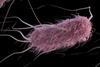
NewsScientists probe mechanism of robust motility in flagellated bacteria
Researchers say they have dispelled the idea that flagellar motors in bacteria are under high load during bacterial swimming.
-
 News
NewsResearchers discover how bacteria in deep-sea vents deal with toxic metal environments
A new study investigates how bacteria in deep-sea hydrothermal vents can survive and thrive in the presence of highly toxic copper and cadmium.