
All Fungi articles – Page 10
-
 News
Key magic mushroom ingredient makes fish less aggressive and lazier
Psilocybin, the chemical compound in magic mushrooms, may reduce energetically costly social behaviors like aggressive swimming bursts, shows a study demonstrating the first evidence of a calming effect in fish.
-
 News
Researchers uncover hidden health risks from urban airborne microbes
Researchers have discovered that seemingly insignificant microbial components in the air, including bacteria, fungi, viruses and cellular debris, pose a long-overlooked health hazard. Bacterial endotoxins can trigger inflammatory responses in the human respiratory system in nearly 20% of cases.
-
 News
Fungi utilize ancient antimicrobial proteins to attack hosts and their microbiomes
An international research team has discovered the surprising evolutionary origin of fungal effector proteins: molecules that pathogens use today to infect their hosts appear to have evolved from ancient antimicrobial proteins.
-
 News
New research finds that almost all plant-based meat alternatives contain mycotoxins
New research into plant-based food and drinks has found a prevalence of mycotoxins – naturally occurring poisonous compounds produced by fungi - in hundreds of vegetarian and vegan products.
-
 News
Moderate UV light is best to boost the vitamin D content of edible mushrooms, study finds
Researchers have discovered that moderate ultraviolet (UV) light exposure is best when the technique is used to enhance vitamin D₂ in edible mushrooms. Excessive exposure leads to nutrient degradation or a plateau effect, they found.
-
 News
Novel wheat hybrids increase resistance to major fungal disease by up to 70%
A new experimental study has identified a novel genetic locus in a common agricultural weed that provides significant resistance to Fusarium Head Blight (FHB) and has now been successfully transferred into wheat to produce FHB resistant hybrids.
-
 News
With large DNA fragment assembly, scientists can design microbes that produce countless complex products
A review demonstrates that scientists can now reliably build and combine very large pieces of DNA, making it much easier to redesign microbes such as yeast and bacteria to act as efficient “cell factories.”
-
 News
Mass mating event reveals how yeast find the perfect match
When choosing mates, yeast organisms tend to pick partners that may increase the chances of their offspring’s success, according to a new study which revealed a link between the success of the parents and the genetic distance between them, and the success of their offspring.
-
 News
Significant rise in valley fever cases in El Paso linked to extreme weather and dust
A new study has identified a significant rise in Valley fever cases in El Paso over the past decade and found strong connections between the disease and extreme weather, wind and airborne dust.
-
 News
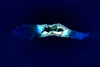
Data from Earth’s most remote atoll show soil fungi are key to island regeneration
Palmyra Atoll, a remote, uninhabited speck of land, coral and sea halfway between Hawaiʻi and American Samoa, is one of the healthiest, intact atolls on the planet—so ecologically sensitive that visiting researchers freeze their clothes at night to kill invasive species. Source: NASA NLT Landsat 7 (Visible Color) ...
-
 News
Rare orchid Paphiopedilum purpuratum mediates adaptation via a dual-fungal strategy
Paphiopedilum purpuratum, an endangered orchid species with critical conservation value, faces severe challenges in ex situ adaptation despite successful reproductive output. A novel study reveals the integrated physiological and symbiotic adaptation mechanism underlying its ex situ conservation.
-
 News
Intestinal Candida albicans is associated with subclinical coronary atherosclerosis in metabolic dysfunction-associated steatotic liver disease with cirrhosis
Researchers have published the first report of gut fungal dysbiosis associated with the severity of metabolic dysfunction-associated steatotic liver disease and subclinical coronary atherosclerosis. An increased abundance of fecal C. albicans was observed in patients with cirrhosis and high SCA burden.
-
 News
Researchers fight oral cancer with bioengineered chewing gum
Research shows that antiviral and antibacterial chewing gums reduce the levels of three microbes linked to worse outcomes in oral cancers, paving the way for more effective and affordable therapies.
-
 News
Scientists catch a fungal enzyme open for business
A new study shows that caspofungin, a widely used antifungal drug, works only when its target enzyme is active, pointing the way toward designing better treatments.
-
 News
Connected habitats help wildlife fight disease, strengthen protective microbes
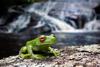
Maintaining connections between natural habitats may support beneficial microbes that help wildlife defend against disease. A new study found that amphibians in connected natural forests and aquatic habitats were more likely to host beneficial skin microbes that inhibit a deadly fungal pathogen.
-
 News
World-first shoe made entirely from pure mycelium unveiled at Milan Design Week
A prototype shoe made entirely from pure mycelium, the root-like network of fungi, will debut at Milan Design Week. The project is a collaboration between researcher and designer Lars Dittrich of Vrije Universiteit Brussel and head shoemaker Marie De Ryck at La Monnaie/De Munt.
-
 News
Some resilient fungi might survive the long voyage to Mars
Researchers recently identified fungi in samples from spacecraft-associated environments, including cleanrooms. Conidia grown from those fungi survived after exposure to simulations of the harsh conditions of Mars and space travel.
-
 News
Modeling premature aging in yeast reveals key effects of progerin on cellular lifespan
Researchers developed a yeast-based model to study premature aging by expressing Progerin, the toxic protein responsible for Hutchinson–Gilford Progeria Syndrome. Using genetically engineered yeast cells, they compared the effects of Progerin with its normal counterpart, Lamin A.
-
 News
Molecular biologist Li-Jun Ma wins 2026 Mahoney Life Sciences Prize
Li-Jun Ma has been chosen as this year’s winner of the Mahoney Life Sciences Prize for her work toward mitigating the effects of a fungal pathogen that is causing the functional extinction of the bananas most commonly found in U.S. supermarkets.
-
 News
Global strategy to combat drug‑resistant fungi is about to change
An increasing number of fungi are becoming resistant to medication, posing serious risks for patients with weakened immune systems. That is why fifty researchers from around the world are calling for action against drug‑resistant fungi.