
All Fungi articles – Page 11
-
 News
NewsEveryday foods could hide fungal risks for mothers and children
A collaborative, multi-institutional project will examine how exposure to zearalenone – a mycoestrogen produced by mold with estrogen-like activity – may affect pregnancy outcomes and children’s growth.
-
 News
NewsNew African species confirms evolutionary origin of magic mushrooms
A long-standing debate about the evolutionary origin of the world’s most widely cultivated ’magic mushroom’ – Psilocybe cubensis – may now have been settled. Scientists describe the discovery of a new species of magic mushroom from the grasslands of South Africa and Zimbabwe.
-
 News
NewsStudy writes the catalog of plasma membrane repair proteins
A new study identifies 80 proteins involved in plasma membrane repair in budding yeast, laying the foundation for membrane repair studies and future therapeutic applications.
-
 News
NewsResearchers make probiotic safer for immunocompromised patients
Researchers have modified a probiotic yeast to make it safer for use by immunocompromised people, older adults and infants. Testing in an animal model found the modified yeast is less likely to cause infection than unmodified strains of the same organism.
-
 News
NewsShifting from biotic to abiotic drivers of urban microbial multifunctionality under drought and rehydration
Scientists conducting microcosm experiments on Zoysia japonica, a common urban turfgrass, simulated four drought intensities and recovery by rehydration. They analyzed alteration in microbial communities and biochemical cycling to pinpoint the drivers of urban microbial multifunctionality.
-
 News
NewsScientists successfully harvest chickpeas from ‘moon dirt’
Scientists have successfully grown and harvested chickpeas using simulated “moon dirt,” the first instance of this crop produced in this medium. They added vermicompost and coated the chickpeas with the fungi arbuscular mycorrhizae before planting.
-
 News
NewsNew study reveals how hygienic honey bees show unique advantages in fighting infectious pathogens in adult bees
For the first time, research shows that a key social trait in honey bees is linked to measurable physiological advantages that can improve colony survival. The study uncovers how hygienic honey bee colonies mount stronger individual immune defenses against Nosema ceranae.
-
 News
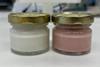
News Natural dye produced by Amazonian fungus can be used in cosmetics
A red extract made from Talaromyces amestolkiae was tested in the bases of potential products, including face cream, shampoo, and gel sticks, for its antioxidant and antibacterial properties.
-
 News
NewsTargeting the gut–lung microbiome to reduce infections in severe pancreatitis
Researchers report new clinical evidence that a fungal probiotic may reduce hospital-acquired infections in patients with severe acute pancreatitis. Patients receiving Saccharomyces boulardii alongside standard enteral nutrition experienced significantly fewer infections than those receiving nutrition alone.
-
 News
NewsThermo Fisher Scientific launches new color-based culture media to help detect Candida infections faster
Thermo Fisher Scientific today announced the launch of Thermo Scientific™ Brilliance™ Candida 2 Agar and Spectra™ Candida Agar, new color-based (chromogenic) culture media to help laboratories quickly detect and differentiate clinically important Candida species.
-
 News
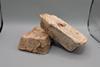
NewsGrowing buildings in space: researchers test fungi as construction material for moon, Mars
A NASA-funded project will investigate whether certain fungi can be combined with regolith — loose rock and soil found on the surface of the moon and other planets — to create materials that could one day support construction in places other than Earth.
-
 News
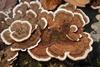
NewsStudy finds natural fungal supplement improves COVID-19 vaccine response
Researchers have found that a natural fungal supplement taken at the time of COVID-19 vaccination reduced short-term vaccine side effects and helped antibodies last longer in people who had not previously been exposed to the virus.
-
 News
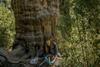
NewsUnderground fungal map of the world’s oldest, slowest-growing rainforest trees can boost the resilience of Earth’s long-term carbon sinks
Protecting and conserving old trees will protect hundreds, if not thousands, of mycorrhizal and other fungal species that inhabit soils around these giants, each of which play a role we might not fully understand in keeping these forests healthy and resilient.
-
 News
NewsAncient symbiosis between plants and fungi: Important insights for sustainable agriculture
Almost all plants live in close symbiosis with so-called mycorrhizal fungi – an important symbiosis for absorbing essential nutrients. Scientists have discovered that this mycorrhizal symbiosis is very sensitive to imbalances of certain nutrients in the soil.
-
 News
NewsBig and small dogs both impact indoor air quality - just differently
An initial study reports that dogs — both big and small — impact indoor air quality. The researchers found that small active dogs produced more airborne particles, but larger animals released more microbes into the air than people did.
-
 News
NewsCell-free DNA offers early warning for bloodstream infections in kids with leukemia
Researchers show that microbial cell-free DNA sequencing can predict bloodstream infections in children with leukemia days before the symptoms appear. Plasma microbial cell-free DNA sequencing (mcfDNA-Seq) offer a potential approach to protecting vulnerable patients by allowing treatment to start before the patient gets sick.
-
 News
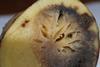
NewsEpigenetic rewiring fuels potato susceptibility to late blight
Scientists performed whole-genome bisulfite sequencing and RNA sequencing on the widely cultivated potato cultivar Qingshu No.9 following Phytophthora infestans infection, uncovering dynamic DNA methylation shifts that correlate with large-scale transcriptional reprogramming and immune suppression.
-
 News
NewsWorld’s first rum brewed with high ginjo-aroma–producing fission yeast Schizosaccharomyces japonicusponicus
Researchers at Kumamoto University have announced the world’s first rum produced using the fission yeast Schizosaccharomyces japonicus, marking a breakthrough in fermentation science and craft spirits innovation. The new product, “JAPONICUS RHUM AGRICOLE,” goes on sale February 27, 2026. Source: Kumamoto University Professor Tokio Tani (left) holds the ...
-
 News
NewsFungi could transform leftovers into lifelines
A new paper outlines an ’emerging circular fungal biorefinery’ – a system in which low-value agricultural byproducts are converted through fungal fermentation into high-protein, nutrient-rich foods.
-
 News
NewsSource or sink? Trees with heart rot disease emit more methane, upending forest carbon models
New research suggests that upland forests harboring trees with a common and incurable fungal disease known as heart rot could actually be emitting more methane than they take in, therefore releasing more greenhouse gases than previously thought.