
All Fungi articles – Page 6
-
 News
NewsYoung frogs “play it safe” when disease strikes
New research shows that young frogs prioritize growing quickly even when infected with a deadly pathogen, shifting energy toward immune defense only when infections become severe.
-
 News
NewsPathogens survive conditions on extraterrestrial locations
Microorganisms from our planet could survive on celestial bodies where water is present, such as Mars, reveals a study focusing on simulated space conditions. Our immune system reacts less effectively to pathogens that have undergone such a simulated space journey.
-
 News
NewsGlobal map of mycorrhizal fungi reveals true scale of underground networks
Researchers have produced the first global maps visualising the distribution and mass of the Earth’s arbuscular mycorrhizal fungal networks, revealing the true scale of this underground fungal infrastructure.
-
 News
NewsFungi help biochar and compost lock more carbon in nutrient-poor urban soils
A new field study shows that soil fungi can determine whether urban greenspace amendments build long-term soil carbon or accelerate carbon consumption.
-
 News
NewsFermentation science may offer new route to better lower-alcohol wine
In addition to finding ways to ferment grape juice without producing as much alcohol, one scientist is exploring novel yeasts and methods to overproduce aromas to compensate for their eventual loss when reducing alcohol through grape juice dilution.
-
 News
NewsMaterial extends shelf life and prolongs release of fungus used as bioinsecticide
Encapsulating Beauveria bassiana in a biopolymer made of cellulose and aluminum increased the viability of the fungus from 69% to 85% after five months of storage, providing a more sustainable alternative that releases the bioinsecticide.
-
 News
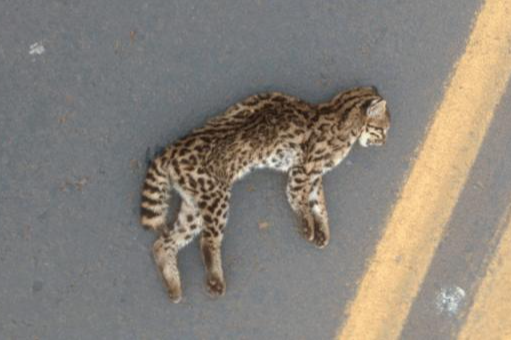
NewsPathogenic fungus transmitted by domestic cat scratches is present in wild animals
Researchers detected pathogenic species of Sporothrix in the internal organs of mammals, birds, and reptiles that were killed by vehicles on Brazilian roads. The study reveals a new reservoir for fungi and highlights the need for surveillance.
-
 News
NewsDolichol biosynthesis conserved across eukaryotes, not limited just to humans
Researchers say a newly proposed three-step “detour” pathway for making dolichol may be more universal than scientists realized. Experiments in yeast suggest eukaryotes may rely on overlapping biochemical pathways, including the evolutionarily conserved “detour” and evidence of a possible “backup route,” to produce a molecule essential to life.
-
 News
NewsGene swapping helped build the planet’s decomposers
Researchers have reconstructed the deep history of osmotrophic specialization in eukaryotes. Their findings suggest that four groups of eukaryotes which have specialized in osmotrophy first arose between 720 million and 1 billion years ago and that they share a toolkit of genes involved in osmotrophic functions.
-
 News
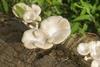
NewsIndigenous mushroom transforms agricultural waste into food
An edible, seasonal mushroom in Eastern Nigeria has nutritional and therapeutic potential but is poorly researched. New research suggests that domestication of Lentinus squarrosulus using waste materials, specifically sawdust, could boost food production and provide employment opportunities for farmers and small businesses.
-
 News
NewsProfessor Kaneko’s sake and wine earn honors at French Japanese Sake Competition for second consecutive year
At “Kura Master,” a Japanese sake competition held in France for French consumers since 2017, “Aldebaran,” a wine produced from grapes grown in the city of Ibara, in Okayama Prefecture, and supervised by Professor Akihiro Kaneko, won a Gold Award in the Muscat Bailey A category.
-
 News
NewsFrom spider silk to science: a new way to access hidden fungal diversity
A new study suggests that spider webs - particularly those incorporating environmental debris - can serve as natural, non-destructive collectors of fungal material in agricultural ecosystems. The findings show that viable fungi can be recovered from these structures, including lineages that may represent previously undocumented diversity.
-
 News
NewsLong-term biochar use can help cropland soils store more microbial carbon, but depth matters
A 12-year field study shows that biochar boosts stable microbial carbon in topsoil while reducing it in deeper soil layers, highlighting the need for depth-specific carbon management.
-
 News
NewsÖtzi and his microbiome: a 5,300-year-old relationship
Researchers have obtained a detailed picture of the microbial community associated with the Iceman mummy Ötzi. The study provides insights into a complex microbiome, ranging from the gut flora of a Copper Age human to cold-adapted yeasts.
-
 News
News‘Baked’, printed, ready – premiere of architecture made from yeast
Researchers have developed a new, entirely bio-based material from a somewhat unexpected ingredient: yeast. The material is 3D printed and customised for use in architectural and interior design elements that are currently made from non-renewable or fossil-based materials, such as plaster, plastic or synthetic textiles.
-
 News
NewsZinc deficiency promotes fluconazole-resistant Candida auris virulence
Researchers identified key nutritional and genetic factors that drive the virulence of fluconazole-resistant Candida auris. Under zinc-deficient conditions, these drug-resistant strains gain a fitness advantage, exhibiting increased pathogenicity and resistance to macrophage-mediated killing.
-
 News
NewsHow Chinese cabbage fights downy mildew
Researchers focusing on the Brassica rapa–Hyaloperonospora parasitica pathosystem identifies DM459 as an Arg–x–Leu–Arg (RXLR) effector that interacts with BraATG8i, activates autophagy, stimulates salicylic acid (SA) signaling, and enhances resistance to downy mildew.
-
 News
NewsBehind the diagnosis: How laboratory testing guided a complex histoplasmosis case
A diagnosis of histoplasmosis forced a teenager with juvenile arthritis onto an uncertain path, one defined by months of treatment, recovery, and a long-term course of antifungal therapy expected to last up to three years. Histoplasma capsulatum, a dimorphic fungus that causes histoplasmosis, found its way into her lungs.
-
 News
NewsSaltier soils may help biochar last longer, new study finds
Researchers found that higher soil salinity can slow the aging of biochar, helping it retain more carbon-rich, aromatic structures while reducing microbial colonization, especially by fungi.
-
 News
NewsProtective soybean seed fungicide treatment may not increase profitability
Researchers analyzed how seed treatments affect yield and profitability in soybean farms in the Midwest and found that yield gains were modest and often did not offset the added cost of the treatment. Additionally, financial benefit was likely only when seed treatment costs were low and soybean prices were high.