
All Fungi articles – Page 4
-
 News
NewsScientists receive DOW funding for fungal biotechnology research
Scientists have been awarded funding to develop new tools permitting high-throughput analysis of fungal genes. The grant focuses on species of Candida, which can contaminate and sometimes cause operational issues in DOW systems like aircraft fuel systems, vehicles, and electronics.
-
 News
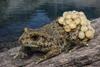
NewsMystery of why some toads survive deadly fungus revealed
The mystery of why some populations of amphibians recover following outbreaks of a deadly fungus has been solved in a new study. Researchers looked at peptides that the toads secreted from their skin – a key part of their immune defence.
-
 News
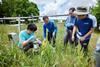
NewsSix years of drought reshape soil microbiomes in tallgrass prairie, study finds
A new study tracking soil microbial communities across six years of experimental drought in a tallgrass prairie finds that prolonged water stress diminishes biodiversity, pushing communities toward less predictable, harder-to-reverse configurations.
-
 News
NewsNew antiseptic capable of eliminating 99.9% of Candida parapsilosis cells
A 0.5% alcohol-based chlorhexidine antiseptic, combined with the natural organic compounds eugenol and menthol, can eliminate 99.9% of Candida parapsilosis cells. This fungus is one of the leading causes of infections in hospital settings.
-
 News
NewsGentian receives carbon through mycorrhizal fungi in addition to photosynthesis
Researchers have found that Gentiana squarrosa Ledeb. is partially mycoheterotrophic. The plant not only produces carbon through photosynthesis but also receives carbon through underground fungal networks.
-
 News
NewsThe broader a fungus’s diet, the better it kills insects and helps plants
Entomologists have discovered that a single underlying trait—metabolic breadth, or the range of nutrients a fungus can use—links its ability to kill insects, partner with plants and thrive in different ecological roles.
-
 News
NewsWild yeast discovery enables non-GM brewing of ornithine-enriched craft beer
Researchers have uncovered a naturally derived yeast mutation that boosts ornithine production while preserving brewing performance for value-added fermentation.
-
 News
NewsFrom infancy to old age, nationwide China study maps how serious lung infections change across life stages
An analysis of 695,142 hospitalized patients identifies eight life-stage pathogen profiles, three co-detection networks, and marked male predominance in bacterial and fungal infections.
-
 News
NewsGene-editing tool can unearth new cancer treatments from fungi
Engineers have developed a gene-editing tool built specifically for fungi, unlocking a hidden library of molecules—including some with early anti-cancer promise—from one of biology’s most overlooked kingdoms.
-
 News
NewsRice-grown chaga reveals genes behind valuable triterpenoids
New study links triterpenoid accumulation in Inonotus obliquus with rising expression of key biosynthetic genes, providing a genetic foundation for future work to improve sustainable production of Chaga-derived compounds.
-
 News
NewsBreakthrough study could unlock key to more reliable truffle cultivation
A pioneering study has revealed that growing truffles depends not just on soil conditions, but on a complex underground ecosystem that the truffles may help to engineer themselves.
-
 News
NewsDrone index tracks wheat mildew
A new study addresses the need for rapid, field-scale monitoring of wheat powdery mildew in smallholder farms, where disease spread can be spatially uneven and difficult to capture through manual scouting alone.
-
 News
NewsNew evolution platform creates tougher yeast for sustainable biomanufacturing
Researchers have now developed a powerful new tool that accelerates microbial evolution. Their study introduces RAMPAGE, a programmable system that continuously generates genetic diversity across the genome of the industrial yeast P. pastoris.
-
 News
NewsWidespread saprotrophs identified as the hidden engine of soil carbon decomposition
A nationwide study across China reveals that broad geographic distribution, rather than local diversity alone, determines which soil fungi actively fuel carbon decomposition and shape future carbon dynamics under climate change.
-
 News
NewsA 'copper economy' helps fungi and bacteria build better biofilms
Scientists have discovered that two common human pathogens can work together by managing copper in their shared environment - a finding that could open new ways to break down stubborn mixed biofilms.
-
 News
NewsEnvironmental fungi found to alter vaginal mycobiome and cervical disease progression during dysbiosis
Scientists have demonstrated for the first time that environmental fungi actively interact with the vaginal bacteriome and mycobiome with likely implications for cervical disease progression.
-
 News
NewsMicrobes rewrite the rules of cancer immunotherapy by triggering immunogenic cell death
A new study reveals that microbiota and their metabolites can effectively reprogram immunogenic cell death (ICD), a unique form of cell death that activates the body‘s immune system against tumors, transforming immunologically “cold” therapy-resistant tumors into “hot” responsive ones.
-
 News
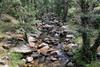
NewsThe climate crisis threatens river microbial biodiversity
A study warns that the biodiversity and biological functions of aquatic fungi in rivers are at risk due to rising temperatures, prolonged dry periods and the loss of riparian vegetation caused by climate change.
-
 Opinion
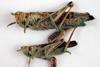
Fungi that inspired The Last of Us may hold the key to a pesticide-free agriculture
They may be the stuff of our nightmares, but Aditya Singh Ranout reveals how invisible allies underneath our feet in the form of entomopathogenic fungi are transforming agriculture - and why these fascinating microbes may hold the key to a pesticide-free agriculture.
-
 News
NewsNative litter jump-starts microbial recovery in mine soils
By applying litter collected from nearby native woodland to rehabilitated mine land, a study has shown increases in microbial diversity, enrichment of carbon- and nitrogen-cycling microorganisms, and stronger biochemical potential for soil organic matter decomposition and nitrogen mobilization.