
All Fungi articles – Page 12
-
 News
NewsScientists uncover how engineered biochar and microbes work together to boost plant-based cleanup of cadmium-polluted soils
A new study reveals how specially modified biochar can significantly improve the ability of willow trees to remove toxic cadmium from contaminated soils, offering a promising strategy for restoring polluted land in a sustainable way.
-
 News
NewsNovel structural insights into Phytophthora effectors challenge long-held assumptions in plant pathology
How do evolutionarily conserved pathogen effectors maintain structural stability while engaging diverse host targets? In a new study, researchers define a conserved subset of Phytophthora RxLR effectors in which short linear motifs (SLiMs) are embedded within folded WY domain cores.
-
 News
NewsStudying yeast in the gut could lead to new, better drugs
A new study sheds light on the behavior of yeast cells in the gut, paving the way for new lines of yeast that more efficiently produce therapeutic drugs tailored to address specific diseases.
-
 News
NewsA comparison of the efficacy of non-chemical versus chemical cleansers against Candida species on removable dental prostheses
A new review aims to systematically compare the efficacy of chemical and non-chemical denture cleansers in reducing Candida spp. on removable dental prostheses.
-
 News
NewsHealthier, tastier kelp: food scientists boost nutrition and flavour of kombu
A team of food scientists has found a way to unlock the trapped nutrients in the edible seaweed, kombu, and replace the strong odours with more appealing scents, directly overcoming the two major challenges – limited nutrient bioaccessibility and poor sensory experience.
-
 News
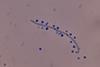
NewsFirst evidence of fungal pathogen becoming more deadly when co-infected with tuberculosis
Co-infection of Mycobacterium tuberculosis, together with Cryptococcus neoformans, is a grave public health concern, increasing the risk of death significantly. Researchers have found that in the presence of Mycobacteria, the fungus changed its cell density, cell diversity, and capsule size.
-
 News
NewsHope for global banana farming in genetic discovery
Scientists have pinpointed crucial genetic resistance to fight a fungal disease which threatens the global banana supply in a wild subspecies of the fruit. The team have identified the genomic region that controls resistance to Fusarium wilt Sub Tropical Race 4 (STR4).
-
 News
NewsInvasive death cap mushrooms are changing their chemistry
Scientists have just published new research about the chemistry of death cap mushrooms (Amanita phalloides) - the species is not only spreading rapidly as an invasive fungal species in the United States, but the move across continents has changed the chemistry of the species.
-
 News
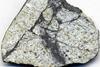
NewsMicrobes harvest metals from meteorites aboard space station
Microorganisms can harvest crucial minerals from rocks and could provide a sustainable alternative to transporting much-needed resources from Earth. Researchers have studied how those microorganisms extract platinum group elements from a meteorite in microgravity, with an experiment conducted aboard the International Space Station.
-
 News
NewsA yeast enzyme helps human cells overcome mitochondrial defects
An international team has experimentally uncoupled nucleotide synthesis from mitochondrial activity using ScURA, a yeast-derived genetic tool now available to the research community that will enable new explorations of cellular metabolism.
-
 News
NewsScaling up: Fungus plays key role in crafting spalted wood
A new standardized, scalable process deploys a fungal pest of deciduous trees to create a unique woodworking product - spalted wood, with its distinctive etched black markings.
-
 News
NewsBeneficial bacterium deployed to protect turfgrass from fungal foes
A novel strain of Bacillus subtilis helps a variety of plants resist soil‑borne diseases, retain moisture and develop stronger root‑to‑shoot growth. New findings on the effect of UD1022 on dollar spot disease suggests intriguing implications for manufacturing of biological treatments for the fungal disease.
-
 Features
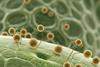
Yeast-plant interactions: nature’s silent partnership for ecosystems and agriculture
Plant–microbe interaction studies have increased greatly in recent years. This sharp increase in studies is attributed to the need to better understand these interactions, which in turn can be used to enhance crop productivity and stress tolerance, reduce fertilizer inputs, and improve plant health. This is vital to meet the ...
-
 News
NewsRecycling strategies of fungi can affect how forests store carbon
Some fungi are wasteful, while others recycle – and this can determine how much carbon is stored in a forest. Researchers have revealed how fungi manage their mycelium, the network that builds the structure of fungus. The results could provide new insights into the carbon cycle and climate.
-
 News
NewsBack from blight: Genomics offers a faster path to restoring the American chestnut
After more than a century of devastation from deadly blight, the iconic American chestnut tree could be brought back from the brink of extinction thanks to novel genomic tools and carefully bred hybrids, a new study finds.
-
 News
NewsRoot microbes could help oak trees adapt to drought
Microbes could help oak trees cope with environmental change. A study observing oaks growing in a natural woodland found that the trees’ above- and below-ground microbiomes were resilient to drought, nutrient scarcity, and exposure to pathogenic beetles and bacteria.
-
 News
NewsRapid response launched to tackle new yellow rust strains threatening UK wheat
The UK’s wheat is under threat from a newly identified strain of the yellow rust pathogen, prompting an urgent mobilisation of research institutes to protect harvests. The new strain has overcome a key resistance gene that was protecting many major UK wheat varieties from yellow rust infection.
-
 News
NewsAccomplices in the spotlight: When the interaction between fungi and bacteria becomes a dangerous alliance
Researchers discover new co-infection strategies of Candida albicans and Enterococcus faecalis. Only some E. faecalis strains significantly increased cell damage when infected simultaneously with Candida albicans. These strains produced cytolysin, a toxin that perforates cell membranes and kills the cells.
-
 News
NewsBee bandits: ecologists study mutualistic plant-pollinator-microbe interactions
Researchers studying nectar-robbing behavior in bumble bees suspect other organisms beyond plants and pollinators may be aiding and abetting pollinators in nectar-robbing behavior.
-
 News
NewsObesity linked to one in 10 infection deaths globally
Just over one in 10 deaths from a wide range of infectious diseases can be attributed to obesity worldwide, finds a major new study. People with obesity face a 70% higher risk of hospitalisation or death from an infection than those of a healthy weight.