
All Gut Microbiome articles – Page 34
-
 News
NewsBeneficial gut microbe has surprising metabolic capabilities
To address childhood malnutrition — which affects 200 million children globally — researchers at Washington University School of Medicine in St. Louis developed a therapeutic food that nourishes the collections of beneficial microbes that reside in the gut, and improves children’s growth and other measures of their health. ...
-
 News
NewsAntibiotics and antifungals may slightly affect Parkinson’s risk, study finds
A study has found that people who took multiple courses of penicillin antibiotics had a modestly lower risk of developing Parkinson’s disease, a surprising finding that researchers say highlights the complex relationship between bacteria in the digestive tract and brain health.
-
 News
NewsTire-wear particles disrupt gut-liver function in aquatic organisms
Researchers have uncovered the adverse health effects of tire-wear particles (TWPs) on aquatic organisms. The study focused on the hepatotoxicity of TWP leachates, revealing significant impacts on the gut-liver axis and oxidative stress levels in test organisms.
-
 News
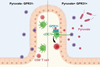
NewsStudy reveals how our gut cells detect harmful invaders
Researchers hve found that the GPR31 path in ‘gut surveillance’ cells detects bacterial metabolites and triggers immune responses, opening new possibilities for drug development, vaccines, and probiotics to fight infections.
-
 News
NewsBeyond gut health: prebiotics promise mental wellness
Research shows a prebiotic supplement can reduce inflammation. This could help with symptoms of stress, anxiety, and depression in people with metabolic syndrome.
-
 News
NewsResearchers reveal how mucin O-Glycans and food-derived glycoproteins link diet and gut bacteria
A research team investigates how mucin, a major component of the gut lining, and food-derived glycoproteins influence the growth of the bacterium Akkermansia muciniphila, revealing the complex interactions between diet and gut bacteria.
-
 News
NewsResearchers help redefine core microbiome, opening new chapter in precision health
A collaborative study introduces a novel method for identifying the crucial set of gut microbes commonly found in humans and essential for health.
-
 News
NewsStudy finds link between PFAS, kidney function and gut microbiome
In the first study of its kind, researchers found that problems with gut bacteria and related metabolites can help explain the link between ’forever chemicals’ and kidney damage.
-
 News
NewsScientists uncover role of the cpb2 gene in the survival of pig-derived Clostridium perfringens
A study has uncovered the genetic nuances of the cpb2 gene in Clostridium perfringens, a bacterium responsible for intestinal infections. The research indicates that cpb2 may enhance the bacterium’s persistence in swine.
-
 News
NewsScientists probe link between gut microbiome and spine health
Researchers looked at patients with and without lumbar degenerative spondylolisthesis to examine the differences in gut microbiome in the two groups.
-
 News
NewsMeet the Global Ambassadors: Our Q&A with Ni Luh Putu Harta Wedari
The Microbiologist chats with our new Global Ambassador for Indonesia, Ni Luh Putu Harta Wedari, a Clinical Microbiologist, Publication Consultant, and Editorial Board Member of Scientific Journals at Intisari Sains Medis Incorporation.
-
 News
NewsWild birds’ health and likely survival is affected by the gut microbiome
Researchers have found that the gut microbiome affects the health of wild birds, which could impact their survival rates and ultimately population sizes.
-
 News
NewsSmall RNA plays a crucial role in gut microbiome colonization
Scientists studying the transcriptome of gut bacterium Segatella copri came across a tiny snippet of RNA that plays an essential role in the reproduction and spread of the bacterium.
-
 News
NewsPossible trigger of Crohn’s disease discovered: Dysfunctional mitochondria disrupt gut microbiome
Disruptions of mitochondrial functions have an influence on Crohn’s disease, a connection now revealed by researchers who showed that defective mitochondria in mice trigger symptoms of chronic intestinal inflammation and influence the microbiome.
-
 News
NewsChronic stress accelerates colorectal cancer progression by disrupting balance of gut microbiota
Cutting-edge research has uncovered how chronic stress disrupts the balance of gut microbiota to speed up the progression of colorectal cancer (CRC), opening new avenues for CRC prevention and treatment.
-
 News
NewsLachnospiraceae could be key to successful fecal transplants
Fecal microbiota transplants are a magic bullet for patients with recurring infections from Clostridioides difficile (C. diff), but researchers are only beginning to understand why.
-
 News
News$5.6 million grant awarded to target treatments for IBS, Crohn’s and Ulcerative colitis
An “out-of-the-box” study has been awarded a $5.6 million NIH grant to target treatments for IBS, Crohn’s, Ulcerative Colitis and more.
-
 News
NewsGut microbiome has central role in human aging
The gut microbiome holds a central role in human aging, influencing everything from metabolic function to immune health, a new review shows.
-
 News
NewsGut hormones could hold the key to fighting fatty liver disease
A new study reveals the crucial role of intestinal absorption in preventing dietary-induced fatty liver disease.
-
 News
NewsMouse model clarifies link between prostate cancer and gut bacteria
Researchers have investigated whether a mouse model of the disease can be used to explore the underlying mechanisms behind the relationship of changes in the composition of gut bacteria and the risk and progression of prostate cancer.