
All Gut Microbiome articles – Page 35
-
 News
NewsSingle-cell genomics decodes bacteria genomes and uncovers new species
A team of researchers has developed a groundbreaking single-cell genome approach. This approach, which reads information from individual cells, offers a promising alternative to conventional metagenomics.
-
 News
NewsIn lab tests, dietary zinc inhibits AMR gene transmission
Genes responsible for antimicrobial resistance (AMR) can spread from microbe to microbe through plasmids, and this lateral transfer occurs in the gut - but transmission of some AMR plasmids may be inhibited by dietary zinc supplements.
-
 News
NewsExperts propose key criteria to classify prebiotics
A group of eight leading international scientists has developed a comprehensive framework that outlines the criteria for establishing prebiotic status, providing much-needed clarity in this evolving field.
-
 News
NewsGut microbiome and tumor cachexia: New European research network
EU project ‘MiCCrobioTAckle’ aims to investigate the complex interactions between the gut microbiome and the human body in order to find ways of slowing down muscle breakdown in tumor cachexia, while promoting young scientists for microbiota medicine.
-
 News
NewsCircadian disruption and gut microbiome changes linked to colorectal cancer progression
Research has revealed how disruption of the circadian clock, the body’s internal, 24-hour biological pacemaker, may accelerate the progression of colorectal cancer by affecting the gut microbiome and intestinal barrier function.
-
 News
NewsResearchers discover new bacterium that causes gut immunodeficiency
The new findings lay the groundwork for potential new treatments for variety of inflammatory and infectious diseases including inflammatory bowel disease, Crohn’s and ulcerative colitis.
-
 News
NewsResearch reveals surprising impact of gut microbiome on hormone levels in mice
Researchers have shown that the balance of bacteria in the gut can influence symptoms of hypopituitarism in mice, and that aspirin was able to improve hormone deficiency symptoms in mice with this condition.
-
 News
NewsFecal DNA testing could reduce global colonoscopy burden: experts
Experts gathered at the ICG 19 · Metagenomics for Health (ICG19·MH) & The 2nd MOHA Consortium have highlighted the global challenge of limited access to colonoscopy, the gold standard for CRC screening.
-
 News
NewsBetter together: Gut microbiome communities’ resilience to drugs
Many human medications can directly inhibit the growth and alter the function of the bacteria that constitute our gut microbiome. EMBL Heidelberg researchers have now discovered that this effect is reduced when bacteria form communities.
-
 News
NewsDietary fibre powers the multivitamin factory in your gut
A study has uncovered how dietary fibres can enhance the availability of gut microbiome-produced B vitamins to the host to impact immune health.
-
 News
NewsStudy reveals link between microbiome and aggression
A new study has unveiled significant evidence connecting the gut microbiome to aggressive behavior in mice. The research explores how disruptions in the microbiome, particularly due to antibiotic use in early life, can lead to increased aggression.
-
 News
NewsResearchers awarded $3 million grant to explore gut health
A $3 million grant has been awarded to investigate the energy generating processes of gut Bacteroides and how they impact our well-being.
-
 News
NewsScientists ID combination of bacterial strains that could treat antibiotic-resistant gut infections
Researchers have isolated 18 bacterial strains from stool from healthy people that could potentially be an effective treatment for antibiotic-resistant bacterial infections in patients with chronic inflammatory intestinal conditions.
-
 News
News‘Transient’ gut bacteria may affect health and guide diet choices
‘Transient’ populations of gut bacteria may contribute to the development of chronic liver disease and diabetes, but a personalised diet plan could lessen the risk, new research suggests.
-
 News
NewsBreastfeeding is crucial to shaping infant’s microbes, lowering risk of asthma
A study shows that breastfeeding beyond three months supports the gradual maturation of the microbiome in the infant’s digestive system and nasal cavity, the upper part of the respiratory tract.
-
 News
NewsNanozymes alleviate depression in rats by restoring gut microbiome
Researchers developed antioxidant carbon dot nanozymes (synthetic enzyme-like substances) that reduced oxidative stress, rebalanced gut microbes and alleviated stress-induced depression in rats.
-
 News
NewsScientists team up to track gut-brain connection in athletes with concussion
120 athletes are to take part in a concussion study with researchers to identify reliable and novel concussion biomarkers in their gut microbiomes in ways that standard brain imaging cannot.
-
 News
NewsComputer-aided biology can be deployed to develop tailored microbe communities
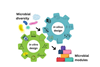
Researchers inspired by natural lichens want to develop the microbial networking manifested here as an example for future applications, as a contribution toward establishing interdisciplinary methods and technologies for CO2-negative processes.
-
 News
NewsGut microbiome influences location and type of immune cells
Researchers have found that different anatomical sections of the gastrointestinal tracts of mice carry different compositions of microbial communities, and the specific makeup of the microbiota can influence the type and abundance of immune cells in any particular region.
-
 News
NewsAntibiotic usage can damage the protective mucus layer in the gut
Researchers have found that a history of repeated antibiotic use causes defects in the normally protective mucus barrier of the gut, due to antibiotic-driven alterations in the microbiota.