
All Immunology articles – Page 39
-
 News
NewsResearchers reveal how fungi ‘manipulate’ the course of tumors
In pancreatic ductal adenocarcinoma (PDA), the abnormal colonization of fungal communities has become a research hotspot. New research indicates that Malassezia is not only a ’marker’ in the tumor microenvironment but also a potential driver of cancer development.
-
 News
NewsForever chemicals influence cellular immune response to coronavirus
A new study shows that PFAS influence the cellular immune response to coronavirus and also reveals sex-specific differences as to how the immune system reacts to the virus.
-
 News
NewsPredictive AI model can help build vaccines for future versions of a virus
Researchers have created an AI tool called EVE-Vax that can predict and design viral proteins likely to emerge in the future. For SARS-CoV-2, panels of these “designer” proteins triggered similar immune responses as real-life viral proteins that emerged during the pandemic.
-
 News
NewsScientists engineer antibody against flu with sticky staying power
Scientists have engineered a monoclonal antibody that can protect mice from a lethal dose of influenza A, a new study shows. The new molecule combines the specificity of a mature flu fighter with the broad binding capacity of a more general immune system defender. Source: NIAID Colorized transmission ...
-
 News
NewsViruses under the super microscope: How influenza viruses communicate with cells
Scientists have characterized a new model of influenza A infection: binding to MHC class II complexes as an alternative receptor and the associated dynamic reorganization of the cell surface.
-
 News
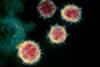
NewsSilver nanoparticles produced by fungus could be used to prevent and treat COVID-19
Silver nanoparticles produced by the fungus Trichoderma reesei could become important allies in the prevention and treatment of COVID-19. Tests on hamsters showed that they not only inhibited the infection but also reduced the viral load in the lungs.
-
 News
NewsLong COVID may cause long-term changes in the heart and lungs and may lead to cardiac and pulmonary diseases
Patients suffering from long COVID may exhibit persistent inflammation in the heart and lungs for up to a year following SARS-CoV-2 infection, potentially placing them at elevated risk for future cardiac and pulmonary conditions.
-
 News
NewsClinical trial underway for potential Long COVID treatment
A clinical trial is underway to assess the effectiveness and safety of sipavibart, AstraZeneca’s long-acting monoclonal antibody designed to provide protection against Covid-19, as a potential treatment for Long Covid.
-
 News
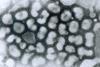
NewsScientists launch intranasal albumin-based vaccine technology platform against respiratory virus
A new paper reports on a novel vaccine technology platform, in which the subunit antigen is genetically fused to albumin. The albumin-antigen fusion vaccines induced both systemic and mucosal antigen-specific antibody responses.
-
 News
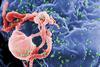
NewsAntibodies that recognize lipids: A new path for HIV vaccines and autoimmune disease treatments
Scientists have used computer modeling to illustrate how a specific class of antibodies actually use lipids to recognize the HIV virus. The work highlights antibody features that could help people design better vaccines for HIV and autoimmune diseases.
-
 News
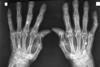
NewsScientists uncover the link between ‘good’ gut bacteria and rheumatoid arthritis
After spending years tracing the origin and migration pattern of an unusual type of immune cell in mice, researchers have shown how activity of “good” microbes in the gut is linked to rheumatoid arthritis and, potentially, other autoimmune diseases.
-
 News
NewsHerpesvirus protein mimics host enzyme to balance infection and latency
Researchers have uncovered a novel regulatory mechanism of CDK mimicry that may help herpesviruses coexist and expand within host cells while balancing host survival with viral persistence throughout the host’s lifespan.
-
 News
NewsHuman protein HSF2 helps wake up sleeping cancer-linked viruses
A new study demonstrates the ability of the human protein HSF2 to remodel the viral DNA to enable the transition from dormant viral latency to active lytic reactivation.
-
 News
NewsCOVID-19 vaccinations are metabolically safe, research finds
New research confirms that multiple doses of COVID-19 vaccines do not cause significant metabolic changes, offering reassurance for those concerned about potential long-term side effects of vaccination.
-
 News
NewsMeasles may be making a comeback in the US, research finds
If immunization rates drop further over a prolonged period of time, measles and even other wiped-out diseases — such as rubella and polio — could one day make a comeback in the United States, according to a new study.
-
 News
NewsInfluenza virus hacks cell’s internal system
The influenza virus manipulates the body’s gene regulation system to accelerate its own spread, according to researchers. Their study shows that an already approved drug could help strengthen immune defenses—though its effect in humans remains to be confirmed.
-
 News
NewsAntibiotic resistance: Towards drugs to disarm bacteria
Researchers have identified the mutation frequency decline (Mfd) protein, a virulence factor produced by all bacteria and essential for them to resist the host immune system. This protein has the additional function of promoting spontaneous and random mutations.
-
 News
NewsEuropean Immunization Week 2025: Inequalities in immunisation against measles could contribute to outbreaks
Research reveals inequalities in MMR vaccination that may contribute to measles outbreaks and epidemics, emphasising the importance of socioeconomic and demographic data in driving public health efforts.
-
 News
NewsBNT162b2 vaccine not only targets COVID-19 virus, but may also help control innate inflammation
New findings suggest the BNT162b2 vaccine may reduce the production of pro-inflammatory mediators to bacterial, fungal or viral infections by reprogramming innate immune cells to regulate inflammation.
-
 News
NewsBirds hold remarkable clues to fighting human and animal infections
Researchers have uncovered a remarkable evolutionary adaptation in birds that could hold vital clues for combating avian flu and respiratory infections in humans, including pneumonia and COVID-19.