
All Infection Prevention & Control articles – Page 53
-
 News
NewsNew 2025 data shows COVID-19 vaccines provide effective, durable protection
Updated COVID-19 vaccines are still providing effective protection against infection, emergency department visits, hospitalization and death, according to new research.
-
 News
NewsNew antibiotic for drug-resistant bacteria found hiding in plain sight
Chemists have discovered a promising new antibiotic that shows activity against drug-resistant bacterial pathogens, including MRSA and VRE. Pre-methylenomycin C lactone was ‘hiding in plain sight’ — as an intermediate chemical in the natural process that produces the well-known antibiotic methylenomycin A.
-
 News
News£4.56M Wellcome Discovery Award to investigate natural human resistance to Salmonella
The University of Liverpool’s Professor Jay Hinton and an international team have been awarded a £4,555,647 Wellcome Discovery funding to lead a five-year research programme exploring how some healthy humans are naturally protected from being infected by Salmonella Typhimurium.
-
 News
NewsStudy identifies viral combinations that heighten risk of severe respiratory illnesses in infants
A new study has revealed that, while a wide range of viruses can cause lower respiratory tract illnesses (LRIs) in infants, certain viruses and viral combinations dramatically increase the risk of severe disease.
-
 News
NewsHow HIV’s shape-shifting protein reveals clues for smarter drug design
Researchers determined the structure of HIV protein integrase during newly discovered function, enabling the development of better HIV therapeutics.
-
 News
NewsGroundbreaking new projects launched to lower the cost of monoclonal antibody production
LifeArc and the Gates Foundation have awarded more than $5m to seven projects aimed at developing cheaper and more efficient ways to produce monoclonal antibody (mAb) treatments. The innovative approaches include using filamentous fungus to produce mAbs.
-
 News
NewsHorizon Awards 2025: Dr Manu De Rycker named as winner of WH Pierce Prize
Dr Manu De Rycker, a Principal Investigator at the University of Dundee, has been named as the newest winner of the WH Pierce Global Impact in Microbiology Prize.
-
 News
NewsDNA from Napoleon’s 1812 army identifies the pathogens likely responsible for the army’s demise during their retreat from Russia
Microbial paleogenomicists extracted DNA from the teeth of soldiers from Napoleon’s ill-fated invasion of the Russian Empire and found no trace of typhus. Instead, they identified two pathogens known to cause enteric fever and relapsing fever.
-
 News
NewsProtection against winter vomiting bug spread with arrival of agriculture
Norovirus clears up after a couple of days, but the protection it provides is short-lived, meaning that the same person can fall repeatedly sick in a short space of time. But some people cannot succumb to the virus, thanks to a particular gene variant whose historical spread has now been traced.
-
 News
NewsNearly 1 in 5 urinary tract infections linked to contaminated meat
A new study estimates that nearly one in five urinary tract infections in Southern California may be caused by E. coli strains transmitted through contaminated meat – and people living in low-income neighborhoods are at the greatest risk.
-
 News
NewsNew compound cuts off protein supply to parasites
There is an urgent need for new active ingredients that are capable of circumventing existing resistances in malaria. Researchers have now identified a new drug candidate, ’Substance 31’, which could enable the development of a new malaria drug.
-
 Careers
Summer studentship: Owen investigates how fungal hyphae interact with lung cells
Owen Nicholson reports back on his AMI-sponsored summer studentship which investigated the role of Piezo1 in the immune response during fungal invasion of the human lung at the University of East Anglia.
-
 News
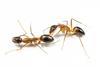
NewsAfter injuries, carpenter ants use amputation to stop potential infections from spreading
Carpenter ants are not squeamish when it comes to caring for the wounded. To minimise the risk of infection, the insects immediately amputate injured legs – thereby more than doubling their survival rate.
-
 News
NewsBay Area Lyme Foundation opens applications for 2026 Emerging Leader Awards and research grants
Bay Area Lyme Foundation, a leading sponsor of Lyme disease research in the US, has announced its call for applicants from academia and the private sector for the 2026 Emerging Leader Awards (ELA).
-
 News
NewsAI tool beats humans at detecting parasites in stool samples, study finds
Scientists have developed an artificial intelligence (AI) tool that detects intestinal parasites in stool samples more quickly and accurately than traditional methods, potentially transforming how labs diagnose parasitic infections around the world.
-
 News
NewsDangerous E. coli strain blocks gut’s defense mechanism to spread infection
When harmful bacteria invade through the digestive tract, gut cells usually fight back by pushing infected cells out of the body to stop the infection from spreading. Scientists have discovered that a dangerous strain of E. coli can block gut this defense, allowing the bacteria to spread more easily.
-
 News
NewsCommon source, common food vehicle: investigations of recurring Salmonella Strathcona outbreaks in Europe since 2011
Across 17 countries and over a time span of 14 years, 662 cases of the rare Salmonella type have been identified – and linked to small tomatoes from Sicily.
-
 News
NewsReport explores health, economic, and societal benefits of vaccination
A new report provides evidence on the advantages of immunization for individual and population health, economic outcomes, and societal well-being. Studies show that every $1 spent on childhood vaccines saves about $11 in avoided medical costs and preserved productivity.
-
 News
NewsBabies born eight to ten weeks early can be safely milk fed without risk of gut complications, finds a new study
A major study has found that babies born between eight to ten weeks early can be fed with milk through a tube in their stomach straight after birth rather than being given intravenous feeds through a drip.
-
 News
NewsGlobal platform for pandemic preparedness to be established at DTU National Food Institute
A new global online infrastructure aims to prevent disease outbreaks from developing into pandemics. DTU National Food Institute in Denmark will serve as the focal point for the new infrastructure. Work to build the platform will begin on 1 January 2026.