
All Infection Prevention & Control articles – Page 51
-
 News
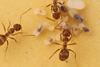
NewsDestroying crazy ant nest structure makes them vulnerable to pathogens
Scientists have devised a reliable way to introduce a natural pathogen in colonies, so that invasive tawny crazy ant populations collapse and other native species can recover.
-
 News
NewsStudy reveals that flu vaccine performance varies by age
New research comparing four different flu vaccines found that the ability of the vaccines to activate cells of the immune system that help to protect against infection varied greatly depending on the vaccine type and age of the patient.
-
 News
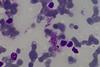
NewsCracking leishmaniasis: new DNA test to track infection
A new study offers an innovative way to track the spread of leishmaniasis, a parasitic disease affecting both animals and humans. Researchers developed a fast, reliable method to identify sand fly species, detect Leishmania parasites, and determine the source of their blood meals from a single sample.
-
 News
NewsMissing links for rabies in Peru highlights global threats of health inequity
Researchers found that efforts to track dog-related rabies in poorer areas of Peru’s second largest city were lacking even though more dogs were found to have the disease there than in wealthier neighborhoods.
-
 News
NewsEgypt becomes the seventh country in the Eastern Mediterranean Region to eliminate trachoma as a public health problem
The World Health Organization (WHO) today announced that Egypt has successfully eliminated trachoma as a public health problem, marking a historic public health milestone for the country and WHO’s Eastern Mediterranean Region (WHO EMR).
-
 News
NewsHuman PARP gene could be novel target for viral diseases or immune-mediated disorders
Researchershave discovered a human gene, the protein PARP14, plays a role in regulating interferon, part of the body’s innate immune system. Their study could guide development of antiviral therapies for several groups of viral infection.
-
 News
NewsBlood-based immunological signatures for extrapulmonary tuberculosis decoded
Scientists have deciphered the immunological properties of extrapulmonary tuberculosis (EPTB) in the blood of affected patients. The results may help to develop new targeted treatments and tests for this important disease.
-
 News
NewsFlu vaccine providing important protection despite new subclade
Children and adults across England are receiving strong protection from this year’s flu vaccine, despite the emergence of a new subclade driving an unusually early flu season.
-
 News
NewsNew drug target identified in fight against resistant infections
Researchers have identified new drug targets within a special repair system possessed by certain bacteria, known as Rtc, which enables them to counteract the effects of these antibiotics.
-
 News
NewsNo-needle test can tell if flu/COVID vaccines are effective
A team of researchers has developed a skin patch that can detect antibodies associated with COVID and flu infections. It’s orders of magnitude more sensitive than existing tests, uses just a half volt of electricity, and can return results in 10 minutes.
-
 News
NewsNewly discovered host mechanism in coronaviruses
A previously unknown cellular mechanism crucial to the replication of coronaviruses has been identified: c-Jun N-terminal kinase (JNK) is activated during infection with human coronavirus HCoV-229E and mediates the phosphorylation of the viral nucleocapsid (N) protein.
-
 News
NewsEvolving antibiotic resistance under pressure may lead to personalized treatment
A new study demonstrates the use of an experimental evolution approach to map genetic mutations in Acinetobacter baumannii treated with one of two uncommon antibiotics.
-
 News
NewsNew nasal vaccine has potential to transform respiratory disease prevention
Researchers have demonstrated that their nasally-delivered, antibiotic-inactivated Bordetella pertussis (AIBP) vaccine not only prevents severe disease but also curbs bacterial transmission — an achievement long sought by vaccine developers worldwide.
-
 News
NewsBiochemists search for cellular vulnerabilities in killer ‘superbugs’
Helen Zgurskaya and Valentin Rybenkov are leading a five-year, $5.3 million project funded by the National Institute of Allergy and Infectious Diseases to find new ways to deliver lifesaving drugs directly into resistant pathogens.
-
 News
NewsTemporary benefit for immune system in early HIV treatment, but dysregulation returns
A study investigated whether immune dysregulation can be prevented by starting HIV medication immediately after infection. Six months after this early treatment, the immune system did indeed work as in people without HIV, but in the longer term, the immune system was disrupted again.
-
 News
NewsCOVID-19 vaccination linked to reduced infections in children with eczema
Children with atopic dermatitis (AD), commonly known as eczema, may experience fewer infections and allergic complications if they receive the COVID-19 vaccine, according to new research.
-
 News
NewsScientists uncover tuberculosis bacterium’s ’heartbeat’, opening door to new treatments
Scientists have identified a molecular system inside Mycobacterium tuberculosis that functions like the organism’s heart or lungs, keeping it alive. The system, known as PrrAB, helps the bacterium generate energy and breathe. When researchers used a gene-silencing tool, the bacterium died.
-
 News
NewsNot just a common cold: studies show RSV’s severity and impact on long-term health
Often confused for a common cold, respiratory syncytial virus (RSV) can in fact be serious and should be studied more closely. Researchers found that the illness could be of comparable severity to other more well-known respiratory viral infections (RVIs) – such as influenza and COVID-19.
-
 News
NewsAI can speed antibody design to thwart novel viruses: study
Artificial intelligence (AI) and “protein language” models can speed the design of monoclonal antibodies that prevent or reduce the severity of potentially life-threatening viral infections, according to a multi-institutional study
-
 News
NewsNew study finds targets for a new tuberculosis vaccine
A large-scale screen of tuberculosis proteins has revealed several possible antigens that could be developed as a new vaccine for TB, the world’s deadliest infectious disease.