
All Innovation News articles – Page 31
-
 News
NewsMashed up purple marine bacteria make an excellent eco-friendly fertilizer
New research published in npj Sustainable Agriculture reports that biomass made from the purple photosynthetic marine bacterium Rhodovulum sulfidophilum is an excellent nitrogen fertilizer. Source: RIKEN Japanese mustard spinach grown in two inorganic nitrogen fertilizers (C1 and C2), and the biomass fertilizer at 1, 2, and 4 times ...
-
 News
NewsScientists can now detect antibiotics in your fingerprints – aiding the fight against drug-resistant TB
A fingerprint may soon be all a doctor needs to check whether tuberculosis patients are taking their antibiotics – thanks to a new study. Scientists successfully detected the drugs in finger sweat – and with almost the same accuracy as a blood test.
-
 News
NewsResearchers develop novel AI algorithm for analyzing microfossils
Microfossil analysis allows us to map the subsurface and understand past geological times. In research labs all over the world geologists spend countless hours looking through the microscope identifying and counting microfossils extracted from sedimentary rock below the seabed. Source: ZooFari Photo of an unidentified 10 million year ...
-
 News
NewsBreakthrough in nanoscale force measurement opens doors to unprecedented biological insights
Groundbreaking research has revealed a new way to measure incredibly minute forces at the nanoscale in watery solutions, pushing the boundaries of what scientists know about the microscopic world.
-
 News
NewsPaper-based biosensor offers fast, easy detection of fecal contamination on produce farms
Researchers are introducing a new biosensor technology to farms inspired by advances during the pandemic. The system delivered 100% accurate results within an hour of in-field sample collection on a commercial fresh produce farm.
-
 News
NewsSimple test for flu could improve diagnosis and surveillance
A low-cost CRISPR-based paper strip test distinguishes between influenza types and can be reprogrammed to recognize different viruses including the H5N1 bird flu virus.
-
 News
NewsRapid test for UTI wins $10m Longitude Prize on AMR to transform fight against superbugs
Sysmex Astrego’s PA-100 AST System has won the $10m (£8m) Longitude Prize on AMR. The winning test provides accurate antibiotic susceptibility results in 45 minutes – compared to the 2-3 day wait patients currently face.
-
 News
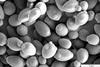
NewsScientists develop functional bread using probiotic yeast to help prevent asthma
Bread produced with probiotic yeast performed well in experiments with mice, showing potential to combat asthma, which affects 20 million Brazilians.
-
 News
NewsNew rapid detection of bacteria in pediatric blood samples
Researchers have demonstrated that a new technology called u-dHRM (Universal Digital High-Resolution Melt) could quickly and accurately diagnose bloodstream infections.
-
 News
NewsAI enables faster, more effective antibiotic treatment of sepsis
Sepsis is a life-threatening infection complication and accounts for 1.7 million hospitalizations and 350,000 deaths annually in the U.S. Fast and accurate diagnosis is critical, as mortality risk increases up to 8% every hour without effective treatment. Source: Ilanaer42 However, the current diagnostic standard is reliant on ...
-
 News
NewsLiving bioelectronics combine sensors and bacteria to heal skin
Researchers have created a unique prototype of a ‘living bioelectronic’ designed to treat psoriasis. The patch – a combination of advanced electronics, living cells and hydrogel – is showing efficacy in experiments in mice.
-
 News
NewsScientists adapt astronomy method to unblur microscopy images
To make adaptive optics more widely available to biologists, researchers have turned their attention to a class of techniques called phase diversity that’s been widely used in astronomy but is new to the life sciences.
-
 News
NewsNew HIV reporter model: Visualizing HIV viral dynamics in cells with dual fluorescence
Researchers have developed a novel viral reporter system that allows for real-time visualization of HIV dynamics post-viral infection. HIV-Tocky features dual fluorescence to illuminate the process of provirus silencing and reactivation.
-
 News
NewsIngestible microbiome sampling pill technology takes a step forward
Significant progress has been made in the development of a small device, about the size of a vitamin pill, that can be swallowed and passed through the gastrointestinal tract to sample the full inventory of microorganisms.
-
 News
NewsAlgae offer real potential as a renewable electricity source
Researchers have described extracting energy from the photosynthesis process of algae suspended in a specialized solution and housed in small power cells that can generate enough energy to power low- and ultra-low power devices.
-
 News
NewsInnovative phage lysin HY-133 enters phase I clinical study
HYpharm’s innovative preventive agent HY-133 has reached the first clinical trial phase. HY-133 is specifically effective against Staphylococcus aureus including multi-resistant strains and is intended to combat its colonisation in the nose.
-
 News
NewsNew 3D printed imaging device combines education and microbial research
Researchers have developed a 3D-printed imaging device for schools and research centres to study microbes. It enables schools to observe natural phenomena, while researchers will gain useful knowledge about the light-activated bacteria.
-
 News
NewsResearchers turn to AI to help combat malaria in Africa
The project is an international effort that will establish a new research center in Africa to advance malaria research and deploy advanced smart traps for real-time identification of mosquitoes carrying the malaria parasite.
-
 News
NewsVaccine approach offers promise to induce longer-lasting protective immunity against COVID-19
A scientific team has engineered a COVID-19 vaccine that induced – in pre-clinical models – very long-lasting, protective immunity against SARS-CoV-2 virus with a single-shot immunisation.
-
 News
NewsScientists invent ‘living bioelectronics’ that can sense and heal skin
Scientists have created a prototype for ’living bioelectronics’: a combination of living cells, gel, and electronics that can integrate with living tissue. The patches are made of sensors, bacterial cells, and a gel made from starch and gelatin.