
Innovation – Page 4
-
 News
NewsNew climate-based tool predicts coral bleaching months in advance
Researchers found that coral bleaching on a Caribbean island occurs when three major climate patterns in the Pacific and Atlantic Oceans align in specific ways that intensify ocean warming. They created a new, early-warning tool called the Bleaching Event Early Predictor (BEEP).
-
 News
NewsBiomaterial made from jackfruit latex is a promising treatment for periodontitis
Researchers have developed a biomaterial containing jackfruit latex, pomegranate peel extract, and simvastatin that shows promising efficacy in treating periodontitis. This chronic inflammatory disease of infectious origin leads to the progressive destruction of the tissues supporting the teeth, resulting in bone resorption and loss of attachment.
-
 News
NewsReal-time brain monitor detects infections earlier
A research team has created a new monitoring system to save lives and significantly reduce health-care costs in brain-injury cases through the early detection of infections in intensive care units. NeuroSense connects to drainage lines to detect biomarkers of infection.
-
 News
NewsNew fluorescent nanosensor enables first-of-its-kind detection of key gut health biomarker
Researchers have developed a novel fluorescent nanosensor capable of rapidly detecting indole-3-propionic acid (IPA), an emerging biomarker linked to gut health and disease. The sensor produces a rapid optical readout within minutes, offering a significantly faster and more accessible alternative to conventional analytical techniques.
-
 News
NewsGenetic engineering of cyanobacteria for the production of sulfated polysaccharide
Researchers have developed a novel strategy to genetically engineer bacteria for the production of sulfated polysaccharides. They demonstrated the successful transfer and functional integration of an entire gene cluster responsible for producing a sulfated polysaccharide known as “synechan.”
-
 News
NewsScientists develop an antifungal aqueous suspension to prevent fungal infections in crops and fruit
Researchers have developed an antifungal aqueous suspension for the prevention of fungal infections in crops and fruit during the pre- and post-harvest stages. The new formulation is aimed at the biotechnology and agricultural sectors.
-
 News
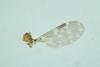
NewsInsect wing identifying app to tackle tropical disease threat
A mobile app that identifies disease-carrying insects from their wing patterns is being developed as part of a project using AI to help diagnose tropical diseases.
-
 News
NewsNew urine test for microbial metabolites offers simple way to screen for autism in children
Scientists have developed a new screening tool to test urine for 17 microbial metabolites in children ages 2 to 11 years. By measuring these compounds in urine, they discovered that they could distinguish children with autism from typically developing children in their study groups with high accuracy.
-
 News
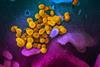
NewsNP14 aptamer: A novel biosensing recognition element for mutation-resilient SARS-CoV-2 detection
New research investigated a novel DNA aptamer, NP14, and developed an innovative dual-mode biosensing platform to achieve highly sensitive, mutation-resilient viral detection.
-
 News
NewsStudents develop milk pathogen test kit and win TED Youth Startup Grant
Inspired by the widely used and user-friendly COVID-19 strip test kits, a team of science students has developed a test kit for detecting pathogens in milk and dairy products. They combined the LAMP technique with strip test technology to create a simple screening tool for harmful bacteria.
-
 News
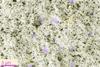
NewsNew ‘permanently wet’ coating method could transform wastewater treatment by helping bacteria survive better
Living bacteria embedded in coatings could clean wastewater, capture carbon and generate biofuels – if they survive the manufacturing process. Researchers have developed a method that keeps bacteria submerged throughout coating formation, increasing the number of surviving cells by around 500 times compared to conventional approaches.
-
 News
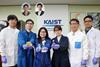
NewsScientists establish ‘eco-friendly bio-platform’ to replace petroleum-derived naphtha
KAIST announced on May 19th that the KAIST-Hanwha Solutions Future Technology Research Institute has secured bio-technology capable of mass-producing eco-friendly raw materials for plastics and textiles using waste resources, offering an alternative to petroleum-derived naphtha. Source: KAIST From Left: Hyun Bae Bang, Cheon Woo Moon, Cindy Pricilia Surya ...
-
 News
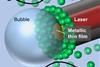
NewsOptical method concentrates microscopic targets for faster, more sensitive detection
Researchers have developed a light-driven technique that quickly amasses thousands of bacteria into a single spot, boosting detection speed and sensitivity. Their approach paves the way for earlier diagnosis of disease.
-
 News
NewsParaprobiotic counteracts damage to male fertility from BPA in plastic
BPA has been shown to impair sperm function, in part through increased generation of reactive oxygen species. Researchers investigated whether a paraprobiotic material derived from the lactic acid bacterium Enterococcus faecalis (known as FK‑23) protects against the sperm toxicity caused by BPA.
-
 News
NewsSynthetic biology leads to recyclable textiles: Engineered protein fibers for a cleaner future
Scientists have created protein-based materials, which are produced in bioreactors using genetically engineered microbes. These materials can be readily recycled after use and remade into the same fibers over multiple cycles. In addition, any microparticles, if released from these fibers during washing, would be biodegradable.
-
 News
NewsResearchers develop experimentally validated AI model to predict the virulence of tomato yellow leaf curl virus
A research team has developed DeepTYLCV, an accurate and interpretable artificial intelligence model for predicting the virulence of Tomato Yellow Leaf Curl Virus (TYLCV). DeepTYLCV uses viral genome-derived sequence information, enabling the model to identify mild and severe strains before symptom-based confirmation.
-
 News
NewsMeasuring SARS-CoV-2 diversity in wastewater improves disease surveillance
Tracking the genetic diversity of SARS-CoV-2 in wastewater, rather than just viral abundance, dramatically improves the ability to monitor and predict COVID-19 outbreaks, researchers report.
-
 News
NewsPenn researchers create AI tool to speed antibiotic discovery
Researchers have developed a novel, AI-powered method for turning promising but imperfect antibiotic candidates into more potent ones. ApexGO starts with a small number of imperfect candidates and improves them step by step, using a predictive algorithm to evaluate each modification and guide the next.
-
 News
NewsBiodegradable sensors attached to plants detect pesticides in three minutes
Researchershave created biodegradable, “wearable” sensors for plants to monitor their health, made from carbon ink and screen-printed onto transparent cellulose acetate bioplastics. They can monitor temperature, humidity, dehydration, biomarkers, diseases, nutrient levels, and the presence of pesticides.
-
 News
NewsResearchers develop AI tool to predict E. coli contamination in waterways
A new artificial intelligence framework will alert water managers to E. coli contamination risk before anyone falls sick. The AI-powered predictive modeling framework uses environmental and hydrometeorological data to provide early warnings of contamination in recreational waterways.