
A simple urine test may help identify children at risk for autism sooner than current assessments — opening the door for earlier diagnosis and treatment, and better long-term outcomes for children who do have autism spectrum disorder.
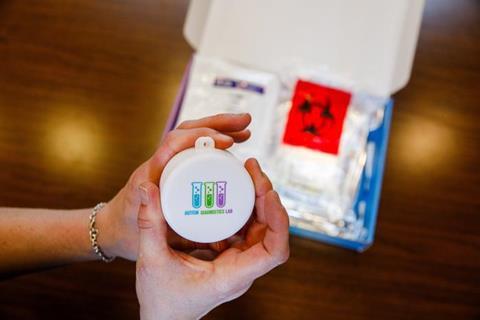
Arizona State University scientists and their collaborators have developed a new screening tool to test urine for 17 microbial metabolites — small molecules produced by microorganisms in the gut — in children ages 2 to 11 years.
By measuring these compounds in urine, the team discovered that they could distinguish children with autism from typically developing children in their study groups with high accuracy.
And understanding the biological diversity within autism could help guide more targeted interventions, including approaches aimed at restoring a healthy gut microbiome.
Biological pattern
The research, published today in Molecular Psychiatry, points to a consistent biological pattern in many children with autism — elevated levels of specific metabolites in the gut.
These included metabolites that come from tyrosine, tryptophan and phenylalanine — amino acids involved in key neurotransmitter pathways — as well as other compounds connected to yeast and fungal activity.
The new classification tool is called the “Microbially-Derived Metabolite (MDM) System.” The system assigns a score based on how many metabolites in a child’s urine exceed a typical reference range.
High levels
“What we’ve discovered is that 80 to 90% of children with autism have extremely high levels of one or more microbially derived metabolites,” said Christina Flynn, first author of the study and a recent ASU PhD graduate. “Using this test will tell you which young children are at high risk for being diagnosed with autism, and guide treatment in those who have already been diagnosed to help them lead their best lives.”
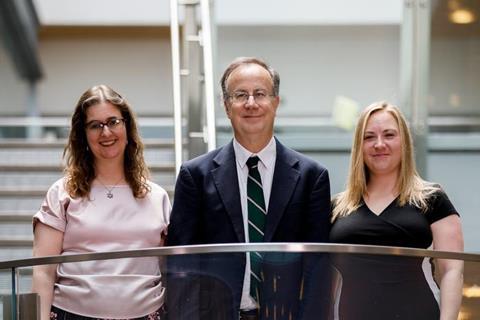
Flynn completed her doctoral studies in chemical engineering in December through the Ira A. Fulton Schools of Engineering at ASU. Her research is part of work through the Biodesign Center for Health Through Microbiomes in the Biodesign Institute at ASU. She is now the research director for the newly launched CLIA-certified Autism Diagnostics Laboratory and serves as a senior research scientist for Gut Brain Axis Therapeutics.
Promising accuracy
During trials, the urine test showed promising accuracy, with 90% sensitivity and 100% specificity. That means it correctly identified 90% of the children with autism, and did not misidentify any of the children without autism in the study.
Additional confirmation of the test’s accuracy is underway to further validate the test due to the moderate sample size of the study.
Using advanced research techniques, the team measured the concentration of microbially-derived metabolites in 52 children diagnosed with autism spectrum disorder, and 47 typically developing children ages 2 to 11 years. Children from four geographic locations, including Arizona, Massachusetts, Tennessee and Texas, participated in the study.
The differences were clear: Nearly all children with autism had at least one metabolite level exceeding the highest observed in the control group, with some levels measuring 100 to 1,000 times higher. On average, children with autism spectrum disorder had about three elevated metabolites, while typically developing children had none.
Key neurotransmitters
“What’s really striking about the bacteria is that they make metabolites that are basically altered versions of serotonin and dopamine,” said President’s Professor James Adams, corresponding author of the study and a researcher with the Biodesign Center for Health Through Microbiomes.
“These are two key neurotransmitters that affect mood, cognition and memory. This could explain many of the symptoms and co-occurring symptoms in children with autism — their social communication, anxiety, depression and attention,” he said. Adams is also the father of an adult daughter with autism.
“We think reducing the levels of these metabolites may help these children lead healthier and happier lives, and we encourage children to be screened sooner to receive earlier interventions,” said Adams, also with the School of Engineering of Matter, Transport and Energy, part of the Ira A. Fulton Schools of Engineering.
Earlier intervention
Current diagnostic tests depend on behavioral observations, and many families face long wait times for answers. Better developmental outcomes are linked to earlier identification and earlier intervention, whether medical, behavioral or educational.
“We hope there is a reduction in stigma and shame associated with the condition,” said Flynn, who herself is a parent of a child with autism. “Sometimes diagnostic hesitancy happens because parents feel like they’re not good enough parents and they’re being judged. But that’s not the case because if we can detect it in urine, it’s a biology-based condition. Hopefully that will prevent any hesitancy on parents’ parts to seek treatment and seek it as early as possible.”
While the urine test is not a stand-alone diagnosis, the researchers say this can help move children to the front of the line for evaluation and specific support.
A biological window into autism
Beyond screening, the findings also point to a possible biological pathway involved in many cases of autism. The metabolites measured in the test are largely produced by the gut microbiome. Some are known to affect the brain and are linked to neurotransmitters including serotonin and dopamine, which play key roles in mood, cognition and behavior.
This study is consistent with over 40 other studies which have found that many of the microbial metabolites measured in the MDM System are significantly higher in children with autism.
The team cautions that their research does not prove these metabolites cause autism, even though some of them are strongly associated with symptoms associated with the disorder.
Proposed new subtype
And based on their findings, the researchers propose a new subtype of autism called “ASD associated with microbially-derived metabolites,” or ASD-MDM. This phenotype encompasses about 90% of cases of autism spectrum disorder. Approximately 10% of children with autism in the study did not have abnormal gut metabolites, however, most of those children had other major metabolic problems possibly associated with genetic disorders.
“For more than 15 years, I have been doing research on the gut microbiome and its potential contributions to human health, and autism spectrum disorder has been at the core of our research,” said Professor Rosa Krajmalnik-Brown, co-author of the study.
“I am excited about the MDM test, which includes important microbial metabolites, previously hypothesized to be linked with autism. This test can be a great way to assess this important microbial contribution,” said Krajmalnik-Brown, director of the Biodesign Center for Health Through Microbiomes at ASU.
Microbiota-based therapies
Some preliminary research suggests that interventions such as microbiota-based therapies may influence metabolite levels and improve symptoms in certain individuals. For example, the team’s first clinical trial of microbiota transplant therapy found that the treatment resulted in a substantial decrease in one microbial metabolite, p-cresol sulfate, accompanied by substantial improvements in gut symptoms and behavioral symptoms. However, the authors emphasize that more rigorous clinical trials are needed before such approaches can be widely recommended.
The test, developed as part of Flynn’s doctoral research, is moving toward broader availability. Analutos, a partner lab in the United Kingdom, is already offering the urine test internationally.
For younger children, the test may serve as a triage tool. For those already diagnosed, it may help clinicians explore underlying biological factors and monitor how interventions affect the body over time.
Cautious optimism
The researchers stress that more studies are needed to validate the findings across larger and more diverse populations, and to better understand how these metabolites are related to the development of autism.
Still, the potential impact is significant. Autism affects an estimated 1 in 31 children in the United States, and the lifetime cost of care averages $3.6 million per person.
Earlier detection and more personalized approaches could help improve quality of life — not just for individuals, but for entire families.
“For many families, one of the biggest challenges is the waiting — the not knowing,” Flynn said. “If this test shortens that gap, even by a little, that’s meaningful because earlier intervention can really help.”
The study’s collaborators included researchers from Arizona State University, Harvard Medical School, Rensselaer Polytechnic Institute and clinical research centers in Tennessee and Texas.
Topics
- Analutos
- Arizona State University
- autism
- Autism Diagnostics Laboratory
- Christina Flynn
- Clinical & Diagnostics
- Early Career Research
- Gut Brain Axis Therapeutics
- Gut Microbiome
- Gut-Brain Axis
- Harvard Medical School
- Innovation News
- James Adams
- microbial metabolites
- Microbially-Derived Metabolite (MDM) System
- neurodiversity
- One Health
- p-cresol sulfate
- phenylalanine
- Rensselaer Polytechnic Institute
- Rosa Krajmalnik-Brown
- screening tools
- tryptophan
- tyrosine
- USA & Canada
- Young Innovators

No comments yet