
Helpful microbes that combat harmful pathogens could be the answer to rising antimicrobial resistance - particularly within built environments such as hospitals, homes and schools.
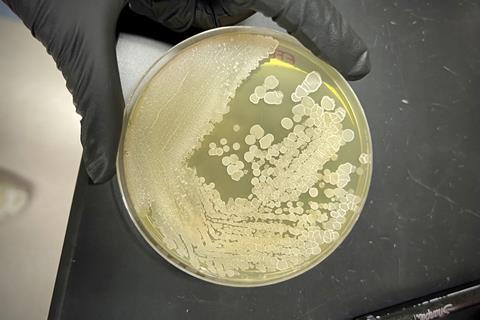
That’s according to a fascinating new review that discusses the ongoing threat of antimicrobial resistant infections and why current prevention and treatment methods fall short.
‘Bioactive environments to combat antimicrobial resistance: artificial intelligence and model-driven microbial biocontrol for living materials’ is a review carried out by researchers at University of California San Diego and has recently been accepted for publication by the Journal of Applied Microbiology, an Applied Microbiology International publication.
It also dives into how AI and metabolic modelling approaches can inform how we design, develop, and test more effective biocontrol strategies.
Global health threat
“Antimicrobial resistance (AMR) is a global public health threat, projected to cause 8-10 million deaths annually by 2050. The persistent failure of current antibiotic treatments has led to the assertion by some that we are already in the post-antibiotic era. More research is needed to develop effective strategies that can prevent infections in the first place,” said lead author Dr. Kathleen Furtado.
MICROBIOLOGY NEWS: Register with The Microbiologist for more free articles
“Extensive cleaning with chemical disinfectants is our current frontline defense, but this approach is not always effective at removing resistant pathogens, and certain cleaners can even promote more resistance development. We discuss using microbial biocontrol as a complementary approach to combat antimicrobial resistance. In other words, using “good” microbes to outcompete, directly inhibit, and/or occupy space such that pathogens cannot gain a foothold.”
Microbial control so far
To date, microbial biocontrol has been tested in agriculture, for livestock and soils, and in various built environments, in particular hospitals.
But in built environments, the outcomes of microbial biocontrol have been inconsistent, with some studies citing large reductions in pathogen prevalence while others have seen little effect. These inconsistencies are likely due to several factors, like genetic differences between the strains used, undefined mechanisms for how those strains could be inhibiting pathogens, environmental stressors that vary between facilities, nutrient variability on different built environment surfaces, what other microbes are present in that environment, etc.
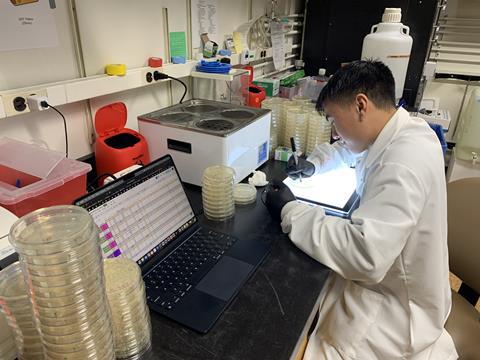
Moreover, the current regulatory landscape for microbial biocontrol in built environments lacks a consistent approach for risk assessment, which is a significant barrier to implementation. The review argues that AI and modeling can help account for these variables and guide testing for risk assessment.
How AI can help
“This review adds to our understanding of the field by highlighting how AI can synthesize information from microbial metabolic modeling, multi-omic datasets, and more focused lab experiments,” said Dr Furtado.
“We describe how AI and models can make microbial biocontrol more feasible, specifically by predicting how biocontrol microbes might interact with existing communities or pathogens, by identifying potential risks (e.g., likelihood for resistance genes to spread), and by integrating context-specific information about a given environment to better predict how microbes might interact in the real-world.
MICROBIOLOGY ON TAP: Get full access to all The Microbiologist articles from just £2.17 a month
“We describe how these models fit within iterative design-test-learn cycles: laboratory and multi-omic data inform metabolic models and can collectively be used to build AI foundation models. These models generate predictions which then inform new experiments to validate and/or further improve existing models. This iterative cycle of prediction, validation, and continually filling gaps in our models serves to promote the development of innovative, effective, and safe biocontrol.”
The built environment
Microbes for biocontrol could be deployed in built environments in sprayed cleaners; this approach has been tested and certain formulations are even commercially available, although the data on their efficacy is mixed.
However, these formulations could be improved by selecting strains that are most likely to survive and be active against pathogens in built environments, which is where modeling approaches would be particularly helpful.
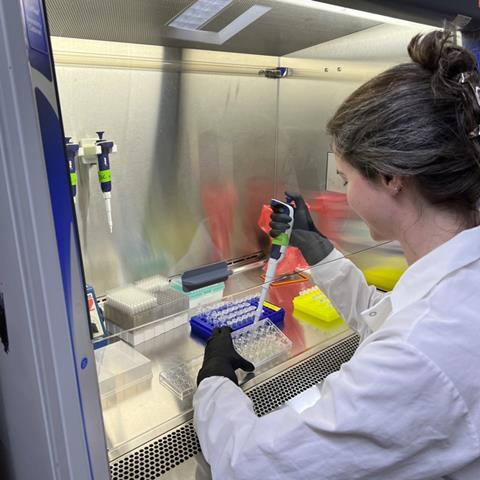
“We also discuss how microbial biocontrol may be implemented using engineered living materials (ELMs), which could allow for sustained biocontrol and enhanced biosafety. ELMs involve growing or embedding/printing microbes into materials that are suitable for construction (e.g., ceramics, concrete, cellulose),” Dr Furtado said.
“Microbes can even be encapsulated in materials to prevent their escape, which would further reduce any potential human health or environmental risks, while still allowing for competitive inhibition (e.g., by competing for nutrients or secreting compounds that inhibit pathogens).
“Modeling could further enhance this approach by identifying materials that optimally balance supporting survival and activity of the biocontrol microbe with structural integrity.”
Next steps
Dr Furtado warns that any insights gained from using AI and metabolic modeling must be experimentally validated to ensure the microbes and engineering approaches used are effective and safe.
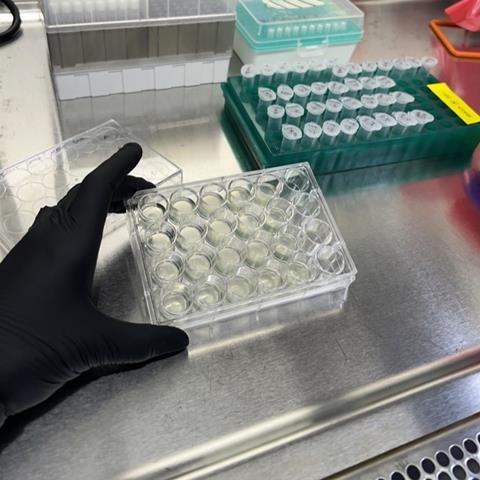
“Also, we still know relatively little about how microbes behave in real-world, built environment settings - specifically, the extent to which potential competitive mechanisms are actually expressed by biocontrol microbes in these settings. More mechanistic experiments are needed, and AI-guided model predictions provide a potential way to identify, prioritize, and design these experiments,” she said.
This review was led by Dr. Kathleen Furtado and Dr. Jack Gilbert, with support from Dr. Maxwell Neal with extensive expertise in metabolic modeling approaches.
‘Bioactive environments to combat antimicrobial resistance: artificial intelligence and model-driven microbial biocontrol for living materials’ is published in the Journal of Applied Microbiology.
Topics
- AMR in the Environment
- Antimicrobial Resistance
- Applied Microbiology International
- Artificial Intelligence & Machine Learning
- Community
- Infection Prevention & Control
- Infectious Disease
- Jack Gilbert
- Kathleen Furtado
- Maxwell Neal
- microbial biocontrol
- One Health
- Research News
- University of California San Diego
- USA & Canada






No comments yet