
Soil microbes are the invisible architects that link humans, animals, plants, and the environment. Coevolution has shaped Earth’s ecosystems for over a billion years. However, climate change and unprecedented anthropogenic activities have placed immense pressure on the soil ecosystem over the past few decades.
Modern agriculture, particularly intensified farming practices that rely heavily on synthetic agrichemicals (such as nitrogen fertilisers), has significantly boosted agricultural productivity, but at the colossal cost of declining soil fertility, reduced environmental sustainability, and potential impacts on human health. Worse still, excessive use of agrichemicals can impair beneficial plant-microbial interactions.
There is an urgent need to develop sustainable and eco-friendly agricultural solutions that can continuously feed a growing global population, while minimising the environmental carbon footprint. Understanding and harnessing the soil microbiome could provide solutions to these challenges and build a more sustainable future.
Soil: a hidden world of microbial diversity
Soils are complex ecosystems and homes to diverse communities of bacteria, fungi, archaea, protists, viruses, nematodes and other microscopic organisms. Among them, bacteria and fungi are the most dominant groups. A single teaspoon of healthy soil can contain billions of microorganisms, forming a “microbial seed bank” that contributes to the plant microbiome. These microbial communities are fundamental to the “One Health” concept, which highlights the interconnection of humans, animals, plants and the environment.
Plant nutrition and soil microbes
The bidirectional communication between plants and soil microbes orchestrates plant growth and development. Through photosynthesis, plants produce organic carbon compounds that are transported from leaves and shoots to roots, where they support the microbial partners underground. Two of the best-known beneficial plant-microbe interactions are arbuscular mycorrhizal (AM) symbiosis and the legume-rhizobium symbiosis.
A recent study discovered that plants supply lipids to AM fungi, which are essential for the formation of fungal structures such as hyphopodia and arbuscules. In return, AM fungi facilitate plant nutrient uptake, particularly phosphate acquisition from the soil. Legume-rhizobium symbiosis has evolved from ancient plant-fungal symbiotic relationships (AM symbiosis in most plants) throughout evolution.
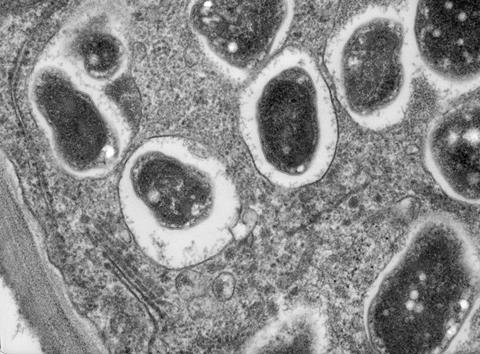
Unlike most cereal crops (such as maize, wheat, and rice), legumes, including peas, beans, and clover, have evolved specialised root nodules that house nitrogen-fixing bacteria. These microbes convert atmospheric nitrogen (N₂) into ammonia (NH₃), providing plants with an essential nutrient for protein synthesis.
To cope with nutrient limitations, plants have developed sophisticated mechanisms to acquire nutrients through their roots. For example, under nitrogen deficiency, maize actively recruits members of the Oxalobacteraceae family to improve nutrient acquisition and plant performance. Rhizosphere bacteria have adapted different mechanisms to cope with fertiliser deficiency to support plant growth. However, modern fertiliser application can disrupt these natural microbial communities. The long-term application of nitrogen lowers soil pH, significantly reducing the average relative richness of Acidobacteria, Patescibacteria and Bacteroidetes. These alterations impair beneficial plant-microbe interactions and imply that excessive nitrogen fertilisers may paradoxically contribute to the low yield of the wheat.
In soybeans, the nitrogen-fixing bacterium Bradyrhizobium japonicum plays a central role in establishing symbiosis through root nodule formation. Cortical cells in legumes provide the structural basis for nodule development and nutrient exchange. A key regulator is the SHORTROOT–SCARECROW (SHR–SCR) stem cell regulatory programme, which enables nodule organogenesis and symbiosis in Medicago truncatula. This programme is absent in cereal crops, presenting a major challenge for recreating nitrogen-fixing symbiosis in staple cereal crops for sustainable agriculture.
Understanding the genetic mechanisms underlying plant-soil microbiome interactions may allow scientists to design “climate-smart crops”. For example, engineering cereal crops to interact more effectively with nitrogen-fixing microbes, or introducing key regulators involved in nodulation and nitrogenase activity in cereal crops, could reduce dependence on synthetic nitrogen fertilisers.
Plant chemicals and their diverse association with soil microbes
Plants are immobile organisms, yet they produce various chemical compounds to reproduce, defend themselves, and survive in a dynamic environment.
Plants can de novo synthesise signalling molecules that enable them to respond to environmental stress. Phytohormones such as jasmonic acid (JA), abscisic acid (ABA), and indole-3-acetic acid (IAA) regulate root architecture and fine-tune growth under extreme conditions, including high salinity or drought stress. Although synthetic phytohormones can be applied to enhance plant resilience, their high costs and potential for unintended consequences associated with overuse (such as excessive vegetative growth and soil degradation) limit their widespread application. To take challenges head-on, many sustainable alterations have been developed, including biostimulants, plant growth-promoting rhizobacteria (PGPR) and biological control agents (BCAs). Beneficial strains, such as Pseudomonas fluorescens, Bacillus subtilis, Bacillus thuringiensis, and Trichoderma spp., can produce phytohormones, including IAA and cytokinins (CKs), which enhance root growth and nutrient uptake, and improve plant resilience to environmental stress.
Terpenes represent one of the most abundant classes of plant-derived compounds and play diverse ecological roles. Among plant secondary metabolites, there are more than 40,000 identified structures across the terpenoid family. These molecules are important sources of medicine, agriculture, and industry.

Plants use chemical signals such as anthocyanins, which are colourful pigments, and volatile compounds such as terpenoids, to attract pollinators and facilitate reproduction. For example, lavender releases linalool, a monoterpene volatile compound, to attract bees for pollination.
Plants also produce chemicals that function as toxins and repellents to defend against herbivores and pathogens. For example, limonene, another monoterpene found in citrus peels, acts as an effective insecticide. Farnesene, a sesquiterpene produced by members of the Asteraceae family, can inhibit fungal spore formation and discourage herbivory. Avenacin A-1, a triterpene glycoside saponin produced in the root epidermis of oat plants (Avena spp.), provides antifungal protection against pathogens such as Gaeumannomyces graminis. Geraniol, a monoterpenoid found in geranium essential oils, has demonstrated broad-spectrum antimicrobial activity against bacteria, fungi, and other pathogens.
Plants can even recruit other natural predators as allies by releasing volatile terpenes. They have evolved strategies to “get someone else to do their dirty work” (to use a phrase from The Art of War by Sun Tzu). For example, maize releases caryophyllene to attract parasitoid wasps that attack herbivorous caterpillars.
Because many plant-derived compounds possess antimicrobial and insect-repellent properties, they represent promising alternatives to synthetic agrochemicals, potentially offering a sustainable approach to crop protection.

Microbes in soil are interconnected with plants and humans
Microorganisms do not exist in isolation. Some microbes can move from soil to edible plants and eventually enter the human food chain. Beneficial microorganisms such as Bacillus subtilis, Streptomyces, and Lactobacillus can contribute to plant growth, biocontrol, food production, and animal and human health.
Apart from their roles in food microbiology, Lactobacillus species (lactic acid bacteria) are also potent promoters of plant growth and biocontrol agents in agriculture. For example, Lactobacillus plantarum isolated from the tomato rhizosphere soil can function as a plant growth-promoting rhizobacterium (PGPR), significantly increasing soil nutrient availability while activating key microbial functional guilds that facilitate plant-soil interactions. However, harmful microbes such as Salmonella enterica and Shigella can also enter the food chain through contaminated crops, posing risks to human health. The UK Health Security Agency (UKHSA) has reported outbreaks of Salmonella and Shigella associated with travel to Cape Verde, where infections can be acquired through contaminated food or water. Symptoms vary but commonly include diarrhoea, fever and cramps.
The influence of soil microbiomes extends beyond agriculture. Many animals, including primates, livestock, and soil-associated mammals, practice geophagy - the consumption of soil - which can provide beneficial minerals and microorganisms to alleviate inflammation, aid immune protection and improve digestion. Humans have also historically practised geophagy, particularly in tribal and traditional rural societies. Cases have been reported among pregnant women in Argentina and southern Iran, and several countries in Africa and Asia. Several theories have been proposed to explain this behaviour, including the hypothesis that geophagy helps compensate for micronutrient deficiencies, particularly iron, calcium and potassium. Women of childbearing age with limited access to animal proteins, especially those in impoverished regions, are vulnerable to vitamin B12 deficiency. Geophagy may also be influenced by religious and cultural traditions. Despite its potential benefits, geophagy also poses health risks through exposure to toxic soil contaminants, heavy metals, parasites, and pathogenic microorganisms.
More commonly. Soil microbiomes influence human health indirectly through food production. For example, microbial-based fertiliser (biofertilizers) can enhance crop nutritional quality, increasing beneficial compounds such as vitamins in tomatoes and polyphenols in eggplants.

Building a sustainable future through microbial understanding
The reciprocal relationships among soil, plants, and humans highlight that microbes are central regulators of planetary health. We need to shift our perspectives toward working with nature rather than against it. With advances in plant breeding, microbiome research, and our understanding of plant chemistry, we have an opportunity to translate these ecological interactions into sustainable and practical solutions. We may develop crops that are more resilient to climate change, reduce reliance on synthetic chemicals, and support a healthier planet for future generations.
Further reading
1. Deciphering Plant-Microbe Symbioses: A Molecular Blueprint for Precision Agriculture | ScienceDirect
2. Soil microbiomes and one health | Nature Reviews Microbiology
3. Exploring the plant microbiome: A pathway to climate-smart crops | Cell
6. The soil-plant-human gut microbiome axis into perspective | Nature Communications







No comments yet