
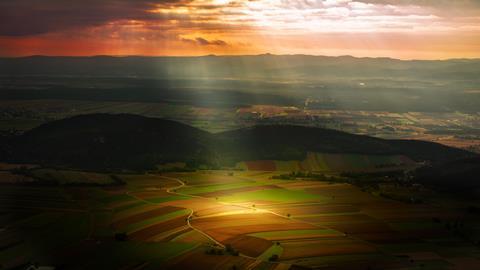
Farmland degradation and soil erosion have caused food shortages and the collapse of civilizations throughout human history. Today, soil degradation is a growing driver of global threats such as climate change, biodiversity loss, and food insecurity. Loss of soil, the resource that supports production of 95% of the food supply, is accelerated by farming practices. This threatens food security in the coming decades if it continues to erode at the rates observed over the last few decades. Moreover, this pace is likely to accelerate due to the ongoing global climate change, which includes an increased frequency of extreme weather events. Food production will be curtailed – as soil diminishes, so do crop yields – making widespread food shortages near-future realities.
Soil is home to the largest diversity of species on Earth, including microorganisms. These microorganisms have several important properties, such as filtering water, supporting crop growth, recycling nutrients, reducing soil-to-atmosphere trace gases, and providing antibiotics for clinical use, among others. Therefore, the loss of soil and its impacts on soil microorganisms are creating far-reaching environmental and health crises.
Despite the increasingly dire nature of the problem, soil erosion remains largely unrecognized by the public and has only recently reached international policy platforms. Soil erosion is correctable; we have the knowledge and resources required for remedial actions. However, history suggests we lack the will to adopt more sustainable farming systems. When healthy biodiversity is returned to soil ecosystems, then the services provided by these ecosystems can recover rapidly. Expanding partnerships among consumers, retailers, and farmers to support change in agricultural practices may be our best option for rebuilding eroded and degraded soils, stabilizing food production, and reversing environmental damage.
Soil structure and microbial services to the earth
The top layer of soil, or topsoil, is generated from the parent rocky material. Large particles are fragmented by physical forces, generating particles designated clay, silt, and sand, which differ in their elemental composition and size – clay particles can be as small as 1 mm in diameter, and sand particles can reach 2 mm. Centuries of physical and biological weathering have changed the biochemical composition and structure of the minerals and enriched the mineral base with plants, animals, and microorganisms that are alive or in various stages of decomposition. It is the abundance of life that differentiates topsoil from the lower layers of the soil horizons. This diversity of soil life is responsible for processing biological material and forming stable organic matter, which is the foundation for a healthy soil ecosystem.
Soil acts as a carbon dioxide (CO2) sink. While plants are commonly highlighted for their ability to fix CO2 and potentially lower atmospheric levels, it is less acknowledged that about 20% of the carbon fixed by plants is released into the soil as exudates through the plant roots, enriching it with organic matter. This organic matter provides carbon, nitrogen, phosphorus, and sulfur, fueling microbial metabolism in the soil. The life of the soil is driven by hyper-diverse communities of bacteria, fungi, and viruses, creating the most biologically diverse habitat on Earth.
”History suggests we lack the will to adopt more sustainable farming systems.”
Microbes represent over 99% of the species on earth, with over 30,000 prokaryotic species, containing up to 1011 cells per gram of plant root. This community of microorganisms drives biogeochemical cycles in soil and on roots, making essential nutrients available to plants and to other soil-dwelling organisms. The composition of the microbes is heavily dependent on the soil properties, making them susceptible to major physical and chemical changes. Certain soil microorganisms cycle nutrients such as:
Phosphorus
Phosphorus is crucial for soil fertility, but mostly in non-bioavailable forms for plants. Plant-growth-promoting rhizobacteria and fungi solubilize inorganic phosphorus through the production of weak acids such as citric, malic, and acetic acid. Meanwhile, plants, fungi, and soil bacteria produce a wide range of phosphatases, such as phytases and acidic/alkaline phosphatases. These enzymes break down organic phosphorous compounds and release phosphate for plant and microbial growth.
Carbon
The terrestrial carbon cycle is dominated by the balance between photosynthesis and respiration, transferring carbon from the atmosphere to the soil via carbon-fixing organisms, primarily photosynthesizing plants and photo/chemoautotrophic microbes. Soil microorganisms, along with plants, are responsible for capturing atmospheric carbon, which contributes to soil fertility and carbon storage. They also play a role in releasing carbon back to the atmosphere through the decomposition of organic matter.
Nitrogen
Through the conversion of ammonia into nitrate, nitrogen can be assimilated by plants. Diazotrophs are bacteria and archaea that can reduce atmospheric dinitrogen (N2) into ammonium. Afterwards, nitrifiers convert ammonia into nitrites and then into nitrates through nitrification, making nitrogen available to plants. Denitrifying bacteria convert nitrates back into nitrogen gas, completing the nitrogen cycle and preventing nitrogen buildup in the soil. However, this conversion might also lead to the emission of nitrous oxide, an important and potent greenhouse gas with a global warming potential 300 times higher than that of carbon dioxide. Excessive production of nitrous oxide not only contributes to climate change but also leads to nitrogen loss from the soil, thereby reducing soil fertility.
Sulfur
Soil microorganisms are also involved in cycling sulfur. Most of the sulfur in soil environments (>95%) is bound to organic molecules and is not available for plants to use. Microbes play an important role in converting sulfur compounds into forms that plants can uptake.

As well as desirable nutrients, soil prokaryotes also regulate the cycling of other greenhouse gases such as methane. Methane is produced by some archaea in anaerobic environments such as thawing permafrost and rice paddy fields, but it can be consumed by other species of bacteria and archaea. Methane contributes about 30% to the total net anthropogenic radiative forcing and is the second most important anthropogenic greenhouse gas after CO2. While methane is a potent greenhouse gas and a natural part of the carbon cycle in soil, excessive methane emissions can accelerate climate change and may indicate poor soil management practices. Balancing soil microbial communities and promoting aerobic conditions can help mitigate methane emissions.
All components of the soil community are interdependent, and they collectively shape the functioning of entire ecosystems. Soil fungi (saprotrophic and mycorrhizal) are the primary drivers of organic matter decomposition, generating many of the essential features of healthy plant and soil communities. Bacteria, in contrast, are critical for the processing of labile organic compounds, a process that is essential in elemental cycling, and the stabilization of carbon within soil aggregates. Besides nutrient cycling, both fungi and bacteria can contribute to the suppression of plant diseases and pests through the active production of antibiotics, direct competition, and the production of compounds that trigger plant defenses or attract beneficial insects. Moreover, the diversity of these microorganisms in the soil promotes higher resistance and resilience to biotic and abiotic stress.
Viruses, which were long ignored in soil microbiology, have finally been recognized as controllers of microbial community structure. Their staggering abundance—107 to 1010 viral particles per gram of soil – gives them substantial power to modulate the size of the hosts’ populations. Collectively, these soil microbial communities regulate global biogeochemistry, the climate, and the productivity of plants around the world.
Over many centuries, weathering and biological processes create the architecture and chemistry that make soil the foundation of agriculture and much of terrestrial life. Mineral particles glued together with organic matter, often in the form of sticky polymers produced by bacteria and fungi, form aggregates that prevent dense packing of soil particles, making the matrix permeable to water and air, and increasing its water-holding capacity. As water trickles through soil, surface contaminants are removed both by mineral particles that bind various chemicals and microorganisms that degrade the compounds, often using them for energy, carbon, and nitrogen. This process cleanses the water before it reaches the aquifers that hold much of the Earth’s groundwater, the source of drinking water for 2.5 billion people on Earth. Soil structure created by the work of microorganisms, as well as the movement of soil invertebrates, also enables air to penetrate the profile, creating aerobic conditions at depths of several meters.
Due to its high water-holding capacity and the crucial role of its microorganisms in nutrient cycling and stress regulation, soil enables the growth of terrestrial plants. These plants are responsible for over 50% of global photosynthesis, surpassing marine primary producers. Moreover, soil serves as a critical storage locker for the Earth’s carbon, holding roughly three times as much as the amount in the atmosphere and three times the amount in all of the Earth’s vegetation. Soil is, as a living entity, a robust manager of biochemical processes essential for all life on Earth, while being a delicately balanced habitat that is vulnerable to degradation.
Soil formation, erosion, and agriculture
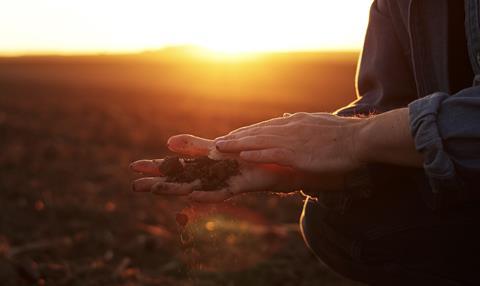
Over recent centuries, the industrialization of agricultural processes has led to the increasing degradation of soil health. At a global scale, agricultural practices (such as plowing) have increased the vulnerability of land to erosion. Although these practices enhance crop productivity in the short-term, their long-term effect on soil elevates the future risk of food insecurity. In fact, several international agencies (United Nations, Food & Agriculture Organisation of the United Nations (FAO), European Commission) emphasize the need for proper soil management to prevent agricultural practices that could lead to emissions of greenhouse gases, impacting global climate change. Within this line is the Mission program of the European Commission that aims to reduce marginal and polluted soils in Europe to enhance plant productivity and increase food security.
Evidence from past civilizations provides tangible evidence for the intimate relationships between soil erosion and the decline of societies. The people of Easter Island, for example, grew crops on their steeply sloped land around AD 1280, and by AD 1400, the land was stripped of soil, and agricultural productivity ceased, resulting in a precipitous decline in the human population from 13,000 to 2,000. In the Southern Piedmont region of the United States, cultivation of the soil on mountainous land between 1700 and the early 1900s eroded most of the topsoil, leading to the abandonment of agriculture, altering the economy of the region. More recently, the Dust Bowl caused great suffering, human migration, and a change in agriculture in the Great Plains of the U.S. On the other hand, the rich, deep soils of the Ukraine have been the focus of regional conflicts for decades, with invasions led by Germany in the 1940s and later on by Russia to control the productive land.

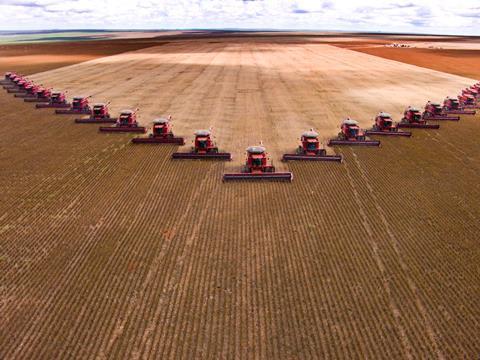
Today, we see troubling soil degradation trends that have existed historically in the United States and globally. The U.S. Department of Agriculture estimates that, on average, soil erodes at a rate of 10 metric tons per ha per year due to erosion by water and wind from U.S. cultivated and uncultivated cropland, and these erosion rates have not decreased over the last 20 years. The same trend is also observed for the European continent, with an average soil erosion rate at 3.07 tons per ha per year in the EU and UK, which is expected to increase by 13%-22.5 % by 2050. Soil is generated at approximately 1/100th to 1/1,000th of this rate, making it impossible to sustain agricultural production with the current rate of loss. These average values tell only part of the story. Average soil loss belies the variation in erosion – some land does not erode at all or accumulates eroded topsoil from upslope areas – and some land erodes at high rates. Erosion across Iowa averages 5.8 tons per acre annually, but in 2014, 1.5 million acres of sloped Iowa farmland lost 25 tons of soil per acre or more, a loss rate approaching 1000 times the soil renewal rates. Substantial areas are devoid of topsoil, and with existing soil loss rates, these areas are expanding.
The fertile soils found in the northern hemisphere, such as Ukraine and the Midwestern United States, are generated by centuries of organic matter addition from the deep-rooted perennial prairie grasses that create a deep, fertile topsoil. Large tracts of sloped land in these regions have been stripped of topsoil in less than two centuries of farming. Erosion of these great soils is especially evident in the middle of the United States, where displaced soil is washed into the Mississippi and Missouri Rivers and ultimately deposited in the Gulf of Mexico, possibly causing conditions for eutrophication and degradation to marine ecosystems. Exposed subsoil with lower fertility is locally washing downslope onto highly productive soils. Once-productive natural soil systems are being transformed into landscapes checkered with increasing areas of unproductive subsoils with reduced soil diversity and biological activity.
Coastal farmland faces additional threats from rising sea levels, leading to inundation and salination, further reducing agricultural viability and food security. However, certain microbial commensals and endosymbionts can mitigate these stresses, enhancing plant tolerance and productivity on soils that are becoming marginal lands.
”Soil is, as a living entity, a robust manager of biochemical processes essential for all life on Earth.”
Soil and climate
As the climate warms, the drying of soils is accelerating the rate of soil erosion, leading to the loss of fertile soil and beneficial functions carried out by soil microorganisms, and exacerbating the degradation associated with large-scale land use change. In addition to water shortages, intense increases in rain can also enhance erosion rates. A consistent feature of climate change since the middle of the 20th century is increasingly frequent severe rainstorms that accelerate soil loss. In recent years, extreme weather has hit the U.S. Midwest and Great Plains especially hard, with a 30% increase in heavy precipitation events compared to the first half of the 20th century. The kinetic energy of 100 cm of rain, an increasingly normal annual expectation in the Midwest US, pounding the surface of 10 Ha can deliver the energy equivalent of that found in about 1 ton of TNT explosives. Heavy precipitation combined with the loss of the soil’s top organic layer decreases the soil aeration, stimulating the growth and activity of methane and nitrous oxide producers, hence promoting a feedback loop that worsens climate change. Projections for soil look bleak – continuing business as usual is not only unwise, but also potentially disastrous.

A chance for a future
There are economically favorable and environmentally sound alternatives to business as usual. Practices that protect the soil surface and filter runoff water can typically lead to soil loss rates that approximate soil regeneration rates for most soils. Three practices exemplify effective methods for reducing erosion with row crop production:
- No-till planting drills seeds directly through previous crop residues into the soil, leaving these residues as the protection against impinging raindrops.
- Cover crops integrated in row cropping systems add protection against the impact of rain and runoff water when the primary crops have been harvested and before establishment of the next crop.
- Strategically placing strips of deep-rooted prairie plants filters water and reduces soil loss by as much as 95 % while stimulating soil microbiome activity and diversity.
Practices that retain soil and associated beneficial microorganisms will reduce the need for fertilizer application; it has been estimated that the use of microbes as biofertilizers can reduce the use of chemical fertilizers by at least 50%. These practices will also reduce the impact of crop production on the degradation of drinking water quality and pollution of rivers and oceans. All these mechanisms are responsible for enhancing soil stability, which is critical to maintaining healthy soil microbial communities that can maintain ecosystem functioning. These could be especially important in degraded areas to speed up soil biological activity and improve carbon sequestration, hence contributing to soil restoration.

In addition, a growing body of research is now beginning to show how the direct addition of diverse microbial inoculants can, in fact, accelerate soil recovery, enhancing soil structure and plant productivity across the globe; it is estimated that adding native soil microbes can accelerate plant biomass production by 64%. Other useful practices could include regenerative and organic agriculture, agro-forestry, and terrace cultivation.
Furthermore, to enhance nutrient use efficiency, new types of smart fertilizers based on nanotechnology with controlled nutrient release are needed. These fertilizers could utilize microorganisms (biofertilizers) and/or nanomaterials (nanofertilizers), which have been shown to improve crop yields, soil productivity, and lower nutrient loss compared to conventional fertilizers. Smart fertilizers regulate nutrient availability according to plant demands, thereby reducing environmental losses.
Each of these agricultural practices can come with an initial investment cost to farmers in the short term. However, they generally come with a longer-term benefit to both landowners and society due to improved soil and water resources. Yet, small profit margins in farming do not always allow farmers the luxury of adopting new practices that have a financial cost without a change in pricing structures. The current political environment within the U.S. limits legislation that would incentivize farmers to change practices, for example, by providing low-interest loans to purchase no-till equipment or subsidizing the cost of these new practices.
Expand the table below to read suggested changes that could be made to the Farm Bill:
| Proposed Change | Description | Expected Measurable Outcome |
|
Increase Funding for Conservation Programs |
Expand funding for EQIP and CSP with higher payment rates and flexible eligibility. |
Increased adoption of conservation practices, improved soil health, reduced erosion, and enhanced water quality. |
|
Provide Low-Interest Loans for Sustainable Equipment |
Establish or expand low-interest loan programs for purchasing no-till equipment. |
Higher adoption rates of no-till farming, reduced soil disturbance, and improved soil carbon sequestration. |
|
Subsidize the Cost of Transitioning to Sustainable Practices |
Introduce subsidies or cost-share programs to cover costs associated with sustainable practices. |
Reduced financial burden on farmers transitioning to sustainable practices, increased uptake of new technologies, and long-term cost savings for farmers. |
|
Incentivize Research and Development |
Increase funding for R&D into sustainable agricultural practices and technologies. |
Development of more efficient no-till equipment, increased innovation in sustainable farming, and dissemination of best practices through extension services. |
|
Expand Technical Assistance and Training Programs |
Allocate resources to NRCS for technical assistance and training on sustainable practices. |
Enhanced farmer knowledge and skills, higher implementation rates of sustainable practices, and increased farm productivity and resilience. |
|
Create a Carbon Sequestration Credit System |
Develop a system that rewards farmers for soil carbon sequestration practices like no-till farming. |
Financial incentives for farmers, increased carbon sequestration in agricultural soils, and contributions to climate change mitigation efforts. |
|
Establish a Sustainable Farming Certification Program |
Introduce a certification program for farms meeting sustainability criteria, modeled after organic certification. |
Market advantages for certified farms, increased consumer demand for sustainable products, and wider adoption of sustainable farming practices. |
|
Strengthen Cross-Agency Collaboration |
Improve coordination between federal agencies to streamline support for sustainable practices. |
More efficient delivery of support services, reduced administrative burdens for farmers, and comprehensive implementation of sustainable agricultural policies. |
Alternatively, a social movement that informs the public about the soil crisis and that provides consumers with the opportunity to support farmers by paying a premium for food that has been grown with “soil safe” practices may be more effective and more sustainable than government programs. Implementing such a plan would require a consortium of farmers, scientists, food retailers, and consumer activists to agree upon criteria for certifying farms as soil safe and a mechanism to accomplish certification and food source labeling. Selected major food retailers could support the movement by contracting with farmers whose products are soil safe, and the market inertia might, with strategic planning, then sustain the movement.
Ultimately, enabling farmers to promote healthy soil biodiversity is going to require governance structures that reward healthy soil management. Currently, farming subsidies in most of the global north incentivize practices that do not promote soil health; some efforts are starting to be made, for example, the Agriculture and Horticulture Development Board’s Great Soils initiative in the UK. Redirecting these subsidies to promote the practices that enhance soil biodiversity may be a critical step in transforming our agricultural systems to support a sustainable future. It is important that any practices promoted provide long-term restoration of soils, as those that provide short-term artificial restoration may not be sufficient in restoring soil multifunctionality.
”Across the globe, progress has been made towards other goals that sounded impossible – the widespread use of recycling, reducing plastic and Styrofoam use, and organic produce. The soil crisis is worthy of the same attention from consumers, activists, and farmers. The stakes are too high to ignore our world’s soil.”
This article was written with contributions from Thomas Crowther, Joana Falcão Salles, Jack Gilbert, Marcela Hernandez Garcia, Nicola Holden, Janet Jansson, Diane Purchase, Sharad Ramchandra Kamble, Juan Luis Ramos, Maria Tsiafouli, and Michael Ukwuru.






No comments yet