
Innovation – Page 8
-
 News
NewsNovel vaccine protects against C. diff disease and recurrence
A novel vaccination approach cleared the harmful gut bacterium Clostridioides difficile in an animal model of infection. An experimental vaccine administered to the mucosal lining of the colon protected against illness, death, tissue damage and infection recurrence.
-
 News
NewsScientists develop first-of-its-kind antibody to block Epstein Barr virus
Using mice with human antibody genes, scientists have developed new genetically human monoclonal antibodies that prevent two key antigens on the surface of the Epstein Barr virus (EBV) from binding to and entering human immune cells.
-
 News
NewsNew biosensor offers early warning system for disease
Researchers have developed a tissue-adhesive sensor for real-time oral health monitoring to combat long-term issues such as gum disease and tooth loss.
-
 News
NewsA yeast enzyme helps human cells overcome mitochondrial defects
An international team has experimentally uncoupled nucleotide synthesis from mitochondrial activity using ScURA, a yeast-derived genetic tool now available to the research community that will enable new explorations of cellular metabolism.
-
 News
NewsRhododendron-derived drugs now made by bacteria
Bioengineered E. coli bacteria can now produce a group of compounds with anticancer, anti-HIV, antidiabetic and anti-inflammatory activities. The compounds, orsellinic acid-derived meroterpenoids, are produced by Rhododendron species.
-
 News
NewsImmunity against common virus leveraged against pancreatic cancer
Researchers have discovered a promising new treatment approach for pancreatic cancer. The approach leverages the body’s natural immune response to cytomegalovirus (CMV), a common but typically harmless virus that most people are infected with at some point in their lives.
-
 News
NewsResearchers develop new inhalable treatment for TB
Researchers have developed an inhalable, immunomodulating, biocompatible nanoparticle system encapsulating rifampin, one of the most important TB drugs.
-
 News
NewsScientists create ‘smart underwear’ to measure human flatulence
Scientists have created Smart Underwear, the first wearable device designed to measure human flatulence. The device helps scientists revisit long-standing assumptions about how often people actually fart. It also opens a new window into measuring gut microbial metabolism in everyday life.
-
 News
NewsNew AI model improves accuracy of food contamination detection
Researchers have significantly enhanced an artificial intelligence tool used to rapidly detect bacterial contamination in food by eliminating misclassifications of food debris that looks like bacteria. Current methods often require specialized expertise and are time consuming — taking several days to a week.
-
 News
NewsNew algorithm enhances microbiome biomarker discovery by integrating biological relationships
Researchers have developed a novel algorithm, Microbiome Elastic Feature Extraction (MEFE), that significantly improves the identification of microbiome biomarkers by incorporating phylogenetic, taxonomic, and functional relationships among microbes.
-
 News
NewsResearchers develop simple at-home tests for detecting cat and dog viruses
Researchers report improved lateral flow assays for at-home screening of cats and dogs. In tests on veterinary clinic samples, the assays demonstrated 100% sensitivity and reproducibility for both feline parvovirus and canine parvovirus.
-
 News
News Engineered moths could replace mice in research into “one of the biggest threats to human health”
Scientists have created the world’s first genetically engineered wax moths – a development which could both accelerate the fight against antimicrobial resistance (AMR) and significantly reduce the need for mice and rats in infection research.
-
 News
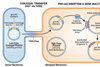
NewsNext generation genetics technology developed to counter the rise of antibiotic resistance
The new Pro-Active Genetics (Pro-AG) tool called pPro-MobV is a second-generation technology that uses an approach similar to gene drives to disable drug resistance in populations of bacteria.
-
News
New vaccine platform promotes rare protective B cells
Based on a virus-like particle built with a DNA scaffold, the approach could generate broadly neutralizing antibody responses against HIV or influenza.
-
 News
NewsA mint idea becomes a game changer for medical devices
Researchers have developed a high‑performance coating made from peppermint essential oil that can be applied to the surfaces of many commonly used medical devices, offering a safer way to protect patients from infection and inflammation.
-
 News
NewsYeast cells can be used for rapid testing of cancer immunotherapy
An international research team has developed a new yeast-based biotechnological platform that makes it possible to test and understand advanced cancer treatments much faster and cheaper than before. It can reduce development time for new types of cancer immunotherapy from months to days or weeks.
-
 News
NewsFrom biocidal coatings to medicines: A nanocomposite sting for microorganisms
A surface capable of responding to chemical signals generated by microorganisms and automatically producing biocidal substances – a description of how the B-STING silica nanocomposite works. The new material acts as a nanofactory of reactive oxygen species, activating only when necessary.
-
 News
NewsNasal vaccine combats bird flu infection in rodents
Researchers have developed an intranasal H5N1 vaccine that elicited strong immune responses when tested in hamsters and mice and prevented infections in exposed animals. The team also confirmed their vaccine remained effective regardless of prior flu exposure.
-
 News
NewsA rapid test using a mobile phone will be able to identify the most severe cases of imported malaria within minutes
A new malaria tool uses a mobile phone to combine rapid diagnostic tests with video analysis and is capable not only of detecting the infection in under six minutes but also of predicting which patients may develop severe forms of malaria.
-
 News
NewsNew tool shows how to enter and change pneumocystis fungi
Researchers have reported success in genetically modifying the fungal pathogen Pneumocystis murina. Their approach uses extracellular vesicles from mouse lungs to deliver gene-modifying molecules inside the fungal cells. The modified fungus expressed the introduced genomic modifications.