
Latest news – Page 287
-
 News
NewsMicrobial cell factories can produce eco-friendly food and cosmetic colourings
Microbial cell factories can produce amino acids, proteins, fats and fatty acids, vitamins, flavours, pigments, alcohols, functional compounds and other food additives used in various foods and cosmetics, a new paper reveals.
-
 News
NewsFar UVC light could have disinfection potential against Covid variants
Scientists have investigated the inactivation efficacy of different UV wavelengths and assessed the safety profile for effective management of COVID-19 risks.
-
 News
NewsOlanike Maria Buraimoh appointed as latest AMI Global Ambassador
Applied Microbiology International (AMI) has announced that Dr Olanike Maria Buraimoh has been appointed as its latest Global Ambassador.
-
 News
News‘Time-travelling’ pathogens in melting permafrost pose likely risk to environment
Ancient pathogens that escape from melting permafrost have real potential to damage microbial communities and might potentially threaten human health, a new study suggests.
-
 News
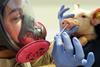
NewsSwine flu strain has passed from humans to swine nearly 400 times since 2009
A new study of the strain of influenza A responsible for the 2009 H1N1 pandemic shows that the virus has passed from humans to swine about 370 times since 2009, and subsequent circulation in swine has resulted in the evolution of pdm09 variants that then jumped from swine to humans.
-
 News
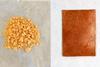
NewsEngineered microbes can make ingredients for infinitely recyclable plastic
Scientists have engineered microbes to make the ingredients for recyclable plastics – replacing finite, polluting petrochemicals with sustainable alternatives.
-
 News
NewsUnraveling cell death protein may inspire new biotechnology tool
Scientists have unraveled the step-by-step activation process of a protein with a deep evolutionary history in all domains of life, opening the door to harnessing its functions for use as a biotechnology tool. The protein belongs to the ‘superfamily’ of Argonaute proteins, which previous research has suggested ...
-
 News
NewsScientists develop new solid-state storage method for biological materials
Scientists have developed a novel method for storing biological materials such as RNA and proteins in a solid-state, physically resembling a pill or a tablet, which dissolves in water for on-demand use.
-
 News
NewsThe Phage-Microbiome Consortium is launched
The International Society of Microbiota (ISM) has announced the launch of a new initiative: The Phage-Microbiome Consortium.
-
 News
NewsBioaction drafts in pathogens as healing allies
A new treatment approach leverages pathogens as valuable allies in promoting tissue regeneration for better implant integration.
-
 News
NewsEavesdropping viruses wait for bacterial signals before switching to kill mode
Researchers have found that dozens of viruses respond to quorum sensing or other chemical signals from bacteria.
-
 News
NewsSpike protein mutants with low binding affinity usher in new Covid vaccine
Researchers have succeeded in producing a new vaccine against the SARS-CoV-2 coronavirus by identifying spike protein mutants that lack binding affinity.
-
 News
NewsAMI seeking expertise from members on renewables and green energy
Applied Microbiology International is keen to hear from members whose research relates to renewable/green energy technologies, or who work within the renewable/green energy technology sector.
-
 News
NewsJak inhibitors can decay viral reservoir in people with HIV
New research demonstrates the potential of Jak inhibitors, specifically ruxolitinib, to significantly decay the viral reservoir in people with HIV, offering a novel pathway toward long-term remission or a cure.
-
 News
NewsMenstrual cups can help prevent infection and boost vaginal health
Teenage girls who were given menstrual cups were less likely to acquire certain kinds of vaginal infections and were more likely to have a healthy vaginal microbiome, a study has found.
-
 News
NewsBeewolves protect symbiont microbes from toxic gas release
The symbiosis of these digger wasps with their bacterial helpers involves protecting the symbionts from toxic nitric oxide released by beewolf eggs to kill pathogens, research shows.
-
 News
NewsSoil microbes help plants cope with drought, but not how scientists thought
Researchers have found microbes help plants cope with drought, but not in response to plants’ cries for help - instead, the environment itself selects for drought-tolerant microbes.
-
 News
NewsInterferon could help reduce the spread of COVID-19
Results of an innovative clinical trial have shown that the drug interferon could help reduce the spread of COVID-19 from a positive person to their household contacts, with the study helping to inform treatment options for a future pandemic.
-
 News
NewsDesert microbes turn on drought tolerance when needed
Germinating Arabidopsis and alfalfa with a microbe taken from the roots of a common desert plant has been shown to help them to thrive under drought conditions.
-
 News
NewsBiosurfactants may offer green solution for tackling oil spills
Researchers investigating whether biosurfactants could increase microbiological oil degradation in North Sea seawater say there is potential for a more effective and environmentally friendly oil spill response.