
All articles by Linda Stewart – Page 55
-
 News
NewsNominate yourself: Call for new Elected Trustees of Applied Microbiology International
Applied Microbiology International (AMI) has issued a call for a new member to join our team as an Elected Trustee on the AMI Board from September 2026.
-
 News
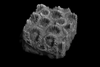
NewsStudy reveals hidden damage in stony corals using 3D imaging and AI
Researchers investigating how disease affects coral structure turned to X-ray microcomputed tomography which generates detailed 3D reconstructions down to microscopic pores, which reveal internal skeletal features, including porosity, thickness and structural orientation, in a non-destructive way.
-
 News
NewsAI spots hidden behavior patterns in self-organizing bacteria
A custom-built artificial intelligence system has helped to uncover how bacterial communities organize themselves, showing that the earliest moments of a biological transition carry far more information than previously considered.
-
 News
NewsNameko mucilage: An eco-friendly solution for microplastic pollution
Researchers use natural mucilage from nameko mushrooms for the removal of micro- and nano-plastics from water. The mucilage is rich in polysaccharides, particularly pectin—a naturally occurring plant-based compound—which is known for its particle-binding properties.
-
 News
NewsA bacterium from bumblebees can produce vitamin B2 in soya drinks
Researchers have developed a new method that can reduce the time needed to find new bacteria for fermentation. They have now identified a bacterium that can be used both for acidification and to increase the vitamin B2 content of soya drinks.
-
 News
NewsCat viruses offer window into human oncogenesis
Cats are not just beloved companions; they are emerging as key “research partners” in unravelling viral cancer mechanisms. A new review explores how feline tumour viruses offer vital insights into human oncology and viral carcinogenesis from a comparative oncology perspective.
-
 News
NewsIntegration of two genes: A valuable strategy for developing virus-resistant tomatoes
Researchers have demonstrated that integration of Ty-1/Ty-3 and Ty-6 resistance genes in tomato plants can confer highly robust resistance to begomoviruses.
-
 News
NewsUltrasensitive test reveals evidence of previously undetected tuberculosis in Boston Hospital patients
Researchers have discovered an unexpectedly high prevalence of Mycobacterium tuberculosis DNA (TB DNA) in patients hospitalized in Boston, suggesting that tuberculosis disease may be significantly underdiagnosed in the United States.
-
 News
NewsLonger-term plankton species diversity is independent of ocean mixing
A new study identifies correlations between turbulence, plankton diversity and aggregate abundance in marine coastal regions over longer time periods, providing new insights into marine ecosystems.
-
 News
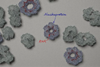
NewsUnraveling the complexities of the Borna disease virus 1
Researchers have published the first detailed structural description of the nucleoprotein-RNA complex in the family Bornaviridae. Their observations revealed the three-dimensional structure of this nucleoprotein-RNA complex, showing ring-like assemblies and viral RNA binds in the inner groove.
-
 News
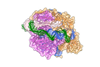
NewsNew bite-sized CRISPR molecule may open doors for therapeutic genome editing
The safest, most accurate gene-editing tools don’t fit inside viral delivery mechanisms that could target them to specific cell types or tissues inside the human body. Researchers have developed a smaller pair of “molecular scissors” for gene editing that could make site-specific delivery within the body possible.
-
 News
NewsResearchers uncover how obesity impairs vaccine response
New findings reveal that obesity significantly impaired the quality and longevity of antibody responses to a Pseudomonas aeruginosa vaccine in a mouse model. The impaired antibody production was due to defects in germinal centers.
-
 News
NewsLancet Countdown Europe: New report on health and climate change
Europe’s dependence on fossil fuels is not only making the continent economically and politically vulnerable, it also has dramatic consequences for the population’s health. Growing air pollution, heat damage and the climate-related spread of infectious diseases are looming, warns a new report.
-
 News
NewsShorter antibiotic courses show similar outcomes to longer use for some pneumonia patients
A multicenter target trial emulation found that for eligible patients hospitalized with community-acquired pneumonia (CAP), health outcomes were similar whether they received a three- to four-day course of antibiotics or a course lasting five days or more.
-
 News
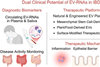
NewsExtracellular vesicle RNAs offer new hope for diagnosing and treating chronic inflammatory bowel disease
Extracellular vesicle-associated RNAs can serve as non-invasive biomarkers for early inflammatory bowel disease detection and disease monitoring, and also hold great potential as targets for next-generation targeted therapies, according to a new review.
-
 News
NewsAutism and ADHD: Epigenetic changes at birth associated with an infant’s microbiome and neurodevelopment
Epigenetic changes present at birth can impact how an infant’s gut microbiome develops during their first year. Researchers also identified specific epigenetic changes and gut microbes that were associated with signs of autism spectrum disorder (ASD) and ADHD when the children were three years old.
-
 News
NewsNew biodegradable wash removes pesticides and extends produce shelf life
Researchers have developed a natural, biodegradable wash that removed up to 96 per cent of pesticide residue from fruit and slowed browning and moisture loss.
-
 News
NewsTwo research projects to study immune responses to dengue and Zika viruses
Dr. James Earnest, an assistant professor at the Burnett School of Biomedical Sciences, is leading two new research projects to examine how humans build an immune response to dengue and the Zika virus over time, in pursuit of creating better preventative measures.
-
 News
NewsBetween 2.4 and 4.1 million people estimated to be living with chronic hepatitis B infection in Europe
Chronic hepatitis B is substantially prevalent across the European Union and European Economic Area (EU/EEA), affecting an estimated 0.7% of the population in the region in 2022, according to a new study.
-
 News
NewsScientists discover the antibacterial potential of ‘hero’ Korean skincare ingredient
Fans of Korean skincare may be familiar with ‘hero ingredient’ Madecassic acid for its skin-soothing properties, but researchers have revealed its greater potential for use in the battle against antibiotic resistance.