
All articles by Linda Stewart – Page 68
-
 News
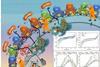
NewsScientists design metal-enhanced biochar to boost clean hydrogen production from agricultural waste
A new study reports that specially engineered biochar made from agricultural waste could significantly increase biohydrogen production by improving the way microbes transfer electrons during fermentation.
-
 News
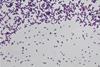
NewsResearchers uncover how bacteria suppress immune defences in stubborn wound infections
A common bacterium can suppress the body’s early warning system in wounds, causing infections to persist and create an environment that allows other bacteria to take hold. Enterococcus faecalis releases large amounts of lactic acid in the wound, which lowers pH, weakens immune cells and prevents them from fighting an infection.
-
 News
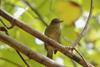
NewsIsland birds reveal surprising link between immunity and gut bacteria
Scientists have uncovered a hidden link between gut health and the immune system, all thanks to a tiny island bird. They collected the poo of the Seychelles warbler to analyse their gut bacteria – and found that their immune genes influence which gut microbes thrive.
-
 News
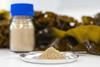
NewsSeaweed has the potential to create a shield to block norovirus infection
Seaweed has certain properties which have the ability to create a shield within the human body, effectively blocking norovirus infection. Fucoidan, from brown seaweed, showed the strongest and most consistent blocking activity against two major norovirus strains, GII.4 and GII.17.
-
 News
NewsAntibiotics can affect the gut microbiome for several years
Researchers have found strong links between a person’s history of antibiotic use and the composition of their gut microbiome, including the diversity of bacterial species.
-
 News
NewsLow-cost preventive measures could mitigate spread of bacteria causing neonatal mortality
A new study found that a multifaceted infection prevention and control intervention could at least temporarily thwart outbreaks of infections from the Klebsiella pneumoniae bacterium.
-
 News
NewsSpecific gut bacteria species linked to muscle strength
A species of gut bacteria called Roseburia inulinivorans is specifically associated with human muscle strength and improved muscular performance in mice, finds new research. R inulinivorans changes certain metabolic processes in muscle, and converts muscle fibres to ‘fast-twitch’ (type II).
-
 News
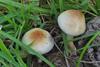
NewsNew African species confirms evolutionary origin of magic mushrooms
A long-standing debate about the evolutionary origin of the world’s most widely cultivated ’magic mushroom’ – Psilocybe cubensis – may now have been settled. Scientists describe the discovery of a new species of magic mushroom from the grasslands of South Africa and Zimbabwe.
-
 News
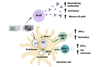
NewsBuilding protection against infectious diseases with nanostructured vaccines
Researchers have leveraged a recently developed highly versatile DNA origami nanotechnology that is both vaccine and adjuvant, named DoriVac, as an alternative to current vaccine platforms.
-
 News
NewsGut bacteria drive process that protects colon tissue
Researchers have shown that the identity of distinct regions of the colon are regulated by the gut microbiome. They identified nicotinic acid, a molecule produced by certain bacteria in the gut microbiome, as a main driver of these regional differences in the colon’s sections.
-
 News
NewsResearchers uncover hidden genetic world in Antarctic Waters
Researchers have completed the most comprehensive survey to date of DNA associated with Southern Ocean microbes, paving the way for a better understanding of their role in climate change. At least a third of the genes identified are missing from existing marine gene catalogs.
-
 News
NewsFrom microbial processes to biofilm control: our interview with JAM Microbial Biotechnology lead editor Manuel Simões
Professor Manuel Simões, Deputy Editor of the Journal of Applied Microbiology, has just been appointed as the journal’s new lead editor in Microbial Biotechnology. Here’s why he’s looking forward to the challenge.
-
 News
NewsMachine learning reveals when biochar helps or harms soil life
Researchers have shown that biochar can either help or harm soil organisms depending on how it is produced and applied. The research analyzed results from dozens of previous experiments to better understand how biochar affects plants, microbes, and soil animals.
-
 News
NewsNew study finds deep ocean microbes already prepared to tackle climate change
A new study demonstrates that the microbe Nitrosopumilus maritimus may already be adapting well to warmer, nutrient-poor waters. Researchers predict that these adaptable iron-dependent ammonia-oxidizing archaea will play an important role in reshaping ocean-nutrient distribution in a changing climate.
-
 News
NewsAntibiotic resistance can vary depending on where the bacteria live
Antibiotic susceptibility in resistant bacteria is not static. New research shows that bacteria harbouring resistance genes may respond differently to antibiotics if they are tested under conditions other than those used in standard laboratory assays.
-
 News
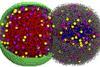
NewsTeam simulates a living cell that grows and divides
By simulating the life cycle of a minimal bacterial cell — from DNA replication to protein translation to metabolism and cell division — scientists have opened a new frontier of computer vision into the essential processes of life.
-
 News
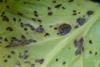
NewsScientists trace crop viruses back to the last Ice Age
Long before humans cultivated crops or sailed between continents, a group of plant viruses was already evolving among wild plants in Eurasia. Tthe ancestors of modern tymoviruses likely emerged before the last Ice Age, a new study reveals.
-
 News
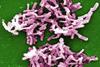
NewsStay or stray? Scientists discover why some gut microbes persist after fecal transplants
Scientists have identified why some gut microbes successfully stay in the gut after faecal transplants, whilst others are much more transient. They tracked key genetic features of gut bacteria in 86 healthy adults over the course of a year.
-
 News
NewsStudy investigates how microbes use ancient carbon
Researchers investigated a hydrothermal vent system at a depth of about ten meters off the coast of Kueishantao island in Taiwan. They tracked the path of this carbon in the surrounding sea and its uptake by microorganisms and other living things.
-
 News
NewsEnteroBiotix announces completion of enrolment in Phase 2a Trial evaluating EBX-102-02 prior to allogeneic stem cell transplantation
EnteroBiotix announced that the investigator-initiated Phase 2a MAST trial has completed its enrolment of 50 adult patients undergoing allogeneic haematopoietic stem cell transplantation (allo-HSCT) for defined haematological malignancies.