
All articles by Linda Stewart – Page 64
-
 News
NewsField-portable assays help scientists study and explore caves
A new study shows that field-portable assays are effective at identifying microbes directly in the field in real time, making it easier to study and explore caves. The researchers established a roadmap for thoroughly studying cave life, emphasizing the need to sample widely and from different materials.
-
 News
NewsNew blood- and microbiome-based neural networks forecast human biological age
A new study aims to develop and compare two models for calculating biological age based on laboratory blood tests and composition of gut microbiota.
-
 News
NewsMicrobial warfare helps bacteria evolve, study shows
A study of commensal bacgteria shows that Streptococcus mitis can kill the pathogen Streptococcus pneumoniae during a physiological state known as competence, when bacteria become able to take up DNA from their surroundings.
-
 News
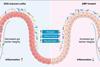
NewsMachine learning identifies antimicrobial peptide candidate for ulcerative colitis
Scientists applied machine learning to accelerate AMP discovery and identify candidates with therapeutic potential for ulcerative colitis.
-
 News
NewsFluorescent imaging reveals how a global parasite develops, opening new paths for drug treatment
Researchers adapted a fluorescent imaging system typically used to study human cells, enabling real-time observation the parasite’s growth, a promising breakthrough against an organism that that infects both humans and animals.
-
 News
NewsSingle-cell sequencing reveals unexpected protist diversity
Scientists developing a single-cell sequencing pipeline have revealed previously unknown diversity from a group of free-living protists closely related to the parasites that cause sleeping sickness.
-
 News
NewsEngineered biochar and beneficial bacteria team up to boost crop growth
Researchers have developed a specially engineered biochar made from sewage sludge that, when combined with beneficial bacteria, significantly enhances plant growth by improving how crops absorb nitrogen.
-
 News
NewsWhy some people naturally control HIV even after stopping therapy — and how we can leverage that to treat others
New research offers a path toward life without daily HIV pills, suggesting a common diabetes pill could help achieve long-term remission.
-
 News
NewsSmart wound dressing delivers antibiotics on-demand, accelerating healing and reducing resistance
Biomedical engineers have developed a new wound dressing material that releases antibiotic drugs only when harmful bacteria are present in a wound. The material could help rapidly clear wound infections to accelerate healing while reducing the unnecessary use of antibiotics.
-
 News
NewsBiochar’s climate promise depends on soil type: Cuts N₂O in dry fields but boosts it in rice paddies
By tracing the exact microbial pathways responsible for N₂O production, the scientists reveal why the same soil amendment produces opposite climate outcomes under different land uses.
-
 News
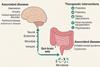
NewsGut microbiota and the gut–brain axis: Mechanisms and therapeutic hopes for brain diseases
A new study looks at the gut–brain axis (GBA), a sophisticated bidirectional communication network that integrates neural, immune, endocrine, and metabolic pathways to govern brain function and systemic homeostasis.
-
 News
NewsNew study reveals spleen-to-lung neutrophil axis orchestrates antiviral defense
Single-cell spatial mapping uncovers the spleen as a critical reservoir for lung neutrophils during respiratory viral infection, according to a new study.
-
 News
NewsPromising active substance against hepatitis E identified
A drug that is already in clinical trials against hepatitis C virus can also prevent hepatitis E virus from replicating An international research team has filtered bemnifosbuvir, a nucleotide/nucleoside analogue, out of a library of active substances.
-
 News
NewsReplicating bacteria DNA relies on accordionlike folds to separate
A new study deepens our understanding of what bacterial cells use to separate their DNA during replication, since they do not rely on external structures like human cells do.
-
 News
NewsBiochar particle size found to shape disease control in crops
Researchers have discovered that the particle size of biochar determines how effectively and how long it can suppress soil-borne pathogens, offering new insights for sustainable agriculture.
-
 News
NewsKorean live microbes survey finds less inflammation from consuming fermented foods
A new study that analyzed South Korean health data to determine whether live microbe intake from fermented foods like kimchi is associated with certain health indicators, found a link between increased consumption of live microbe-rich foods and lower systemic inflammation.
-
 News
NewsWhole-genome sequencing is a powerful tool that can pick up on genetic signatures for antimicrobial resistance in UTIs: research
New research to be presented at MLSFF26 reveals whole-genome sequencing as a powerful tool that can distinguish between antibiotic-resistant and susceptible strains of urinary tract pathogens by identifying the specific genetic signatures that confer resistance.
-
 News
NewsKimchi-derived probiotic found to promote binding and excretion of intestinal nanoplastics
Scientists have announced that a lactic acid bacterium isolated from kimchi can help promote the removal of nanoplastics from the body by binding to them in the intestine.
-
 News
NewsWeaning, more than a change of food: It shapes a life-long, healthy gut
According to a team of researchers, weaning or switching from milk to solid food in early life doesn’t just change what babies eat, it helps reprogram the gut’s immune defenses to mount faster and stronger responses that can last into adulthood.
-
 News
NewsNeanderthals may have used birch tar for its anti-bacterial properties
Scientists extracted tar from modern birch tree bark, specifically targeting species known from Neanderthal sites. When exposed to different strains of bacteria, all tar samples were found to be effective at hindering the growth of Staphylococcus bacteria known to cause wound infections.