
All articles by Linda Stewart – Page 89
-
 News
NewsBacteria use wrapping flagella to tunnel through microscopic passages
A new study shows that certain symbiotic bacteria wrap their rotating flagella around their cell bodies to form a “screw thread.” This configuration lets them propel forward through one-micrometer-wide passages, such as those inside insect guts, that would otherwise trap or immobilize them.
-
 News
NewsNexaBiome accelerates development of novel diabetic foot treatment with Scottish Enterprise funding
UK biotechnology company NexaBiome Life Sciences Ltd has received continued funding from Scotland’s national economic development agency, Scottish Enterprise, to accelerate its breakthrough bacteriophage technology for the treatment of diabetic foot infections (DFIs).
-
 News
News‘Antimicrobial resistance pandemic will kill more people than cancer by 2050 and no one at Davos is talking about it’
Scientists speaking at Frontiers Science House at Davos warned that antimicrobial resistance (AMR) will be the next “pandemic” like COVID-19, killing more people than cancer by 2050. They urged immediate global action against AMR.
-
 News
NewsSniffing out the cause of keratoderma-associated foot odor
The distinct foot odor that comes with the skin disorder Nagashima-type palmoplantar keratosis (NPPK) is caused by the overgrowth of a specific bacterial strain. Topical application of benzoyl peroxide restores balance in the bacterial skin flora, reducing the odor.
-
 News
NewsLow vitamin D levels shown to raise risk of hospitalization with potentially fatal respiratory tract infections by 33%
Severe vitamin D deficiency is associated with a higher rate of hospitalisation for respiratory tract infections such as bronchitis and pneumonia. Scientists found that those with a severe deficiency (below 15 nnmol/L) were 33 per cent more likely to be admitted to hospital for treatment.
-
 News
NewsScientists solve 66 million-year-old mystery of how Earth’s greenhouse age ended
Experts studying foraminifera fossils have discovered that concentrations of calcium in the sea dropped by more than half across the last 66 million years, which likely caused Earth’s massive drop in temperature.
-
 News
NewsMajor clinical trial provides definitive evidence of impacts of steroid treatment on severe brain infection
A major UK clinical trial has shown that adding the corticosteroid dexamethasone to standard antiviral treatment for encephalitis, caused by herpes simplex virus (HSV) does not improve long-term outcomes overall, although early use may lead to better recovery.
-
 News
NewsOral bacterium may promote breast cancer development and spread
Researchers found that Fusobacterium nucleatum, an oral bacterium commonly associated with periodontal disease, can promote breast cancer initiation, tumor growth and spread by inducing DNA damage and altering cancer cell behavior.
-
 News
NewsResearch team identifies species of brucellosis-causing bacteria in Cameroon
Researchers have identified the specific species of the Brucella bacterium that causes illness in animals in Cameroon. A study of more than 4,600 livestock animals found that the only Brucella species present was Brucella abortus, a species primarily associated with cattle that causes pregnancy loss and infertility.
-
 News
NewsGrowing together, bacterium after bacterium
Social interaction among babies in their first year of life influences and enriches the diversity of their gut microbial strains, based on the findings of a study on microbiome transmission.
-
 News
NewsScientists discover novel immune ‘traffic controller’ hijacked by virus
Researchers have discovered a tissue protein that acts as a central ‘traffic controller’ for immune cells and can be hijacked by a virus to weaken immune responses. Cytomegalovirus (CMV) can hijack this system by producing a protein that blocks CD44 function on stromal cells.
-
 News
NewsPositive interactions dominate among marine microbes, six-year study reveals
Researchers have found that marine microbes interact in ways that benefit one another more often than they eat each other or compete. Periods of elevated ocean temperatures, usually times of stress for these microbes because of a dearth of nutrients, resulted in even more of these positive interactions.
-
 News
NewsMost would recommend RSV immunizations for older and pregnant people
A US survey found an increase in awareness of immunizations that are available for RSV. The survey of 1,637 U.S. adults also found that about 6 in 10 respondents would recommend the vaccine or antibody injections to the groups recommended by the CDC, an increase from past years.
-
 News
NewsLithium study yields insights in the fight against HIV
Lithium, a widely used treatment for bipolar disorder and other mood disorders, has shown early promise in suppressing HIV. A new study found lithium can prevent infected cells from reactivating, and that it does so through an unexpected biological mechanism.
-
 News
NewsPine bark removes pharmaceutical residues from wastewater – an affordable way to keep antibiotics out of nature
Researchers have developed a pine‑bark–based water‑treatment medium that efficiently removes antibiotics as well as residues of blood‑pressure and antidepressant medicines from wastewater treatment plant effluent.
-
 News
NewsScientists engineer quantum-enabled proteins, opening a new frontier in biotechnology
A new study reports the creation of a new class of biomolecules, magneto-sensitive fluorescent proteins, that can interact with magnetic fields and radio waves. This is enabled by quantum mechanical interactions within the protein, and occur when it is exposed to light of an appropriate wavelength.
-
 News
NewsEarly translational study supports the role of high-dose inhaled nitric oxide as a potential antimicrobial therapy
Researchers report that high-dose inhaled nitric oxide (iNO) demonstrates potential antimicrobial activity in preclinical models and is safe and feasible in early human studies, supporting further clinical investigation.
-
 News
NewsEngineered nanobodies improved respiratory defenses in preclinical study
Engineered nanobodies improved protection against multiple viruses by bolstering respiratory mucus. The bispecific design of the nanobodies works against viruses, like influenza, which can normally evade mucosal defenses.
-
 News
NewsThe brain’s sneakiest houseguest: how a parasite rewrites neuron messages and alters neuroplasticity
A new study describes how Toxoplasma gondii manipulates the behaviour and brain function of its hosts. It explored a new angle by looking at nanoparticles called extracellular vesicles, which cells use to send messages to one another, and carry small regulatory molecules known as microRNAs.
-
 News
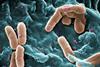
NewsNew study shows how light suppresses virulence in antibiotic-resistant pathogen
Researchers uncover a light-sensitive signaling cascade in Pseudomonas aeruginosa that suppresses biofilm formation and virulence, offering a potential new strategy to combat antibiotic-resistant infections.