
All articles by Linda Stewart – Page 93
-
 News
NewsRare microbial wrinkle structures - signs of ancient life - turn up in an unexpected place
Deep water sediment layers in the Dadès Valley in the Central High Atlas Mountains of Morocco have revealed rare microbial wrinkle structures formed far from sunlight.
-
 News
NewsFirst extensive study into marsupial gut microbiomes reveals new microbial species and antimicrobial resistance
New research provides the first metagenomic data for 13 marsupial species , including the red kangaroo and the common brushtail possum. They revealed that host family, animal location, and diet all contributed towards variance between different microbiomes.
-
 News
NewsA protein found in the GI tract can neutralize many bacteria
The mucosal surfaces that line the body are embedded with defensive molecules that help keep microbes from causing inflammation and infections. One of these molecules, intelectin-2, has broad-spectrum antimicrobial activity against bacteria found in the GI tract.
-
 News
NewsNew hypothesis links HPV E6 and SARS‑CoV‑2 spike proteins to reduced p53 activity
Scientists have proposed a hypothesis suggesting that virally encoded proteins such as HPV-E6 or SARS-COV-2 Spike may cooperate in suppressing host defenses including tumor suppressor mechanisms involving p53.
-
 News
NewsA gentler way to model deadly lung infections in old age
Researchers report a refined mouse model that successfully mimics chronic Pseudomonas aeruginosa lung infection in old age. The study introduces an agar bead-based delivery strategy that allows bacteria to persist in the lungs of aged mice without causing rapid death.
-
![[EMBARGOED UNTIL 14JAN2026] TOBY KIERS (Credit TOMAS MUNITA) D8A8895](https://d3rmrttq0bsnxi.cloudfront.net/Pictures/100x67/1/8/3/17183_embargoeduntil14jan2026tobykierscredittomasmunitad8a8895_785480_crop.jpg) News
NewsBiologist Dr. Toby Kiers wins Tyler Prize, calls fungi key to restoring degraded land and an untapped ally for the earth
Evolutionary biologist Dr. Toby Kiers, a world-renowned expert on mycorrhizal networks, is being awarded the Tyler Prize for Environmental Achievement for her “transformative” work, the Tyler Prize Executive Committee announced today.
-
 News
NewsInjectable hydrogel-mediated co-delivery of oncolytic adenovirus and melphalan for retinoblastoma control and vision preservation
The collagen-based hydrogel enabled controlled oncolytic adenovirus and melphalan release and sustained retention. This approach eradicated retinoblastoma tumors and restored normal ocular structure and visual function following intravitreal administration.
-
 News
NewsVaccine against foot-and-mouth disease could deliver $1.3 billion a year in global livestock benefits
A new foot-and-mouth disease vaccine is projected to deliver over $1.3 billion in annual benefits and transform global livestock resilience.
-
 News
NewsSunlight-activated nanospray enables painless, antibiotic-free therapy for infected diabetic wounds
A research team has reported a multifunctional photodynamic nanospray for chronic infected wounds that harnesses natural sunlight to address persistent bacterial infections, impaired healing and severe pain simultaneously.
-
 News
NewsGut bacteria protect mice with influenza A from bacterial pneumonia, study finds
Select gut bacteria protect mice against post-influenza virus secondary bacterial pneumonia, according to a study which sought to define whether intestinal bacteria influenced some individuals’ vulnerability to secondary bacterial infections following primary respiratory viral infection.
-
 News
NewsCat disease challenges what scientists thought about coronaviruses
Researchers have uncovered new details about how a once-deadly coronavirus disease in cats spreads through the immune system. For years, the prevailing belief was that the virus behind feline infectious peritonitis infected just one type of immune cell.
-
 News
NewsGamma rays quickly toughen nitrogen‑fixing bacteria
Heat‑resilient biofertilizers could help crops cope with rising temperatures but engineering them has been slow and uncertain. A new study shows that pairing experimental evolution with controlled gamma‑ray mutagenesis can accelerate the path to heat‑tolerant nitrogen‑fixing bacteria.
-
 News
NewsResearcher reveals secrets of bacteria that can swim upstream
Rather than washing pathogens away, strong fluid currents act as “guide rails” that align bacteria and accelerate their upstream migration. They discovered that this creates a “two-way invasion” where pioneer cells reach the source within minutes, seeding colonies that spread threefold faster than in still water.
-
 News
NewsTeam shows how viral lysis of blue-green algae enhances ecosystem-scale productivity
Newly published interdisciplinary research shows viral infection of blue-green algae in the ocean stimulates productivity in the ecosystem and contributes to a rich band of oxygen in the water.
-
 News
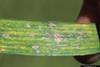
NewsHow wheat protects itself from fungi
Researchers have conducted in-depth studies to establish how the powdery mildew fungus is able to infect wheat despite the presence of resistance genes. The researchers discovered a previously unknown interplay between resistance factors in wheat and disease factors in powdery mildew.
-
 News
NewsResearchers deploy bacteria to make healthier sugar substitute
Researchers have developed a way to biosynthetically produce an otherwise rare sugar called tagatose, which could very well provide the sweetness and natural taste of table sugar without its potential harms. It might even provide some health benefits.
-
 News
NewsA simple blood test can predict Crohn’s disease years before symptoms appear
Researchers have shown a blood test can predict Crohn’s disease years before symptoms appear, opening the doors to early diagnosis and potentially prevention. The test measures a person’s immune response to flagellin, a protein found on gut bacteria.
-
 News
NewsResearchers uncover the secret route of prostate infections
A research team has developed a “mini prostate” organoid model using adult stem cells. Using this model, the scientists could follow a bacterial prostatitis infection step by step under controlled conditions and identify exactly how the bacteria attack.
-
 News
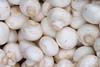
NewsNew study reveals evolutionary and domestication history of button mushroom
A large-scale population genomic study has shed new light on the evolutionary and domestication history of the button mushroom (Agaricus bisporus), one of the most widely cultivated edible fungi in the world.
-
 News
NewsFrom palm oil to designer enzymes: researchers reprogram yeast cells
Many everyday products contain fatty acids from palm oil or coconut oil, but the extraction of these raw materials is associated with massive environmental issues. Researchers have now developed a biotechnological approach that could enable a more environmentally friendly production method.