
All articles by Linda Stewart – Page 95
-
 News
NewsPlastic particles can increase intestinal inflammation
Researchers investigating a possible link between the rising number of people with chronic inflammatory bowel disease and the increasing exposure to micro- and nanoplastics show that plastic particles influence the immune cells and the intestinal microbiome and can thus increase inflammation.
-
 News
NewsVictoria’s Secret grant backs cutting-edge ovarian cancer research
Promising ovarian cancer research by Melanie Rutkowski, PhD, at the University of Virginia Comprehensive Cancer Center has won $700,000 in support from the Victoria’s Secret Global Fund for Women’s Cancers in partnership with Pelotonia and AACR, the American Association for Cancer Research.
-
 News
NewsA high-protein diet can defeat cholera infection
A new study has found that diets high in casein, the main protein in milk and cheese, as well as wheat gluten, could make a dramatic difference in the amount of cholera bacteria able to infect the gut.
-
 News
NewsRising temperatures reshape microbial carbon cycling during animal carcass decomposition in water
Using metagenomic sequencing across a realistic temperature gradient, researchers show that carcass decay triggers a surge in carbon-degradation genes, while warming selectively favors pathways that rapidly consume easily degradable carbon.
-
 News
NewsA single gene underlies begomovirus resistance in eggplant
Researchers identified a gene in eggplant (Solanum melongena) that provides resistance to begomovirus infection. The work reveals a previously unknown defense mechanism and highlights clear biological differences between virus-resistant and virus-susceptible plants.
-
 News
NewsA new ally against tooth decay: Arginine offers sweet relief
A new human clinical trial finds arginine can prevent caries due to bacterial plaques by reducing the acidity, altering the plaque structure and reducing harmful bacteria in the plaques.
-
 News
NewsHow do biodegradable plastic films affect microplastics and soil microorganisms in paddy fields?
A study shows that biodegradable plastic films not only have the yield-preserving advantages of traditional plastic films, but also reduce the environmental risks of long-term accumulation of microplastics through synergistic effect with soil microorganisms.
-
 News
NewsUshikuvirus: A newly discovered giant virus may offer clues to the origin of life
Researchers have reported the discovery of a giant DNA virus that infects amoeba. Named ushikuvirus after Lake Ushiku in the Ibaraki Prefecture of Japan, where it was isolated. This discovery offers further support for the nuclear virus origin hypothesis.
-
 News
NewsMicrobes in breast milk help populate infant gut microbiomes
A new study provides one of the most detailed portraits yet of how different combinations of bacteria in human milk contribute to the assembly of infants’ gut microbiomes.
-
 News
NewsNewly discovered gut microbial molecules in infancy may influence the risk of type 1 diabetes
An international research team has uncovered compelling evidence that gut-microbe-derived molecules may play an important role in shaping the developing immune system during early childhood.
-
 News
NewsBeyond gene scissors: New CRISPR mechanism discovered
Two studies describe how researchers found a novel CRISPR mechanism, Cas12a2, in a family of nucleases that exclusively cleave DNA. In contrast, Cas12a2 was able to broadly cleave both RNA and DNA.
-
 News
NewsWhooping cough vaccination for pregnant women strengthens babies’ immune system
Vaccinating women during pregnancy leads to the transfer of antibodies to their newborns. These antibodies were detected not only in blood, but also in the nasal mucosa, the site where whooping cough bacteria enter the body.
-
 News
NewsCommon brain parasite can infect your immune cells. Here’s why that’s probably OK
Researchers have determined how our immune systems fight back against the parasite Toxoplasma gondii when it makes it inside the CD8+ T cells meant to destroy it.
-
 News
NewsNew research decodes the bacterial “zip code” of colorectal cancer for prediction and survival
A recent study shows that bacteria living inside colorectal tumors form distinct ecosystems that are closely linked to how the disease progression and patient outcomes.
-
 News
NewsCooperation: A costly affair in bacterial social behaviour?
A new study reveals that population bottlenecks can fundamentally reshape how cooperation evolves and persists in complex microbial societies. Researchers explored how repeated bottlenecks affect cooperative traits of Myxococcus xanthus, a model social bacterium.
-
 News
NewsCholera vaccine completes phase 1 trial
A clinical trial shows promising results for PanChol, a single-dose oral vaccine aimed at the up to 4 million annual cholera cases worldwide.
-
 News
NewsSub-lethal water disinfection may accelerate the spread of antibiotic resistance
A new study reveals that environmental stressors do not merely kill bacteria; they can also prime surviving cells to take up resistance genes more efficiently, raising concerns about how antibiotic-resistant bacteria may spread in aquatic environments.
-
 News
NewsSome antibodies outmaneuver germs from sticking to cells
Researchers have uncovered several new mechanisms by which antibodies block E. coli bacteria that cause urinary tract infections from attaching to bladder cells. Once E. coli bacteria get a strong grip, they can be difficult to flush out.
-
 News
NewsNew study uncovers how rice viruses manipulate plant defenses to protect insect vectors
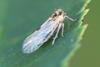
Rather than passively “hitchhiking” within insect vectors, rice viruses actively manipulate plant defense pathways to protect their insect carriers.
-
 News
NewsRibosomal engineering creates ‘super-probiotic’ bacteria
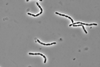
Using ribosome engineering (RE), researchers introduced mutations affecting the protein synthesis mechanism of probiotic Lacticaseibacillus rhamnosus GG (LGG). These mutant LGGs exhibit altered surface protein expression, including increased presentation of so-called “moonlighting proteins.”