
All articles by Linda Stewart – Page 100
-
 News
NewsHarnessing the positive health benefits of microbes
A new article introduces the ‘Database of Salutogenic Potential’, a world-first prototype open-access repository that catalogues microbes and natural compounds linked to positive health outcomes.
-
 News
NewsRising heat reshapes how microbes break down microplastics, new review finds
A new review examines how high and extreme temperatures influence the ability of microorganisms to degrade microplastics. The authors show that heat can both accelerate and suppress microbial breakdown of plastic particles, depending on conditions and the organisms involved.
-
 News
NewsA ‘one-pot’ assay of or rapid portable identification of genotypes I and II African swine fever viruses
Researchers in search of an African swine fever virus genotyping method developed an isothermal ‘one-pot’ CRISPR-Cas12i3/Cas13d-based assay, designated OBServe.v2, to detect two amplified targets from multiplex recombinase polymerase amplification (RPA) in a single tube.
-
 News
NewsA new study reveals the microbial biodiversity of dehesa soil
A study reveals the underground interactions between fungi and oomycetes in twenty Andalusian dehesas, wooded pasturelands typical of the Iberian Peninsula, making it possible to identify the role of water as the main driver of microorganism diversity and to shed new light on the pathogen responsible for la seca.
-
 News
NewsBreakthrough AI speeds up discovery of life-supporting microbes
Scientists have developed a powerful new artificial intelligence tool called LA⁴SR that can rapidly identify previously overlooked proteins in microalgae - tiny organisms that produce much of the Earth’s oxygen and support entire aquatic ecosystems.
-
 News
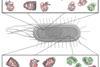
NewsFor certain life-essential proteins in E. coli, repair is more likely
A new study shows that E. coli proteins containing a specific structure are more likely to misfold and, if they are required the bacteria’s survival, more likely to be repaired.
-
 News
NewsStudy reveals high stakes of early immune development—and a potential probiotic fix
Scientists find that certain gut bacteria are essential for building immune defenses during infancy, pointing to new strategies for protecting children’s health. They have identified a way to preserve healthy immune development even when infants need antibiotic treatment.
-
 News
NewsCan an electronic nose detect indoor mold?
Researchers have developed an electronic nose that can reliably sense and identify mold, which causes various health issues for humans and animals, as well as damage to homes and other buildings and structures.
-
 News
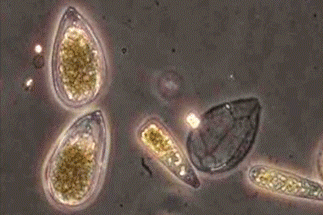
NewsScientists discover fungus that kills toxic algae threatening human health
A team of researchers have discovered a previously unknown species of marine fungus that can kill harmful, bloom-forming algae. The new species, Algophthora mediterranea, is a form of microscopic chytrid fungus that can occupy a broad range of hosts.
-
 News
NewsCancer-fighting bacterial product ‘cocktails’ may offer personalized treatment
Bacteria may be the next frontier in cancer treatment, according to researchers who devised a new approach of creating bacteria-derived mixtures — or cocktails — to help fight bladder cancer. They found that the cocktails significantly boost the immune system’s ability to fight cancer.
-
 News
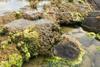
NewsStudy showcases resilience and rapid growth of ‘living rocks’
South Africa is home to some of the oldest evidence of life on Earth, contained in rocky, often layered outcroppings called microbialites. Like coral reefs, these complex “living rocks” are built up by microbes absorbing and precipitating dissolved minerals into solid formations. Source: Rachel Sipler, Bigelow Laboratory for ...
-
 News
NewsCOVID-19 leaves a lasting mark on the human brain
COVID-19 does not just affect the respiratory system, but also significantly alters the brain in people who have fully recovered from the infectious disease, highlighting the long-term neurological impact of the virus.
-
 News
NewsSoil bacteria and fungi emerge as a top predictor of childhood allergic disease
The unique blend of fungi and bacteria in a region’s soil may be the strongest factor explaining its rates of childhood allergic disease, with certain assemblages of soil critters appearing linked with better health outcomes, according to new research.
-
 News
News AMI in 2025: our big round-up of the year
What a year it’s been for Applied Microbiology International. We’ve grown, reached further across the globe and played a bigger part in showing how applied microbiology can make a real difference to the world.
-
 News
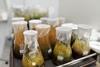
NewsMoss and symbionts offer a promising solution for removing metals from mining and forestry-impacted waters
New findings shed light on the mechanisms behind a natural purification process and identify the key microbial “teammates” that enable mosses to remove metals from water. The new study reveals that mosses do not remove metals alone. The key is the cooperation between the moss and its microbial symbionts.
-
 News
NewsNew one-two punch could knock out drug-resistant TB
Researchers found that pairing the antibiotic rifampicin with a second compound turned multidrug resistance into a weakness—providing proof of concept for using basic science to design life-saving dual-drug strategies.
-
 News
NewsA new way to diagnose deadly lung infections and save lives
Researchers have found a way to identify lung infections in critically ill patients by pairing a generative AI analysis of medical records with a biomarker of lower respiratory infections.
-
 News
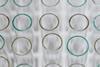
NewsNew method accelerates resistance testing in urinary tract infections
Researchers have developed two methods that allow urine samples to be tested directly for antibiotic susceptibility. Because the procedures do not require standardized bacterial suspensions, the time to result is reduced by up to 24 hours compared to conventional testing.
-
 News
NewsUnseen allies: symbiotic bacteria help clean wastewater, but there is a catch
Scientists have identified new species of denitrifying endosymbionts in wastewater, highlighting their global prevalence – with an unexpected climate implication.
-
 News
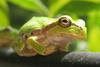
NewsGut bacteria from amphibians and reptiles achieve complete tumor elimination
Researchers have discovered that the bacterium Ewingella americana, isolated from the intestines of Japanese tree frogs (Dryophytes japonicus), possesses remarkably potent anticancer activity.