
All articles by Linda Stewart – Page 105
-
 News
NewsMicrobiome of an entire country is mapped for the first time
An international research team has systematically mapped the microbiome of an entire country for the first time. More than 10,000 environmental samples from across Denmark were analyzed, resulting in an atlas of environmental microbiomes with unprecedented spatial resolution and functional depth.
-
 News
NewsNew tools saved a million lives from malaria last year but progress under threat as drug resistance rises
Wider use of new tools against malaria, including dual-ingredient nets and WHO-recommended vaccines helped to prevent an estimated 170 million cases and 1 million deaths in 2024, according to WHO’s annual World Malaria Report.
-
 News
NewsDo oral bacteria from tooth infections worsen diabetes risk?
A new study demonstrates that Porphyromonas gingivalis and its lipopolysaccharide are potent drivers of both periapical bone destruction and systemic metabolic dysfunction, acting through an IL-17–dependent inflammatory pathway.
-
 News
NewsThe ship-timber beetle’s fungal partner: more than just a food source
Researchers studying the ambrosia fungus of the ship-timber beetle discovered that this fungus stores significantly more nutrients than other types of fungi. The beetle’s symbiotic fungus accumulates various phenolic substances from the wood in its mycelium.
-
 News
NewsComplex life developed earlier than previously thought, study reveals
New research indicates that complex organisms evolved long before there were substantial levels of oxygen in the atmosphere, something which had previously been considered a prerequisite to the evolution of complex life.
-
 News
NewsThe power of gut enzymes: why healthy eating affects everyone differently
Researchers have uncovered a mechanism that determines how our gut microbiome processes healthful plant compounds. The chemical cookbook of gut bacteria varies from person to person—and is often disrupted in chronic diseases.
-
 News
NewsResearchers use ‘brain-on-a-chip’ to revolutionize fight against deadly encephalitis viruses
A transparent chip no larger than a stick of gum is helping scientists transform the way researchers study the human brain and develop treatments for some of the world’s deadliest viruses.
-
 News
NewsSingle-cell movies reveal how host physiology sets phage success - and how to time therapies
A new study outlines how an innovative imaging platform can be used to help uncover the reasons why phages succeed or fail when used to target bacterial infections.
-
 News
NewsNew roadmap reveals how everyday chemicals and microbes interact to fuel antimicrobial resistance
A new perspective outlines an urgent scientific roadmap for understanding how common chemicals interact with microbial communities to accelerate the global crisis of antimicrobial resistance.
-
 News
NewsScientists clarify how much metal in soil is 'too much' for people and the environment
A new review explains which laboratory tools, models and tests best capture the true bioavailability of heavy metals in soil and how regulators worldwide are starting to use them.
-
 News
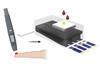
NewsNew test distinguishes vaccine-induced false positives from active HIV infection
A new device correctly identified those with active HIV-1 infection 95% of the time and those without active infection but with vaccine-induced molecules that could trigger a false positive, 98% of the time.
-
 News
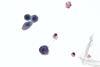
NewsStudy shows common childhood virus can drive bladder cancer development
Tackling a common childhood virus could open the door to preventing bladder cancer, according to new research. The study suggests that a virus most people pick up in childhood can trigger the type of DNA damage that can lead to bladder cancer later in life.
-
 News
NewsFamily dogs boost adolescent mental health through the microbiome
It’s no surprise that dogs benefit people’s mental health. Researchers point to a reason as to why: dogs prompt changes in the collection of microbes that live in and on our bodies, resulting in an increase in mental health.
-
 News
NewsResearchers confirm new rickettsia species found in dogs
Researchers have confirmed that a species of Rickettsia first seen in dogs in 2018 is a new species of bacteria. The new species is associated with symptoms similar to those of Rocky Mountain spotted fever (RMSF) in dogs, but has not yet been found in humans.
-
 News
NewsCedars-Sinai and Exobiosphere partner to launch biomedical research aboard the Haven-1 Space Station
Cedars-Sinai is partnering with Exobiosphere, a company that has developed scientific hardware to automate biomedical research in space and on Earth, and will send experiments to Haven-1, set to become the world’s first commercial space station.
-
 News
NewsPlant ‘first responder’ cells warn neighbors about bacterial pathogens
Researchers have found that a subset of epidermal cells in plant leaves serves as early responders to chemical cues from bacterial pathogens and communicate this information to neighbors through a local traveling wave of calcium ions.
-
 News
NewsAntibiotics could trigger immune response through gut microbiome metabolites
Researchers report how one of the most abundant gut bacteria responds to tetracyclines, a class of commonly prescribed antibiotics. Newly characterized signals released by the bacterium could aid the host’s immune response, inhibit pathogens and restructure the gut microbiome.
-
 News
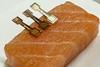
NewsFish freshness easily monitored with a new sensor
Researchers have developed a simple, effective electronic device that quickly measures a compound that forms when decomposition starts. The prototype sensor can determine how fresh a fish is in less than two minutes.
-
 News
NewsAlgae show how to make two proteins from one messenger RNA
Scientists have uncovered a hidden feature of protein translation in green algae, offering a new perspective on the basic rules of gene expression.
-
 News
NewsLight-sensitive microbial protein may herald new cancer therapies
Researchers used a mouse cancer model to show that tumors expressing Archaerhodopsin 3 shrink after exposure to green light.