
All Microbiological Methods articles – Page 5
-
 News
NewsNew single-cell transcriptomic clock reveals intrinsic and systemic T cell aging in COVID-19 and HIV
Scientists developed a new single-cell transcriptomic clock called T immune cell transcriptomic clock (Tictock) to measure aging in specific immune cells. They found that in patients with acute Covid-19, the infection increased the biological age of naïve CD8 T cells.
-
 News
NewsA yeast enzyme helps human cells overcome mitochondrial defects
An international team has experimentally uncoupled nucleotide synthesis from mitochondrial activity using ScURA, a yeast-derived genetic tool now available to the research community that will enable new explorations of cellular metabolism.
-
 News
NewsSilent enemies, smart weapons - switching off phage contamination using nanoparticles
Bacteriophages represent a serious threat to laboratories and industries that rely on bacterial cultures for production. Researchers have demonstrated an innovative solution that enables targeting the surface of bacteriophage through electrostatic interactions.
-
 News
NewsStiff gels slow germs: New study maps hydrogel properties that control bacterial growth
Scientists has found that firmer, lower water content hydrogels limit bacterial growth, with implications for designing antibacterial coatings, infection models, and advanced medical materials.
-
 News
NewsResearchers rebuild microscopic circadian clock that can control genes
Researchers have solved how the circadian clocks within microscopic bacteria are able to precisely control when different genes are turned on and off during the 24-hour cycle.
-
 News
NewsScientists create ‘smart underwear’ to measure human flatulence
Scientists have created Smart Underwear, the first wearable device designed to measure human flatulence. The device helps scientists revisit long-standing assumptions about how often people actually fart. It also opens a new window into measuring gut microbial metabolism in everyday life.
-
 News
NewsNew algorithm enhances microbiome biomarker discovery by integrating biological relationships
Researchers have developed a novel algorithm, Microbiome Elastic Feature Extraction (MEFE), that significantly improves the identification of microbiome biomarkers by incorporating phylogenetic, taxonomic, and functional relationships among microbes.
-
 News
News Engineered moths could replace mice in research into “one of the biggest threats to human health”
Scientists have created the world’s first genetically engineered wax moths – a development which could both accelerate the fight against antimicrobial resistance (AMR) and significantly reduce the need for mice and rats in infection research.
-
 News
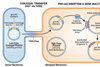
NewsNext generation genetics technology developed to counter the rise of antibiotic resistance
The new Pro-Active Genetics (Pro-AG) tool called pPro-MobV is a second-generation technology that uses an approach similar to gene drives to disable drug resistance in populations of bacteria.
-
 News
NewsA standout solvent for today’s biorefineries
Researchers tested multiple distillable amine-based solvents to see how they performed in pretreatment processes for biomass. They found butylamine was a superior solvent.
-
 News
NewsBreakthrough in human norovirus research: Researchers overcome major obstacle to grow and study the virus
Researchers have overcome a major obstacle that limited their ability to continuously grow human norovirus. They identified factors that restrict viral replication and developed a way to overcome them to optimize long-term viral cultivation.
-
 News
NewsTesting menstrual blood for HPV could be “robust alternative” to cervical screening
Testing menstrual blood for human papillomavirus (HPV) could be a “robust alternative or replacement” for current cervical cancer screening by a clinician, finds a study. The researchers say using menstrual blood for HPV testing is convenient and non-invasive.
-
 News
NewsYeast cells can be used for rapid testing of cancer immunotherapy
An international research team has developed a new yeast-based biotechnological platform that makes it possible to test and understand advanced cancer treatments much faster and cheaper than before. It can reduce development time for new types of cancer immunotherapy from months to days or weeks.
-
 News
NewsGreen chemistry: Friendly bacteria can unlock hidden metabolic pathways in plant cell cultures
Co-culturing plant cells with harmless bacteria can expand the diversity of obtainable plant-derived compounds for pharmaceuticals, cosmetics, and agrochemicals, a new study shows.
-
 News
NewsNew tool shows how to enter and change pneumocystis fungi
Researchers have reported success in genetically modifying the fungal pathogen Pneumocystis murina. Their approach uses extracellular vesicles from mouse lungs to deliver gene-modifying molecules inside the fungal cells. The modified fungus expressed the introduced genomic modifications.
-
 News
NewsHow genes influence the microbes in our mouths
A new study has found human genetic factors that influence the oral microbiome and may increase risk of cavities and tooth loss in some people. Analysis of the now largest collection of oral microbiome profiles reveals interactions between human and bacterial DNA.
-
 News
NewsTracking antibiotic resistance in the environment gets a high tech upgrade
Antibiotic resistance is often framed as a hospital problem, but a growing body of evidence shows that the environment plays an equally critical role in the global spread of drug resistant bacteria. Rivers, soils, wastewater, and even the air can act as reservoirs for antibiotic resistance genes that may eventually ...
-
 News
NewsScientists illuminate ancient plant-fungus partnership at molecular level
Researchers have coupled two powerful tools that allow scientists to identify which proteins work together to make plant-fungi partnerships function—and to verify those interactions in living plant roots, where the collaboration actually occurs.
-
 News
NewsPIXL Max: Automated colony picker breaks records for speed and accuracy
With the latest innovation from the team at Singer Instruments, a new standard for speed and repeatability in microbial colony pickers has been achieved through the integration of cutting edge AI technologies.
-
 News
NewsScientists engineer quantum-enabled proteins, opening a new frontier in biotechnology
A new study reports the creation of a new class of biomolecules, magneto-sensitive fluorescent proteins, that can interact with magnetic fields and radio waves. This is enabled by quantum mechanical interactions within the protein, and occur when it is exposed to light of an appropriate wavelength.