
All monoclonal antibodies articles
-
 News
News Huayunuo approval positions China at forefront of viral hepatitis innovation, says GlobalData
Huahui Health has recently secured conditional approval from China for Huayunuo (Libevitug Injection), marking it as the first domestically developed monoclonal antibody (mAb) drug for chronic hepatitis D virus (HDV) infection in adults with or without compensated cirrhosis.
-
 News
NewsScientists develop first-of-its-kind antibody to block Epstein Barr virus
Using mice with human antibody genes, scientists have developed new genetically human monoclonal antibodies that prevent two key antigens on the surface of the Epstein Barr virus (EBV) from binding to and entering human immune cells.
-
 News
NewsResearchers discover how a respiratory bacterium obtains essential lipids from the human body and targets fat-rich tissues
A multidisciplinary team has uncovered a key mechanism that allows the human bacterium Mycoplasma pneumoniae—responsible for atypical pneumonia and other respiratory infections—to obtain cholesterol and other essential lipids directly from the human body.
-
 News
NewsGlobal Virus Network issues warning on the Marburg virus outbreak in Ethiopia
The Global Virus Network (GVN) has issued a statement on the newly confirmed outbreak of Marburg virus disease (MVD) in southern Ethiopia. This represents the country’s first documented outbreak of Marburg virus and raises urgent public health, research, and surveillance imperatives.
-
 News
NewsGroundbreaking new projects launched to lower the cost of monoclonal antibody production
LifeArc and the Gates Foundation have awarded more than $5m to seven projects aimed at developing cheaper and more efficient ways to produce monoclonal antibody (mAb) treatments. The innovative approaches include using filamentous fungus to produce mAbs.
-
 News
NewsNew monoclonal antibody shows promise for preventing malaria infections
A new early-stage clinical trial has found that a novel monoclonal antibody provided dose-dependent full protection against the malaria parasite with minimal side effects.
-
 News
NewsVanderbilt and Parse Biosciences collaborate on new measles treatment
Vanderbilt University Medical Center and Parse Biosciences, an innovator in single-cell sequencing, are collaborating on a new treatment to help unvaccinated measles victims, as the U.S. measles outbreak has now reached its highest case count in 30 years.
-
 News
NewsStudy uncovers how certain antibodies help fight tuberculosis
Researchers collected the largest library of monoclonal antibodies to Mycobacterium tuberculosis (Mtb) and identified specific antibody features that significantly limit its growth.
-
 News
NewsClinical trial underway for potential Long COVID treatment
A clinical trial is underway to assess the effectiveness and safety of sipavibart, AstraZeneca’s long-acting monoclonal antibody designed to provide protection against Covid-19, as a potential treatment for Long Covid.
-
 News
NewsMonoclonal antibody nirsevimab provides strong protection against severe RSV in infants
Nirsevimab, a monoclonal antibody, is highly effective in real-world conditions at preventing severe respiratory syncytial virus (RSV) infections in infants, suggests a meta-analysis.
-
 News
NewsTransatlantic collaboration to develop therapeutic for Crimean-Congo Hemorrhagic Fever
A new transatlantic collaboration will look to develop an affordable and accessible monoclonal antibody therapeutic for Crimean-Congo Hemorrhagic Fever Virus (CCHFV), which could treat and protect thousands of people globally.
-
 News
NewsAntibody-based therapy is several steps closer to treat lethal mucormycosis
A new paper discusses the use of monoclonal antibodies to target a key fungal cell surface protein, CotH, which enables the Mucorales fungus to invade human cells and cause mucormycosis, which has high mortality rates in people with weakened immune systems.
-
 News
NewsBAADesign enables the immune escaped etesevimab fully-armed against SARS-CoV-2 Omicron subvariants
BAADesign offers a powerful tool for reengineering monoclonal antibodies to combat emerging SARS-CoV-2 variants, providing a scalable solution for future pandemic preparedness, according to a new study.
-
 News
NewsResearchers identify antibodies against Klebsiella pneumoniae
Researchers have identified 29 novel antibodies against the bacterium Klebsiella pneumoniae, an important cause of drug-resistant infections.
-
 News
NewsAntiviral-resistant variants of SARS-CoV-2 can emerge in immunocompromised people
Individuals with compromised immunity and persistent COVID-19 infections can harbor drug-resistant variants of the SARS-CoV-2 virus, which have the potential to spread to the general population.
-
 News
NewsNew tool may help prioritize high-risk infants for RSV immunization
On the heels of a shortage of nirsevimab for infant respiratory syncytial virus (RSV) lower respiratory tract infection (LRTI) prevention, a new tool may help identify newborns at highest risk for developing serious infections.
-
 News
NewsExperimental NIH malaria monoclonal antibody protective in Malian children
One injected dose of an experimental malaria monoclonal antibody was 77% effective against malaria disease in children in Mali during the country’s six-month malaria season, according to the results of a mid-stage clinical trial.
-
 News
NewsScientists find weak points on Epstein-Barr virus
Studies of interactions between two lab-generated monoclonal antibodies (mAbs) and an essential Epstein-Barr virus (EBV) protein have uncovered targets that could be exploited in designing treatments and vaccines.
-
 News
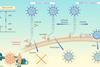
NewsProtective human monoclonal antibody targets a conserved site of spike glycoprotein of SARS-CoV-2 Omicron variants
Scientists report that mAb-39 greatly improved the neutralizing activity of anti-RBD antibody, the same type of EUA therapeutic monoclonal antibodies, against the highly neutralization-resistant Omicron variants.
-
 News
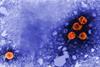
NewsMonoclonal antibody shows promise for treating chronic hepatitis B and D infections
In a preclinical study, the potential of an engineered investigational human monoclonal antibody for the treatment of chronic hepatitis B and hepatitis D has been demonstrated.