
More News – Page 51
-
 News
NewsBiosensor detects early fungal outbreaks, advances plant biotechnology
A new biosensor detects the emerging presence of fungus on plants at the molecular level, paving the way for next-generation crop protection and the development of stress-tolerant plants.
-
 News
NewsNew research suggests HIV can be kept in check – without medication
An international study shows that a combination of two parts of the immune system – antibodies and T cells – can suppress HIV without lifelong medication.
-
 News
NewsResearchers reveal m6A epigenetic modification controls arbovirus infection and transmission between vertebrates and mosquitoes
Researchers reveal that N6-methyladenosine (m6A) epigenetic modifications in mosquito-borne flaviviruses (MBFs) enhance viral propagation in vertebrates and thus increase transmission from vertebrates to mosquitoes.
-
 News
NewsMapping the hidden gene highways of wastewater biofilms
A new study uncovers the hidden microbial connections within wastewater biofilms by combining Hi-C sequencing with multi-omics to directly map which phages and plasmids are associated with which microbial hosts.
-
 News
NewsHKU innovations achieve recognition at the 51st International Exhibition of Inventions at Geneva
The University of Hong Kong (HKU) secured 46 awards at the 51st International Exhibition of Inventions of Geneva, including recognition for a project aiming to gain immunity against the three major respiratory viruses through home-based toothbrushing.
-
 News
NewsStudy details neuropsychiatric symptoms and biological mechanisms of long COVID
A review highlights the need to standardize diagnosis and treatment of long Covid. In the study, the researchers emphasize that avoiding SARS-CoV-2 infection is the only way to prevent long COVID so far.
-
 News
NewsEndometrial microbiota-dimethylglycine-Treg cell axis affects endometrial receptivity in recurrent implantation failure
A new study investigates the possibility of an imbalance in reproductive tract microbiota as a potential factor associated with recurrent implantation failure, offering a novel and promising avenue for exploration.
-
 News
NewsEuropean Region misses 1 in 5 TB cases: WHO Europe and ECDC publish new joint surveillance report
The European Region continues to fall short of regional and global End TB milestones on two fronts: a persistent detection challenge, with one in five TB cases going undiagnosed or unreported, and drug-resistance levels that remain far higher than in other regions.
-
 News
NewsSelenium nanoparticles and glutathione synergistically enhance soybean salt tolerance by activating the JA pathway and arbutin-mediated rhizosphere microbiota
Researchers addressing soil salinity have developed a novel nano-biostimulant, a synergistic composite offering a new paradigm for enhancing salt tolerance by coordinating the plant’s endogenous signaling pathways with the functions of its rhizosphere microbial community.
-
 News
NewsField-portable assays help scientists study and explore caves
A new study shows that field-portable assays are effective at identifying microbes directly in the field in real time, making it easier to study and explore caves. The researchers established a roadmap for thoroughly studying cave life, emphasizing the need to sample widely and from different materials.
-
 News
NewsNew blood- and microbiome-based neural networks forecast human biological age
A new study aims to develop and compare two models for calculating biological age based on laboratory blood tests and composition of gut microbiota.
-
 News
NewsMicrobial warfare helps bacteria evolve, study shows
A study of commensal bacgteria shows that Streptococcus mitis can kill the pathogen Streptococcus pneumoniae during a physiological state known as competence, when bacteria become able to take up DNA from their surroundings.
-
 News
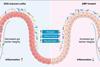
NewsMachine learning identifies antimicrobial peptide candidate for ulcerative colitis
Scientists applied machine learning to accelerate AMP discovery and identify candidates with therapeutic potential for ulcerative colitis.
-
 News
NewsFluorescent imaging reveals how a global parasite develops, opening new paths for drug treatment
Researchers adapted a fluorescent imaging system typically used to study human cells, enabling real-time observation the parasite’s growth, a promising breakthrough against an organism that that infects both humans and animals.
-
 News
NewsSingle-cell sequencing reveals unexpected protist diversity
Scientists developing a single-cell sequencing pipeline have revealed previously unknown diversity from a group of free-living protists closely related to the parasites that cause sleeping sickness.
-
 News
NewsEngineered biochar and beneficial bacteria team up to boost crop growth
Researchers have developed a specially engineered biochar made from sewage sludge that, when combined with beneficial bacteria, significantly enhances plant growth by improving how crops absorb nitrogen.
-
 News
NewsWhy some people naturally control HIV even after stopping therapy — and how we can leverage that to treat others
New research offers a path toward life without daily HIV pills, suggesting a common diabetes pill could help achieve long-term remission.
-
 News
NewsSmart wound dressing delivers antibiotics on-demand, accelerating healing and reducing resistance
Biomedical engineers have developed a new wound dressing material that releases antibiotic drugs only when harmful bacteria are present in a wound. The material could help rapidly clear wound infections to accelerate healing while reducing the unnecessary use of antibiotics.
-
 News
NewsBiochar’s climate promise depends on soil type: Cuts N₂O in dry fields but boosts it in rice paddies
By tracing the exact microbial pathways responsible for N₂O production, the scientists reveal why the same soil amendment produces opposite climate outcomes under different land uses.
-
 News
NewsGut microbiota and the gut–brain axis: Mechanisms and therapeutic hopes for brain diseases
A new study looks at the gut–brain axis (GBA), a sophisticated bidirectional communication network that integrates neural, immune, endocrine, and metabolic pathways to govern brain function and systemic homeostasis.