
More News – Page 60
-
 News
NewsBiomarkers indicating higher liver cancer risk in chronic hepatitis B patients identified
Researchers have identified Hepatitis B RNA serum levels as a biomarker that more accurately stratifies risk of liver cancer in individuals who have been functionally cured of chronic hepatitis B.
-
 News
NewsWorld’s first rum brewed with high ginjo-aroma–producing fission yeast Schizosaccharomyces japonicusponicus
Researchers at Kumamoto University have announced the world’s first rum produced using the fission yeast Schizosaccharomyces japonicus, marking a breakthrough in fermentation science and craft spirits innovation. The new product, “JAPONICUS RHUM AGRICOLE,” goes on sale February 27, 2026. Source: Kumamoto University Professor Tokio Tani (left) holds the ...
-
 News
NewsFungi could transform leftovers into lifelines
A new paper outlines an ’emerging circular fungal biorefinery’ – a system in which low-value agricultural byproducts are converted through fungal fermentation into high-protein, nutrient-rich foods.
-
 News
NewsMicrobes unlock a hidden natural source of mercury emissions from ‘stable’ minerals
A new study reports a previously overlooked natural mechanism that could contribute substantially to global mercury emissions. Researchers show that chemolithoautotrophic microbes can use mercury sulfide nanominerals as an energy source and, in the process, release volatile Hg0 into the air.
-
 News
NewsScientists develop new gut health measure that tracks disease
Scientists have found that healthy and diseased digestive systems behave like two distinct ecological states, driven not by individual microbes but by how entire bacterial communities compete and cooperate.
-
 News
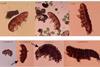
NewsWater bears reveal potential for adapting and protecting Martian resources
Microscopic tardigrades help inform how simulated Martian soil might support plant life and mitigate contaminants shedding from human explorers, researchers report.
-
 News
NewsNanoplastics can interact with Salmonella to affect food safety, study shows
Researchers investigating what happens when nanoplastics (polystyrene) interact with Salmonella discovered an increased expression of virulence-related genes. The bacteria also formed thicker biofilms, which indicates they are becoming more virulent.
-
 News
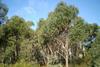
NewsNative forest litter helps rebuild soil life in post-mining landscapes
Researchers investigating rehabilitated land near a former uranium mine in northern Australia found that introducing leaf litter from nearby native Eucalyptus woodlands rapidly reshaped soil microbial communities and improved their functional potential.
-
 News
NewsStudy reveals immune blueprint for next-generation malaria vaccine
New research has uncovered how the human immune system fights Plasmodium vivax, paving the way for the first effective vaccine against the most widespread form of malaria. It provides critical evidence of how protective immunity to P. vivax works, identifying specific targets on the parasite.
-
 News
NewsTackling tuberculosis systematically: How the environment shapes TB risk
Researchers introduce the concept of the “tuberculogenic environment”: the complex interplay of structures, rules, and living conditions that keep certain communities at high TB risk, even when care is available.
-
 News
NewsBacterial cellulose as a sustainable vehicle for the controlled release of nisin and mandelic acid: A clean beauty-based approach for acne treatment
A new study developed a bacterial cellulose-based delivery system loaded with nisin and mandelic acid, targeting acne treatment. Bacterial cellulose, derived from Komagataebacter xylinus, served as a biocompatible, biodegradable matrix to control the release of bioactive compounds.
-
 News
NewsTrust your gut to heal your brain
Researchers have found that short-term antibiotic treatment significantly reduced neuroinflammation and neurodegeneration following traumatic brain injury (TBI) by altering the gut microbiome in animal models.
-
 News
NewsA highly precise target for medications against tropical diseases
Researchers have discovered a critical vulnerability shared by the pathogens that cause African sleeping sickness, Chagas disease and leishmaniasis. The PEX38 protein plays a crucial role in the formation of certain organelles of the trypanosomes that are essential for their energy supply.
-
 News
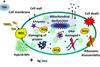
NewsFe₃O₄@mPEG-Ag nanoparticles: a new frontier in combating antibiotic resistance
A collaborative study introduces Fe₃O₄@mPEG-Ag nanoparticles (NPs) as a groundbreaking non-antibiotic strategy to combat drug-resistant bacteria, offering the antibacterial properties of silver (Ag) with the stability and biocompatibility of magnetite (Fe₃O₄) modified by methoxy poly(ethylene glycol) (mPEG).
-
 News
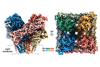
NewsImaging technique is step towards needed treatments for hantaviruses in new molecular ma
Researchers have produced a detailed blueprint, the highest resolution yet, for a protein complex the Andes virus uses to infect host cells. The new detailed structural information enabled the researchers to produce a vaccine candidate that caused mice to produce neutralizing antibodies against the Andes virus.
-
 News
NewsAcoziborole Winthrop receives European Medicines Agency positive opinion as three-tablet, single-dose treatment for most common form of sleeping sickness
The European Medicines Agency has granted a positive opinion to Acoziborole Winthrop (acoziborole) as a single-dose oral treatment for both early- and advanced-stage gambiense sleeping sickness in adults as well as in adolescents 12 years and older weighing at least 40 kilograms.
-
 News
NewsProtein interplay offers insights into how the immune system recognizes viral RNA
A new study reveals how two proteins cooperate in a key early step of antiviral detection. Using cryo-electron microscopy and high-speed atomic force microscopy, researchers found that LGP2 binds to viral RNA and recruits MDA5 molecules, as if threading beads on a string.
-
 News
NewsMountain soils in arid regions may emit more greenhouse gas as climate shifts, new study finds
A new field study from northwestern China reveals that climate-driven changes in temperature and moisture could significantly reshape nitrous oxide emissions from soils in arid mountain ecosystems, with important implications for future climate feedbacks.
-
 News
NewsUnder the Lens: Nicola Holden and Gil Domingue weigh in on the raw milk debate
The latest episode of Applied Microbiology International’s ‘Under The Lens’ video series turns the spotlight on the contentious issue of raw milk, with AMI Trustee Professor Emmanuel Adukwu interviewing Professor Nicola Holden and Dr Gil Domingue.
-
 News
NewsGut health home-testing kit outcomes vary between kits and manufacturers
Results and health assessments from gut microbiome home-testing kits vary whether they are produced by the same or different manufacturers. The findings on testing kits from seven providers highlight the need for caution when interpreting or acting on test results, according to the authors.