
More USA & Canada News – Page 15
-
 News
NewsIn pregnant mice with severe flu, harmful molecules can breach fetal barriers
A new study shows, for the first time, that severe flu infection in pregnant mice leads to a breakdown in placental and brain barriers, leading to the accumulation of potentially harmful molecules in the fetal brain. Fibrinogen can pass into developing fetal brains.
-
 News
NewsHeadspace invaders: How mosquito-borne viruses breach the brain’s defenses
Using a stem cell-based model of the human blood-brain barrier, researchers compared two closely related Sindbis virus strains — one brain-invading and one not — and found that small changes in viral surface proteins called glycoproteins dictate whether the virus can cross.
-
 News
NewsKey to the riddle of sleep may be linked to bacteria
New research suggests a new paradigm in understanding sleep, demonstrating that a substance in the mesh-like walls of bacteria, known as peptidoglycan, is naturally present in the brains of mice and closely aligned with the sleep cycle.
-
 News
NewsTrojan horse: Amoebae as carriers for human Norovirus and Adenovirus
A new study reveals that common waterborne amoebae can ingest and protect human viruses, extending their environmental persistence. Human norovirus and human adenovirus can enter and persist within FLA.
-
 News
NewsStudy models how human behavior, lockdowns and restrictions shaped COVID’s spread
Researchers employed computer modeling and large datasets to better understand how COVID-19 was transmitted in one community in South Africa during the course of the worldwide pandemic.
-
 News
NewsNew study finds dried blood spot test reliably detects congenital CMV at birth
New research confirms that testing for congenital cytomegalovirus (cCMV) at birth using the routinely collected dried blood spot (DBS) is a reliable and effective method to identify newborns at risk for long-term developmental challenges.
-
 News
NewsStudy reveals how tick-borne encephalitis virus enters cells
The protein on human cells that tick-borne encephalitis virus (TBEV) uses for infection has now been identified—a major step toward understanding how TBEV causes neurological disease and for developing antiviral drugs.
-
 News
NewsMore than 50 scientific societies issue letter to Congress expressing concerns regarding executive order on federal grantmaking
A coalition of more than 50 scientific societies has issued a letter to the United States Congress, expressing concerns over provisions in the 7 August 2025 Executive Order (EO) titled “Improving Oversight of Federal Grantmaking.”
-
 News
News NIH grant to UC Riverside supports research on dangerous emerging virus
Researchers have been awarded an NIH grant of about $3.4 million over five years to lead an international study focused on developing protective antibodies against Crimean-Congo hemorrhagic fever virus (CCHFV), a biosafety level 4 pathogen and a Category A bioterrorism agent.
-
 News
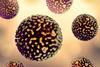
NewsHow viruses build perfectly symmetrical protective shells
Researchers used a new simulation framework to capture key biological factors like protein diffusion, genome flexibility, and shape-shifting behavior to model how viral proteins self-assemble into symmetric shells.
-
 News
NewsNew single-dose, temperature-stable rabies vaccines could expand global access
Researchers have discovered a new way to make human rabies vaccines that could greatly expand access to immunization across the globe. The new method creates shots that are temperature-stable—meaning they don’t need to be stored at cold temperatures.
-
 News
NewsScientists show how to grow more nutritious rice that uses less fertilizer
Scientists have shown that nanoscale applications of selenium can decrease the amount of fertilizer necessary for rice cultivation while sustaining yields, boosting nutrition, enhancing the soil’s microbial diversity and cutting greenhouse gas emissions.
-
 News
NewsGut bacteria linked to how our genes switch on and off, research finds
The trillions of microbes that live in the human gut may play a bigger role in health than previously thought, according to a review highlighting how the gut microbiome can affect epigenetics, the process that turns genes on or off without changing the DNA itself.
-
 News
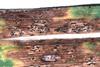
NewsFungal genome secrets unlocked in breakthrough for crop disease research
Scientists have developed a new method to improve the accuracy of gene mapping in complex organisms. Using an advanced bioinformatics tool, they re-annotated the genome of Zymoseptoria tritici, a major fungal pathogen responsible for septoria leaf blotch.
-
 News
NewsTropical diseases: Global health meeting showcases resilience of field under fire
At a moment of monumental challenges for global health, thousands of researchers, clinicians and public health professionals from over 100 countries will gather in Toronto for the 2025 Annual Meeting of the American Society of Tropical Medicine and Hygiene (ASTMH).
-
 News
NewsGut punch: $2 million to decode bacteria’s role in fighting disease
A $2 million grant to UC Riverside will explore how gut bacteria shape human health. The NIH award will support Ansel Hsiao’s lab in its quest to answer questions about how gut microbes communicate with each other and with their human hosts to influence health.
-
 News
NewsJie Xiao to receive 2026 Carolyn Cohen Innovation Award from The Biophysical Society
The Biophysical Society has announced that Jie Xiao, of the Johns Hopkins School of Medicine, USA, will receive the 2026 Carolyn Cohen Innovation Award.
-
 News
News'Know-do gap' drives inappropriate antibiotic overprescribing for child diarrhea in India
Researchers report that the persistent “know-do gap” — where clinicians know guidelines but practice differently — is the primary driver of antibiotic overprescribing for pediatric diarrhea in India’s private sector.
-
 News
NewsStudy links chronic sickle cell pain to gut microbial imbalance
Researchers have found a clear connection between chronic sickle cell disease pain and the bacteria present in the gastrointestinal tract. The team alleviated chronic pain by transplanting bacteria from the feces of healthy mice into the digestive tract of sickle cell animals.
-
 News
NewsYeast in gut microbiome can worsen salmonella infection
Researchers have discovered that a yeast commonly found in our gut can make infection with salmonella worse. Salmonella binds to Candida albicans and triggers a chain reaction that allows the bacteria to better invade cells lining the intestines.