
News in Disease X
-
 News
NewsOne of cholera’s great enemies is found in the human gut
Cholera-causing bacteria are locked in an evolutionary arms race with a viral nemesis, according to a new genomic study. Researchers found that in the Ganges Delta, cholera bacteria rapidly gain and lose special armour that protects against attacks from the virus, known as bacteriophage ICP1.
-
 News
NewsGlobal Virus Network launches expanded “Global Guardians for Pandemic Preparedness” program for Florida high school students
The Global Virus Network (GVN) announced the launch of its expanded Global Guardians for Pandemic Preparedness initiative, with applications now open for high school students across the state of Florida.
-
 News
NewsScientists develop therapeutic, nasally delivered DNA vaccine for tuberculosis
Research shows the vaccine — in combination with drug therapy — accelerated a relapse-free TB cure in mice, improved activity of a drug-resistant TB regimen and stimulated immune responses in nonhuman primates.
-
 News
NewsA study links armed conflict in Colombia with higher tuberculosis cases and mortality
Areas with the highest intensity of conflict between 2008 and 2019 recorded a higher disease burden, highlighting the need for control strategies tailored to each territory.
-
 News
NewsDramatic reduction in prescribing of hepatitis C antivirals may leave many curable patients untreated
A new study analyzed a large national prescription database to estimate hepatitis C treatment courses over time and trends by patient and prescriber characteristics from 2013–2025. Prescriptions rose rapidly after direct-acting antivirals first became available, peaking in 2015, but then declined sharply through 2025.
-
 News
NewsClimate change is fueling disease outbreaks
Researchers analyzed the connection between a cyclone in Peru and a massive outbreak of dengue fever, a mosquito-borne viral disease that can cause fever, rash, and life-threatening symptoms like hemorrhage and shock. Their findings reveal that warmer, wetter weather linked to climate change is making disease epidemics more likely.
-
 News
NewsWhat factors influence likelihood and severity of Ebola outbreaks?
Two new papers looked at factors that contribute to how Ebola outbreaks begin and how severe they become. This Q&A looks at how the results could inform public health interventions to prevent pathogen emergence or slow the spread of Ebola and other infectious diseases.
-
 News
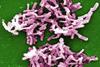
NewsStay or stray? Scientists discover why some gut microbes persist after fecal transplants
Scientists have identified why some gut microbes successfully stay in the gut after faecal transplants, whilst others are much more transient. They tracked key genetic features of gut bacteria in 86 healthy adults over the course of a year.
-
 News
NewsScientists identify more effective way to detect poultry viruses in live markets
Scientists have found that viruses circulating in live poultry markets can be detected more effectively by sampling the surrounding environment than by testing individual birds. The study shows that environmental sampling can uncover a broader range of poultry viruses.
-
 News
NewsStudy warns of underrecognized Lassa Fever threat with global implications
A new study shows an urgent need for improved detection and treatment of Lassa fever. The study in Liberia found a high prevalence of Lassa fever among febrile admissions: 11% of patients with fever had Lassa fever despite not being suspected clinically.
-
 News
NewsThermo Fisher Scientific launches new color-based culture media to help detect Candida infections faster
Thermo Fisher Scientific today announced the launch of Thermo Scientific™ Brilliance™ Candida 2 Agar and Spectra™ Candida Agar, new color-based (chromogenic) culture media to help laboratories quickly detect and differentiate clinically important Candida species.
-
 News
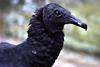
NewsHuge toll: Bird flu rampant among black vultures
More than four out of every five dead black vultures examined by University of Georgia researchers tested positive for highly pathogenic avian influenza, according to a new study. Their indiscriminate scavenging appears to sustain transmission of the virus beyond the typical bird flu season.
-
 News
NewsTackling tuberculosis systematically: How the environment shapes TB risk
Researchers introduce the concept of the “tuberculogenic environment”: the complex interplay of structures, rules, and living conditions that keep certain communities at high TB risk, even when care is available.
-
 News
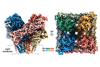
NewsImaging technique is step towards needed treatments for hantaviruses in new molecular ma
Researchers have produced a detailed blueprint, the highest resolution yet, for a protein complex the Andes virus uses to infect host cells. The new detailed structural information enabled the researchers to produce a vaccine candidate that caused mice to produce neutralizing antibodies against the Andes virus.
-
 News
NewsYou don’t need to be very altruistic to stop an epidemic
Researchers have used a mathematical model of epidemic behaviour to find that even people who are only barely altruistic - valuing their own life as equivalent to the lives of around 100,000 others – would still see it as rational to drastically reduce their social contacts when infected.
-
 News
NewsPower grids to epidemics: study shows small patterns trigger systemic failures
Why do some systems collapse suddenly after what seems like a minor disturbance? In nature, a local disease outbreak can quickly escalate into an epidemic. New research suggests that in many cases, the key isn’t the entire system – but its smallest building blocks.
-
 News
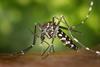
NewsDebilitating virus can spread in cool weather, increasing health risk in Europe
Chikungunya virus, a debilitating tropical disease caused by infected mosquito bites, poses a greater health threat in Europe than previously thought because it can be spread when air temperatures are as low as 13 degrees Celsius.
-
 News
NewsStrategic changes in water treatment could prevent disease outbreaks
A breakthrough new study shows how strategic changes in water treatment effectively treated a deadly outbreak of Legionnaires’ Disease. For the first time, the study provides evidence of an outbreak being stopped by introducing disinfection to previously untreated groundwater.
-
 News
NewsGlobal commitment on display as countries negotiate key annex to the Pandemic Agreement
Member States of the World Health Organization (WHO) concluded a weeklong round of negotiations on draft annex for Pathogen Access and Benefit Sharing (PABS) – a key component of the WHO Pandemic Agreement.
-
 News
NewsMpox: recombinant virus with genomic elements of clades Ib and IIb
Recombination of monkeypox virus (MPXV) strains has been documented in recent months, with two cases of a recombinant strain comprising clade Ib and IIb MPXV reported, the World Health Organization says.