
News in Pollution & Remediation
-
 News
NewsFrom silent killer to cellular fuel: chemist unlocks nature’s carbon monoxide sensors
While carbon monoxide (CO) is widely feared as an odorless, deadly household hazard, nature views it quite differently. In the microscopic world, carbon monoxide serves as an essential cellular messenger and a vital lifeline of energy for microbes thriving in harsh environments.
-
 News
NewsWearable nanotech could combat nerve agents
Fungi-inspired nanoparticles could someday provide a new way to help soldiers fight back against deadly nerve agents on the frontline. Scientists developed a nanoparticle-based compound that, when mixed into clothing dyes, could limit the impact of chemicals commonly found in pesticides, insecticides and nerve agents.
-
 News
NewsSafer water: From single-target tests to real-time multipathogen surveillance
A new perspective outlines how integrated biosensing systems could move aquatic pathogen surveillance from periodic single-target testing toward rapid, online monitoring of multiple pathogens at once.
-
 News
NewsScientists advance fungi-based upcycling of waste concrete
Scientists are investigating how fungi can be harnessed to transform demolished concrete into reliable, high-value materials for future infrastructure.
-
 News
NewsRainwater tanks may be harbouring hidden health risks
Rainwater tanks are a popular way for Australians to save water, but new research has found they can also harbour potentially harmful bacteria and metals that could pose health concerns.
-
 News
NewsBacteria pulled from local pond water show early promise for cleaning up sewage
A new study identifies green sulphur bacteria from Peshawar pond samples that reduced pollution markers in wastewater after a week of treatment.
-
 News
NewsBacteria in airway shape air pollution health risk
A study suggests that the subtype of the bacterium Streptococcus pneumoniae, together with air pollution exposure impacts the rate and timing of invasive disease — with some strains linked to immediate infection after air pollution exposure, and some taking several weeks.
-
 News
NewsAMI welcomes new member to its Board of Trustees
Applied Microbiology International has welcomed Professor Les Baillie as the latest member of its Board of Trustees. We also bid a fond farewell and thank you to Professor Diane Purchase who is leaving the Board.
-
 News
NewsRiver drinking water sources may face greater antibiotic resistance risks than reservoirs, study finds
A basin-wide study of 13 drinking water sources in China’s Poyang Lake region shows that water source type can strongly shape the occurrence and spread of antibiotics, antibiotic resistance genes, and resistant bacteria.
-
 News
NewsFrom soil to outer space: our interview with JAM Systems Microbiology Lead Editor Janet Jansson
We get to know Janet Jansson, who has been appointed as new Lead Editor in Systems Microbiology at the Journal of Applied Microbiology.
-
 News
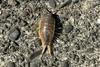
NewsWhat happens when a shoreline scavenger consumes microplastics?
Researchers report on what happens when wharf roaches, a common shoreline scavenger, eat expanded polystyrene (EPS). Analysis of the wharf roach gut microbiome showed little change, but several rare microbes were found only in the EPS-fed specimens.
-
 News
NewsMicroplastics may act as pollutant shuttles, carrying chemicals, pathogens and antibiotic resistance genes
A new review reveals how microplastics transport multiple pollutants across ecosystems and proposes a framework for identifying when these vector effects become serious ecological threats.
-
 News
NewsPreliminary wastewater bioremediation by photosynthetic Chlorobium genus isolated from pond water
Researchers have isolated naturally occurring light-driven bacteria from local pond water and shown that, within just one week, these microorganisms can substantially reduce the levels of organic pollutants in raw sewage.
-
 News
NewsUnderground methane leaks may cultivate microbes that help consume them
Researchers have identified where naturally occurring soil microbes consume methane released from underground natural gas leaks. Methane-consuming microbes were most active in a narrow zone near the surface where methane rising from below meets oxygen entering from the atmosphere.
-
 News
NewsAn enzyme with potential: New type of plastic-degrading enzyme discovered in bacteria
Researchers have identified a new enzyme that can not only degrade certain polyesters and bioplastics, but also might provide bacteria with resistance to antibiotics. The discovery raises hopes that microorganisms can adapt to plastic degradation more rapidly than previously thought.
-
 News
NewsReview explores the presence, fate, and effects of pharmaceutical compounds in soil and air
Pharmaceutical contamination in soil and air has become a critical environmental concern due to its widespread sources, complex behavior, and long-lasting ecological impacts.
-
 News
NewsOxygen nanobubbles turn biochar into an active defense against cadmium in flooded rice soils
A newly engineered biochar maintained oxygen around rice roots, shifted cadmium into more stable soil forms, and substantially reduced cadmium accumulation in rice plants.
-
 News
NewsBloomNet turns lake data into early algal bloom warnings
A research team has developed BloomNet, an interpretable deep-learning framework that forecasts harmful algal blooms at hourly resolution up to 72 hours ahead while also showing how risk changes over time.
-
 News
NewsTire microplastics may accelerate the spread of antibiotic resistance in cities
A new perspective article suggests that tire microplastics could create environmental hotspots that help antibiotic resistance genes persist, move between bacteria, and spread through cities.
-
 News
NewsCaterpillar that attacks soybeans and cotton harbors fungi that can degrade polystyrene
A moth caterpillar identified by the agribusiness sector as one of the most destructive pests of soybean, cotton, and corn crops may harbor fungi and bacteria in its gut that can degrade expanded polystyrene, also known as Styrofoam.