
We get to know Janet Jansson, who has been appointed as new Lead Editor in Systems Microbiology at the Journal of Applied Microbiology.

The Journal of Applied Microbiology has unveiled four key Research Themes under the JAM umbrella - Microbial Biotechnology; Systems Microbiology; Microbiology in Health & Disease; and Plant & Environmental Microbiology.
Each Theme encompasses emerging hot topics and leading-edge research that align with AMI’s goal to apply microbiology to solving the world’s greatest challenges.
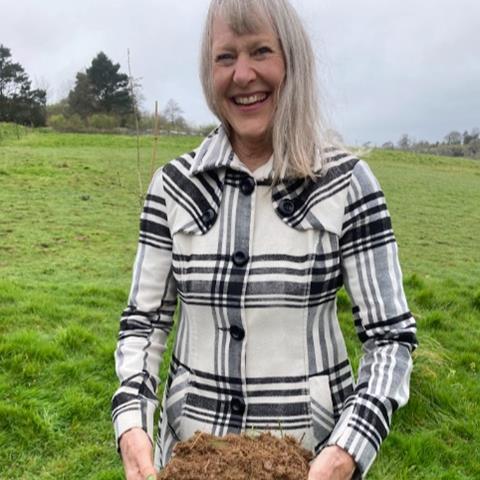
Janet Jansson is Chief Scientist for Biology and Laboratory Fellow (Retired) at the Pacific Northwest National Laboratory (PNNL) in Richland, Washington, USA.
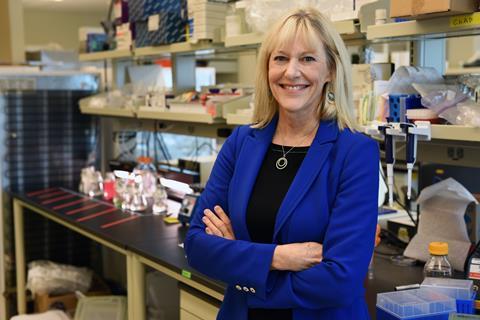
After obtaining her Ph.D. in microbial ecology at Michigan State University (1988), she established a successful career in Sweden for 20 years and was Professor, Chair of Environmental Microbiology, and Vice Dean at the Swedish University of Agricultural Sciences. She was a Senior Staff Scientist at Lawrence Berkeley National Laboratory from 2007-2014 and an Adjunct Professor at the University of California, Berkeley and at the University of Copenhagen, Denmark from 2012-2014.
During her career she led several large research projects that focused on the impacts of perturbations, such as climate change, oil spills and microgravity in space on environmental microbiomes and viruses. She is a Fellow of the American Academy of Microbiology, the Washington State Academy of Science and the American Association for the Advancement of Science.
She is a recipient of an Honorary Doctorate from the University of Helsinki, Finland and of the International Society of Microbiology’s Tiedje Award in recognition of lifetime achievements in microbial ecology. She is Past President of the International Society for Microbiology (ISME) and has served as an expert on numerous national and international advisory panels, including the White House’s Microbiome Initiative, the National Academies of Sciences, the U.S. National Committee for Soil Science and NASA.
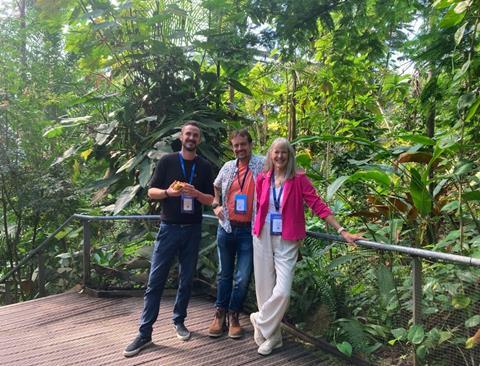
She is currently Chair of The Soil Stars, a multi-disciplinary group that advocates for and implements use of microbial strategies for improving soil health in degraded ecosystems and to mitigate climate change.
What excites you about heading up this new Research Theme?
I am excited about how the study of systems can be applied to address important questions and challenges in the microbiology field.
What first sparked your interest in microbiology and how did your career develop?
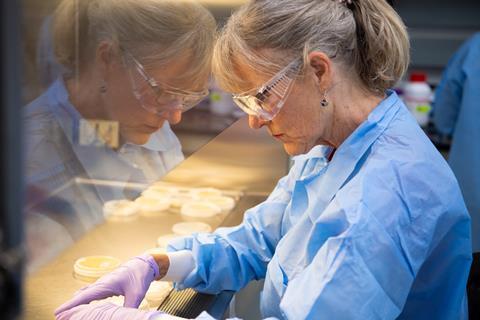
My interest in microbiology began as an undergraduate student when I took a course in Soil Microbiology. I was fascinated by the thought of living microorganisms in soil and the ability to grow them on agar plates.
What’s the microbe that most fascinates you and why?
I have long been a fan of actinobacteria because of their ability to become dormant under stress conditions, such as drought.
What real-world problem would you eventually love to solve with microbiology?
I would love to use microorganisms to help restore degraded soils. This could be by direct application of plant growth promoting bacteria that facilitate plant growth in degraded soils. Alternatively, soil microorganisms can be indirectly stimulated by regenerative agricultural practices that promote soil health.
What are the most intriguing new areas of research emerging in Systems Microbiology at the moment?
New areas of research that are emerging in Systems Microbiology include the incorporation of AI into predictive models. This can have large implications for several applied areas of research, including predicting impacts of climate change on soil biodiversity and function.
How important do you think the role of applied microbiology could be in solving some of the world’s problems?
Microorganisms have so many beneficial properties that are already being applied to address many of the world’s problems, including carbon capture and storage and consumption of methane emissions for environmental applications. Beneficial microbes are already key players in many areas of health, industrial and food microbiology applications.
How would you persuade authors of the benefits of publishing in JAM?
JAM has recently been relaunched with an eye to the future impact of microbial science across many areas of applied research. The time is ripe to publish in JAM because readers will be highly interested in gaining new knowledge and insights into how microorganisms can be applied to solve many of Earth’s most challenging problems.
Looking in your crystal ball, what new areas of research can you see emerging in the next few years?
I think that in the next few years, AI will be a key aspect of applied microbiology research. I also think that microorganisms will be increasingly recognized as resources to address many of the world’s existing challenges.
Janet Jansson is the Chief Scientist for Biology and Laboratory Fellow (retired) at the Pacific Northwest National Laboratory (PNNL) in Richland, Washington, USA.
Find out more about submitting your research to the Journal of Applied Microbiology.
Topics
- Actinobacteria
- Applied Microbiology International
- Climate Action
- Community
- Healthy Land
- International Society for Microbiology
- Janet Jansson
- Journal of Applied Microbiology
- Lawrence Berkeley National Laboratory
- Microbes and Space
- Pacific Northwest National Laboratory
- People News
- plant growth promoting bacteria
- Pollution and Remediation
- Publishing
- Soil & Plant Science
- Soil Stars
- Systems Biology
- UK & Rest of Europe
- University of California, Berkeley
- University of Copenhagen
- University of Helsinki
- USA & Canada


No comments yet