
Viruses must hijack host-cell machinery to synthesize, fold, and stabilize their proteins. Due to the frequent mutation rates of viral genomes, traditional direct-acting antivirals are often compromised by the emergence of drug resistance. Therefore, a growing number of laboratories are exploring host-directed strategies that interfere with cellular factors required for viral replication.
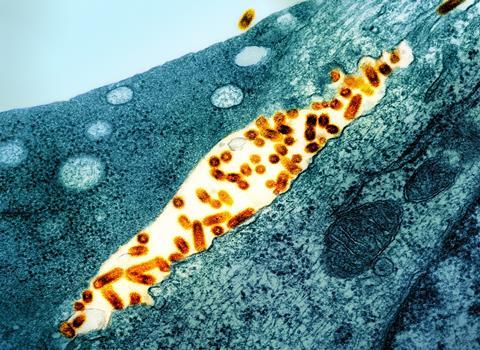
A collaborative study published in Science China Life Sciences has identified an unexpected antiviral function of phosphoglycerate kinase 1 (PGK1), a classic metabolic enzyme best known for its role in glycolysis.
The study was led and accomplished by groups from the Chinese Academy of Agricultural Sciences. The results showed that PGK1 restricted the replication of several RNA and DNA viruses, including influenza A virus (IAV), Sendai virus (SeV), vesicular stomatitis virus (VSV), and herpes simplex virus 1 (HSV-1).
PGK1 is traditionally recognized as a glycolytic enzyme involved in cellular energy metabolism. However, the researchers found that its antiviral activity was independent of its canonical metabolic function. Instead, PGK1 acted as a “moonlighting” protein by using its non-canonical protein kinase activity.
Key target
The team identified the host molecular chaperone HSP90AA1 as a key target of PGK1. HSP90AA1 helps fold and stabilize a wide range of cellular proteins and is also exploited by many viruses to maintain the stability of newly synthesized viral proteins.
Through in vitro experiments and mouse studies, the researchers found that PGK1 directly interacted with and phosphorylated HSP90AA1. This phosphorylation reduced the chaperone activity of HSP90AA1 and promoted its K27-linked ubiquitination and subsequent proteasomal degradation.
As HSP90AA1 levels declined, viral proteins that depended on this chaperone became unstable and were degraded. The loss of these viral proteins disrupted the viral replication process. Thus, PGK1 restricted viral replication by interfering with a host factor on which multiple viruses depend, rather than directly targeting viral components.
Potential countermeasure
The study also revealed a potential viral countermeasure. The nucleoprotein of influenza A virus competed with HSP90AA1 for binding to PGK1, thereby interfering with the PGK1-HSP90AA1 antiviral pathway. This finding illustrates the molecular competition between host defense mechanisms and viral immune-evasion strategies.
By defining the PGK1-HSP90AA1 axis, the study expands the known biological functions of a classic metabolic enzyme and reveals a link between cellular metabolism, protein homeostasis, and antiviral defense. The findings also identify this pathway as a potential target for developing host-directed antiviral interventions with activity against multiple viruses.
MICROBIOLOGY NEWS: Register with The Microbiologist for more free articles
Further studies will be needed to determine the safety, specificity, and therapeutic feasibility of modulating this pathway. Because HSP90AA1 participates in many essential cellular processes, future drug development will need to balance antiviral efficacy with potential effects on normal host-cell functions.





_particles_(orange)_found_in_extracellular_space_and_budding_from_the_plasma_membrane_of_infected_cells_(teal).jpg)
No comments yet