
A new study, published in Energy & Environment Nexus, shows that a soil bacterium can directly reduce Fe(III) minerals, exchange electrons with electrodes, and use electrode-derived electrons to convert carbon dioxide into acetate under autotrophic conditions.
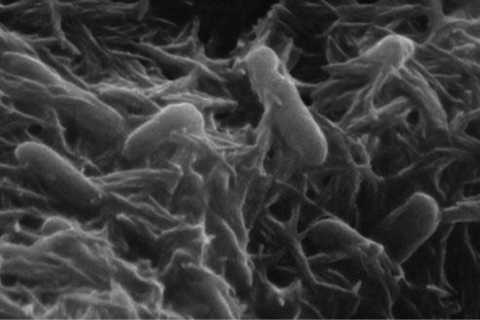
The reseach conducted by Yong Yuan’s team, Guangdong University of Technology, reports that F. terrae SG127 performs bidirectional extracellular electron transfer and can drive CO₂-to-acetate conversion through electrode-supported electroautotrophic metabolism.These findings reveal a microbial strategy that links electrical energy, carbon fixation, and anaerobic metabolism.
Electroactive bacteria
Extracellular electron transfer is a key process in microbial ecology and bioelectrochemical systems, allowing certain microorganisms to exchange electrons with minerals, metals, and electrodes outside the cell.
Current knowledge of bidirectional electron transfer has mainly come from model electroactive bacteria such as Shewanella oneidensis and Geobacter sulfurreducens. Sulfate-reducing bacteria are important anaerobic microorganisms involved in sulfur cycling, metal transformation, corrosion, and bioremediation, but only a few species have been clearly shown to perform bidirectional electron transfer.
It also remains unclear how such electron-transfer systems connect with carbon fixation and biosynthetic metabolism. These gaps indicate the need to explore new electroactive sulfate-reducing bacteria and clarify their electron-transfer and carbon-conversion mechanisms.
Soil bacterium F. terrae
To evaluate the extracellular respiratory capacity of F. terrae, the researchers first tested its ability to reduce ferrihydrite, a reactive Fe(III) mineral. The strain achieved a Fe(III) reduction efficiency of 68.3% within seven days, and this activity occurred even without soluble electron shuttles such as anthraquinone-2,6-disulfonate, suggesting a direct, membrane-associated electron-transfer pathway.
The team then constructed a bioelectrochemical system using graphite electrodes to determine whether the bacterium could exchange electrons in both directions. In anodic mode, where the electrode acted as an electron acceptor, F. terrae generated a maximum current density of 27.50 μA/cm² when supplied with pyruvate as the electron donor. In cathodic mode, where the electrode acted as an electron donor, the strain produced a maximum cathodic current density of 28.75 μA/cm² with sulfate as the electron acceptor.
Scanning electron microscopy further showed dense biofilms on both anode and cathode surfaces, supporting the presence of direct microbe-electrode interaction. The researchers also used cyclic voltammetry, respiratory-chain inhibitors, UV-visible spectroscopy, and genome analysis to probe the mechanism behind this bidirectional electron flow.
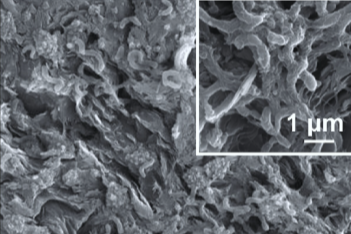
The electrochemical results indicated surface-controlled, quasi-reversible electron transfer. Inhibitor experiments showed that ATP synthesis, complex I, complex III, and quinone-related processes contributed differently to inward and outward electron transfer. UV-visible spectra revealed characteristic signals of c-type cytochromes, while genomic analysis identified genes encoding redox-active proteins such as MacA, MtrD, MtrC, and type IV pili-related components.
Together, these results suggest that F. terrae may use a cytochrome- and pilus-associated system to move electrons across the cell envelope. Finally, under sulfate-free autotrophic conditions, the bacterium used electrons from the cathode and CO₂ as the carbon source to produce acetate, reaching up to 11.05 mM. Genomic pathway analysis indicated that this carbon fixation likely proceeds through the Wood–Ljungdahl pathway.
Bioelectrochemical technology
Overall, the study expands the known diversity of electroactive microorganisms by demonstrating that F. terrae SG127 combines bidirectional extracellular electron transfer with electroautotrophic carbon fixation.
By showing that a sulfate-reducing bacterium can draw electrons from an electrode and channel them into CO₂ conversion, the work provides both a mechanistic framework and a microbial resource for future bioelectrochemical technologies.
These findings may support the development of sustainable systems that transform carbon dioxide into useful chemicals while deepening understanding of microbial energy exchange in anaerobic environments.
Topics
- anaerobic metabolism
- Asia & Oceania
- Bacteria
- bidirectional extracellular electron transfer
- Biofilms
- carbon fixation
- electrical energy
- electroactive bacteria
- electroautotrophic metabolism
- Environmental Microbiology
- Healthy Land
- Microbes of the Earth
- Microbial Biotechnology
- Microbial Characterisation
- Research News
- Soil & Plant Science
- sulfate-reducing bacterium
- Yong Yuan





No comments yet