
Cyanobacterial blooms, like the ones that occur in Lake Geneva are rapid, dense growths of photosynthetic bacteria in fresh and marine waters that can threaten the health of swimmers and their pets.
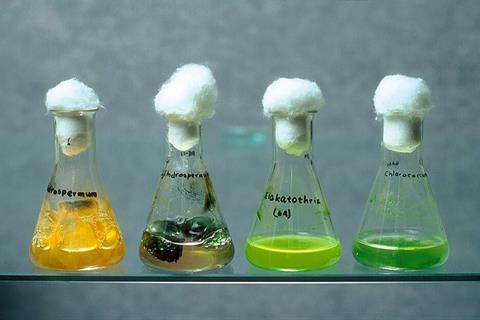
Blooms can release microcystins, a family of toxins that threaten drinking-water supplies, recreational waters and aquatic ecosystems. More than 300 microcystin variants, known as congeners, have been identified, and they can differ subtly in structure while producing different biological effects.
Microcystins detection methods
Detecting microcystins quickly and telling them apart is still difficult, as each of most common methods have limitations.
ELISA immunoassay tests are relatively fast and sensitive, but they generally cannot identify individual microcystin congeners and may cross-react with related compounds. Liquid chromatography coupled to tandem mass spectrometry (LC-MS/MS), is far more selective, but requires expensive equipment, trained specialists and sample transport. Depending on the analysis, results may take from a day to several weeks.
Now, scientists in the groups of Matteo Dal Peraro and Tamar Kohn at EPFL have developed a nanopore sensor that detects microcystins one molecule at a time. The work, which was led by Alissa Agerova and Juan Francisco Bada Juarez, is published in ACS Nano.
Novel nanopore channel
The sensor uses aerolysin, a protein that spontaneously forms a “nanopore” channel through a thin membrane, around ten nanometers long, with a narrowest point about one nanometer across.
When a voltage is applied, ions flowing through the channel generate an electrical current. As a microcystin molecule interacts with or passes through the pore, it briefly blocks part of that current. The depth and duration of the blockage provide a characteristic signal for the molecule.
MICROBIOLOGY NEWS: Register with The Microbiologist for more free articles
Based on this readout, the team distinguished between seven individual microcystin congeners under controlled laboratory conditions. The signals remained sufficiently distinct for all seven populations to be separated even without more sophisticated data classification.
Field testing and further development
The researchers then tested the system with natural lake-water samples, which they filtered to remove particles that could interfere with the nanopores.
“Filtration is an obstacle in the sense that it implies more sample manipulation before analysis,” says Tamar Kohn. “In the future we would like to find a way to analyze the samples without the need for filtration, or at least automate this step to avoid lengthy sample manipulation.”
In water from Lake Geneva, they successfully separated two closely related microcystins that had been added at concentrations representative of strong blooms. The lake water did not prevent the pore from distinguishing the two toxins.

In a sample collected during a cyanobacterial bloom in Lake Lugano, the nanopore identified and quantified one of the best-studied microcystins, MC-LR. It measured a concentration of 12.7 nanomolar, closely matching the 13.1 nanomolar result obtained by LC-MS/MS.
By creating a salt-concentration gradient across the pore, the researchers also improved sensitivity and detected MC-LR at concentrations as low as 25 picomolar. This is 40 times below the provisional WHO guideline of 1 nanomolar for lifetime exposure to MC-LR in drinking water.
MICROBIOLOGY ON TAP: Get full access to all The Microbiologist articles from just £2.17 a month
The technology is not yet mature to be used in the field, as the lake samples were filtered and adjusted to high salt concentrations before measurement. But because nanopores are compact and produce electrical signals in real time, the sensor could eventually be incorporated into portable systems for on-site, real-time water monitoring. Further engineering can help adapt the same principle to detect other cyanotoxins or small environmental pollutants.
Further developing, scaling, and commercializing the technology is the focus of a future startup, CYnANO, currently being planned by the paper’s first author, Alissa Agerova.







No comments yet