
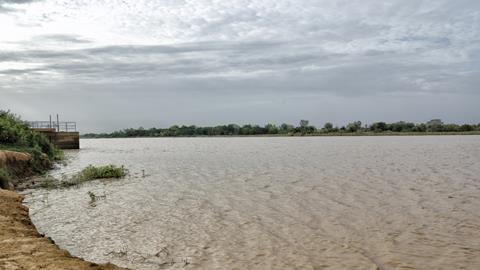
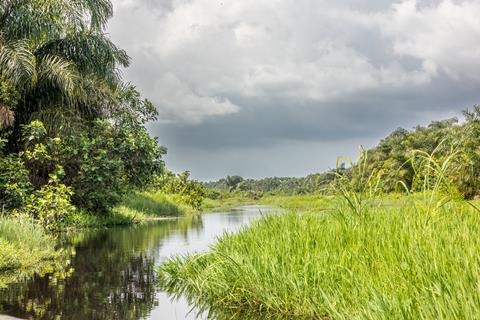
The Niger Delta, once a mosaic of mangrove forest, freshwater swamp, and spectacular biodiversity, has paid an extraordinary price for the oil beneath its feet. Half a century of extraction, pipeline ruptures, militant sabotage, and the acrid smoke of “artisanal” refineries have saturated the region’s soil and aquifers with benzene, toluene, ethylbenzene, and xylene (collectively, BTEX). Among these, benzene stands alone in its toxicological menace: it is freely soluble in water, extraordinarily mobile in soil, and a proven human carcinogen, linked to leukaemia and a range of haematological disorders. Its persistence in the environment is not merely an ecological statistic; it is a sentence, repeated every time a child drinks well water in Eleme, Emuoha, or Aluu communities in the Niger Delta region.
Benzene contamination from decades of oil exploitation has turned the Niger Delta’s groundwater into a slow-acting poison for millions of people. Yet the solution may already be living in the contaminated sediment itself, if only the political will exists to deploy it.
Yet here is the paradox that energizes a growing body of research: the microorganisms already living in this contaminated landscape may be the most effective clean-up agents available. Over the past two decades, laboratory and field studies have demonstrated that indigenous microbial communities, bacteria shaped and selected by years of hydrocarbon exposure, possess remarkable enzymatic machinery for dismantling benzene. The question is no longer whether they can do it. The question is whether we will give them the conditions to succeed.
A carcinogen hiding in plain sight
Benzene’s chemical stability is both the source of its usefulness to the petrochemical industry and the root of its environmental persistence. The six-carbon aromatic ring, stabilized by delocalized electrons, resists spontaneous breakdown under normal environmental conditions. Once it infiltrates the subsurface, it partitions readily into groundwater and, in the largely anoxic (oxygen-depleted) conditions typical of Niger Delta sediments, it can persist for decades.
The UNEP’s 2011 Environmental Assessment of Ogoniland, arguably the most comprehensive scientific survey of any oil-contaminated zone in the world, documented benzene in drinking water at concentrations up to 900 times the WHO guideline value. Subsequent studies have confirmed that the problem extends well beyond Ogoniland: pipeline-related residential contamination across the eastern Niger Delta has been shown to dramatically elevate cancer risk in communities relying on shallow groundwater. Meanwhile, conventional remediation approaches, digging up soil and transporting it elsewhere, or extracting and treating groundwater at surface facilities, have proved either prohibitively expensive, logistically impossible in the wetland terrain, or simply ineffective at reaching the contaminant plumes that have migrated deep into the aquifer.
The Hydrocarbon Pollution Remediation Project, HYPREP programme, established by the Nigerian government in 2017 in response to the UNEP report, has deployed primarily surface-based aerobic techniques: landfarming, biopiling, and monitored natural attenuation. These are valuable tools, but only where oxygen is available. In the deep, waterlogged mangrove sediments that characterize much of Ogoniland, they cannot reach the contamination that matters most.
When oxygen runs out: the aerobic frontier
Where oxygen is present, in topsoil, shallow sediments, and surface waters, microbial benzene degradation can be remarkably rapid. Bacteria such as Bacillus, Micrococcus, and various Pseudomonas species deploy dioxygenase enzymes to attack the benzene ring directly, cleaving it through the catechol pathway to produce compounds that enter the citric acid cycle and are ultimately mineralized to carbon dioxide and water. In well-oxygenated topsoil amended with nitrogen and phosphorus, a technique known as biostimulation, these organisms can reduce benzene concentrations by orders of magnitude within months.
The Niger Delta’s surface soils harbour indigenous aerobic degraders that are well-adapted to hydrocarbon-rich conditions. Field studies have demonstrated that biostimulation, simply adding nutrients to activate the existing microbial population, can substantially accelerate natural attenuation rates. This is an important and underused tool for surface and near-surface remediation, and HYPREP’s deployment of it in biopiles represents genuine progress.
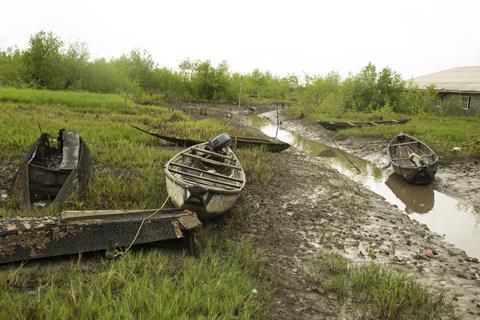
But the surface is not where the problem lives. The bulk of the benzene contamination in Ogoniland has migrated downward, into the saturated zone where oxygen is absent and aerobic degraders cannot function. This is where the story of microbial remediation becomes both more complex and more scientifically compelling.
The anaerobic frontier: deep-seated hope
For much of the twentieth century, the conventional wisdom in environmental microbiology held that benzene was essentially recalcitrant under anaerobic conditions. Its chemical stability, combined with the absence of the oxygen co-substrate that aerobic enzymes require, seemed to render it untouchable in the deep subsurface. This view has been overturned by two decades of painstaking research.
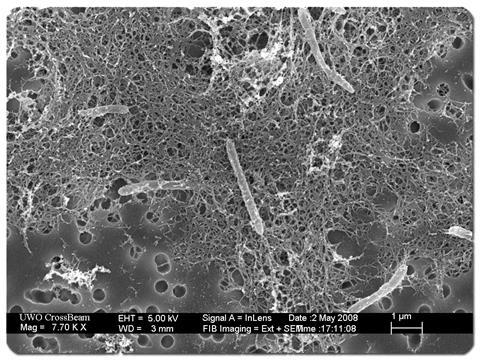
The key insight came with the discovery that certain microorganisms can activate benzene through an entirely different mechanism: carboxylation. Rather than breaking the ring open with oxygen, these bacteria add a carbon dioxide molecule to the ring, generating benzoate. This compound can then be fed into the well-characterized anaerobic degradation pathway centred on benzoyl-CoA. The enzyme system responsible for the initial carboxylation step, encoded by the abcA and abcD genes and employing a specialized prenylated flavin mononucleotide (prFMN) cofactor, was only characterized in molecular detail within the last decade, and has transformed our understanding of what is biochemically possible in anoxic sediments.
Crucially, the Niger Delta is not a passive backdrop to this science; it has been a proving ground for it. A study published in Biodegradation in 2021, using sediment cores from the region, demonstrated that natural microbial communities from the Niger Delta could achieve complete anaerobic benzene mineralization under iron-reducing and methanogenic conditions. The organisms driving this process included members of the recently described order Thermincolales within Desulfobacterota, specialists in benzene carboxylation, phylogenetically distinct from any previously characterized hydrocarbon degraders. This study showed, for the first time, that the metabolic toolkit for anaerobic benzene destruction is present in situ, in the very sediments that need remediation.
Table: Comparison of aerobic and anaerobic benzene degradation pathways
|
Feature |
Aerobic Degradation |
Anaerobic Degradation |
|
Electron Acceptor |
Oxygen (O₂) |
Nitrate (NO₃⁻), Iron (Fe³⁺), Sulfate (SO₄²⁻) |
|
Typical Rate |
Fast (0.12–0.69 day⁻¹) |
Slow to Moderate (weeks to months) |
|
Key Microorganisms |
Pseudomonas, Sphingobium, Micrococcus, Bacillus |
Peptococcaceae, Geobacter, Ignavibacteriales, Desulfuromonadales |
|
Primary Mechanism |
Ring cleavage via oxygenases (catechol pathway) |
Activation via carboxylation (AbcA/AbcD enzyme system) |
|
Delta Habitat |
Topsoil and surface waters |
Deep aquifers and waterlogged mangrove sediments |
A microbial community built for the task
The Niger Delta’s anaerobic sediments support a complex web of microbial life in which benzene degradation is rarely the work of a single organism. Rather, it depends on syntrophic partnerships, cooperative metabolic relationships in which one organism’s waste product is another’s fuel.
Under sulfate-reducing conditions, which are prevalent throughout much of the region’s mangrove belt, benzene-degrading specialists, such as members of the Peptococcaceae family, carry out the initial carboxylation, generating benzoate and acetate. These compounds are then consumed by sulfate-reducing bacteria, including Desulfuromonadales, which couple their metabolism to the reduction of sulfate to sulfide. The two guilds are metabolically interdependent: the benzene degraders cannot function without their partners removing the products that would otherwise accumulate and inhibit them.
Under iron-reducing conditions, where microorganisms use ferric iron (Fe³⁺) as their terminal electron acceptor in place of oxygen or sulfate, Geobacter species and their relatives are prominent, and mineralization rates recorded in Niger Delta cores have been among the highest documented for any anaerobic condition. Nitrate-reducing conditions, where they occur near agricultural land or anthropogenic nitrogen sources, support fast-acting Thauera species capable of benzene degradation at rates approaching aerobic speeds. Even in the most extreme conditions, methanogenesis, where no conventional electron acceptor is available and benzene is ultimately converted to methane and carbon dioxide by a community of fermenters, acetogens, and methanogens, degradation, while slow, proceeds to completion.
This metabolic diversity is the Delta’s hidden asset. The contaminated sediments are not dead zones awaiting rescue from outside; they are ecosystems in which evolution has already produced the biological machinery for benzene remediation. What they lack, and what conventional treatment approaches have failed to provide, are the specific geochemical conditions that allow these communities to express their full potential.
The contaminated sediments are not dead zones awaiting rescue from outside. They are ecosystems in which evolution has already produced the biological machinery for benzene remediation.
From laboratory to field: the path to in-situ bioremediation
Understanding which microorganisms are doing what, and under what conditions, is not merely academic. It is the prerequisite for designing bioremediation strategies that actually work. The field of in situ bioremediation, treating contamination at the source, in the ground, without excavation or extraction, is precisely where this mechanistic knowledge translates into practical intervention.
The most immediately applicable approach is biostimulation: the injection of specific electron acceptors or co-substrates into the contaminated aquifer to stimulate the activity of resident anaerobic degraders. In sulfate-limited zones, for example, careful addition of sulfate can unlock the metabolic potential of Peptococcaceae and Desulfuromonadales that are already present but substrate-starved. In iron-limited zones, amendments of ferric iron compounds can activate Geobacter communities. Pilot-scale studies in analogous contaminated aquifers in Europe and North America have demonstrated that this approach can achieve benzene removal rates of 60–90% within monitored treatment zones.
A more targeted strategy is bioaugmentation: the introduction of specifically cultivated microbial consortia, grown in the laboratory from Niger Delta source material, characterized by genomic sequencing, and proven to degrade benzene under defined conditions, into the contaminated zone. This approach has the advantage of delivering a primed, optimized community rather than relying on the sometimes-sluggish response of the native microbiome to stimulation. Its challenges are considerable: ensuring survival and dispersal in a complex subsurface environment, and demonstrating that the introduced community integrates without disrupting the existing ecosystem, but they are not insuperable.
“What both approaches share is a fundamental requirement: they must be designed and implemented based on detailed site-specific microbial characterization.”
The Niger Delta is not a uniform environment. Its redox chemistry varies on scales of metres, its sediment mineralogy differs between mangrove, freshwater swamp, and riverine zones, and the microbial communities reflect this heterogeneity. Effective bioremediation requires a suite of molecular and geochemical tools that can map which organisms are active, where, and at what rates. These are the tools needed to be developed for more precise site-specific bioremediation.
The policy gap: science ahead of governance
Here is where the science runs ahead of the policy. The UNEP report called for a comprehensive, long-term remediation programme funded to the tune of one billion US dollars. The HYPREP programme that emerged from this mandate has, despite genuine institutional effort, been hampered by funding shortfalls, coordination failures between federal government and state actors, and most fundamentally, a remediation methodology that has not kept pace with the state of the science.
HYPREP’s primary tool remains aerobic surface treatment: landfarming contaminated soil in windrows and monitoring natural attenuation. For surface contamination in accessible terrain, this is defensible. For the deep, anoxic, waterlogged mangrove sediments where the bulk of the benzene contamination persists, it is insufficient. The Nigerian government’s own reporting acknowledges that groundwater benzene levels at most HYPREP sites remain far above WHO limits after nearly a decade of intervention.
Closing this gap requires, first, that remediation policy be updated to reflect the scientific evidence for anaerobic bioremediation. The regulatory frameworks governing contaminated site management in Nigeria should explicitly recognize in situ biological treatment, biostimulation, and bioaugmentation as approved remediation technologies. This is not a novel demand: the United States Environmental Protection Agency has endorsed monitored natural attenuation and enhanced in situ bioremediation as standard approaches for BTEX-contaminated groundwater for more than twenty years.
Second, it requires investment in local scientific capacity. The microbial ecology of the Niger Delta’s contaminated sediments has been characterized primarily by laboratories outside Nigeria. This must change. Funding mechanisms through HYPREP, through international development partners like the hydrocarbon industries, and through Nigerian research councils should support Nigerian universities and research institutions to build the genomic, isotopic, and ecological expertise needed to characterize local microbial communities and design site-specific remediation programmes. The knowledge already exists in the Delta’s sediments. The capacity to read and act on that knowledge must be built there, too.
Third, the communities living with contamination must be partners in the remediation process, not spectators. Indigenous ecological knowledge, including knowledge of where contamination is most severe, how it has changed over time, and what ecological indicators signal improvement, is a resource that formal monitoring programmes consistently underutilize.
A biological mandate
The Niger Delta benzene crisis is a story of compounding failures: of extraction without accountability, of regulation without enforcement, of remediation without science. But it is also a story with a biological counternarrative, of microorganisms that have spent decades adapting to the contamination that human activity created, developing the enzymatic architecture to undo it.
The AbcA carboxylase. The Thermincolales degraders. The syntrophic sulfate-reducing consortia that can mineralize benzene in sediments where no conventional treatment can reach. These are not laboratory curiosities. They are indigenous to the Niger Delta. They are doing this work already, slowly, in the dark, in the absence of any external intervention.
The scientific community’s task is now to understand this process precisely enough to accelerate it. The policy community’s task is to create the regulatory and financial conditions that make acceleration possible.
“The moral imperative is clear: a region that has subsidized global oil demand for half a century deserves a remediation programme commensurate with the damage. The microbes are ready. Are we?”
Bibliography
Nwaichi, E. O., et al. (2022). Assessing the health risks of benzene exposure in oil-impacted communities of the Niger Delta. Environmental Monitoring and Assessment, 194, 312.
United Nations Environment Programme (UNEP). (2024). Monitoring report on the progress of the Ogoniland remediation project. UNEP Disasters and Conflicts Branch.
Hydrocarbon Pollution Remediation Project (HYPREP). (2026). 2025 scorecard: Infrastructure, water, and mangrove restoration progress. Federal Ministry of Environment, Nigeria.
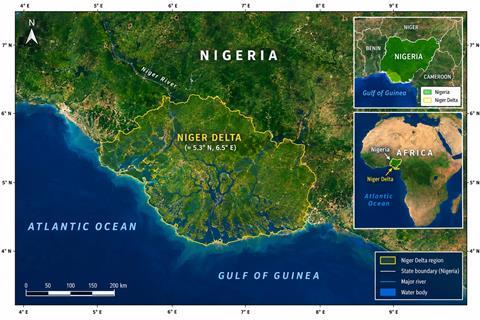
The geographic location of the Niger Delta region within Nigeria and Africa.





No comments yet