
AMI’s One Health Advisory Group has issued comments to bring antimicrobial awareness to the forefront of conversation and political action. Their comments centre the environment and the importance of a One Health perspective at the heart of the AMR conversation.
Acknowledging the global nature of the issue and the audience, part of the OHAG statement was offered by Dr Filipa Godoy in both English and Spanish.
“Antimicrobial resistance is not merely a clinical crisis—it is an ecological one.”
”From the daily lifestyle habits that shape our human microbiomes to the environmental contaminants altering the ecosystems around us, every disruption ripples through the microbial networks that sustain our health,” said Dr Godoy.
”This World AMR Awareness Week, safeguarding the future of medicine, means moving beyond the clinic to protect the delicate balance of both our internal and external worlds by understanding our microbiomes and all those that surround us.”
En español: “La resistencia a los antimicrobianos es una crisis tanto clínica como ecológica. Desde los hábitos cotidianos que moldean nuestros microbiomas hasta los contaminantes ambientales que alteran los ecosistemas que nos rodean, cada perturbación repercute en las redes microbianas que sostienen nuestra salud. En esta Semana Mundial de Concienciación sobre la Resistencia a los Antimicrobianos, salvaguardar el futuro de la medicina implica actuar más allá del ámbito clínico para proteger el delicado equilibrio tanto de nuestro entorno interno como del que nos rodea y conocer los microbiomas.”
Dr Kate Lagerstrom also stressed the importance of considering the environment in effective AMR response, and described the importance of her work in meeting this challenge.
”Antimicrobial resistance isn’t just a human health issue; it’s an environmental issue, too.”
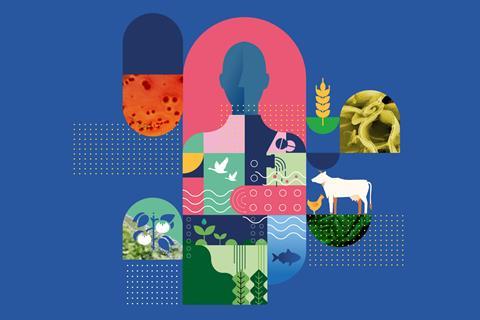
”While much of the conversation around AMR focuses on antibiotic use in clinical settings, bacteria in soils, waterways, and wildlife microbiomes are exposed to a much broader range of chemical pollutants. Heavy metals, pesticides, disinfectants, and even some non-antibiotic pharmaceuticals can create selective pressures that favor antibiotic resistance, sometimes even in the absence of antibiotics themselves.” Dr Kate Lagerstrom said.
”My research explores how exposure to multiple environmental stressors shapes wildlife-associated microbial communities. I’m particularly interested in whether these overlapping chemical pressures increase the carriage of antimicrobial resistance in wildlife, and what that might mean for their health. These are questions we still know surprisingly little about, despite the interconnected nature of human, animal, and environmental health.”
”Responsible antibiotic use remains critical, but it is only part of the solution.”
”Protecting wildlife, reducing environmental contamination, and understanding the ecological and evolutionary pressures that drive antimicrobial resistance must also be part of a truly One Health approach.”
Chair of the One Health Advisory Group, Dr Sally Cutler, reinforced the need for effective stewardship.
”Antibiotics have changed our lives, but now, with the current challenge of antimicrobial resistance, we need conservative, cautious use underpinned by understanding the dynamic and complex interactions of antimicrobial resistance genes within a One Health context. This is a priority for the One Health Advisory Group (OHAG) within Applied Microbiology International.”
Attend the MSE Working Group’s upcoming FREE upcoming webinar on AMR here.
Read more about AMR week here.
Stay up to date with the OHAG’s work here.





No comments yet